
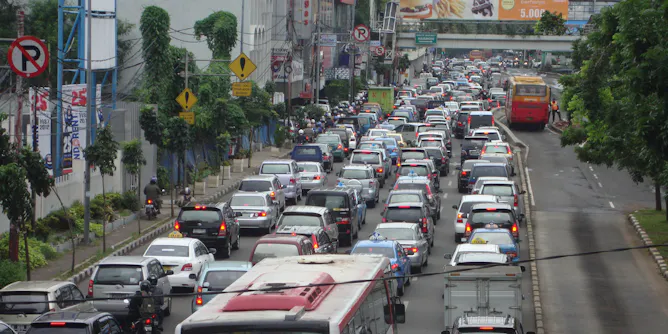
Governments are using Big Data to design improvements and upgrades of cities. But ethical questions need to be considered, lest we end up jeopardising citizens’ privacy or deepen social inequalities.
Articles on Smart cities
Displaying 61 - 80 of 108 articles

Big data provides a rich picture of the physical city, but it won’t tell us much about the social city – that’s where agent-based modelling comes in.
With the emerging emphasis on regional City Deals and Smart Cities funding, perhaps Australia is beginning to find its way to a national cities policy, rather than just a big cities policy.
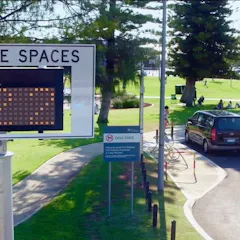
Public spaces have become more, not less, important to our experience of cities in the digital era. These technologies can be used to confound and enlarge our experiences of and connections to place.
Many cities lack the resources to analyze their own vast troves of administrative data.
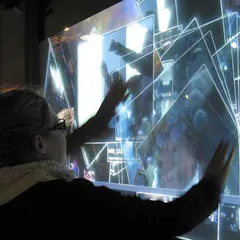
With the rise of the knowledge-based economy, fab labs, maker spaces and more, cities are being transformed into production centres. This dynamic movement is ripe with promise, but also has risks.

Toronto has entered a joint venture with a Google sister company to create a high-tech urban development area. The goal is to ‘re-imagine cities from the internet up’ – Google’s internet, of course.
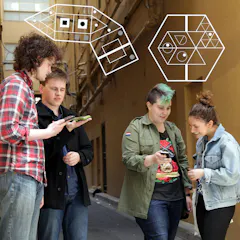
As adults we often trivialise the value of play. But playing games lets us play with possibilities, see how they play out – and exploring alternative realities helps us see the familiar in new ways.

A common theme from science fiction is a vision of a world where humans do less work and machines do more. Why have we not yet reached that point?
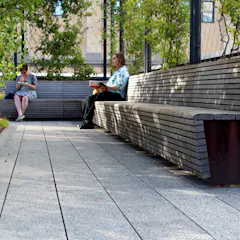
With cities becoming more dense and housing more crowded, people rely more than ever on well-designed public spaces, so why hasn’t the furniture changed with the times?
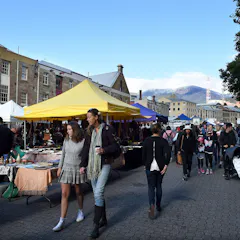
Knowing a city’s professional network ratio helps to understand how connected its inhabitants are to other markets, customers and ideas. All support innovation, adaptation and city growth.

As disruptive technology increasingly enters our lives, it demands that we rethink and reorganize all aspects of work, life, and society.
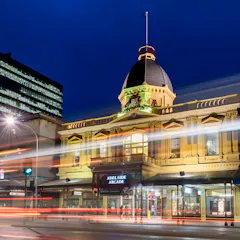
Smart city thinking makes good use of rapidly developing technology to help make cities work better, easier-to-navigate, safer, healthier and more enjoyable places to live.
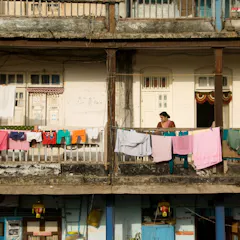
India’s quest to build smart cities by developing high-rise housing will have adverse environmental impacts and reduce resilience.

Developing principles to create cities that are good for all is not easy. Who decides what is good? And for whom? We desperately need a big and general public discussion about this.

Regional cities can be as effective at generating jobs and growth as their big five metro cousins. But they must identify and build on their strengths to be investment-ready.

The corporate world has taken the lead in promoting various creative/smart city visions, which struggle to be inclusive, let alone entrust citizens with control over their lives.

All it takes is data … lots of data.

Universities can lead the way in creating opportunities for the economic development of regional cities and outer metropolitan areas under new City Deals.
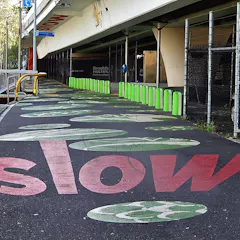
Smart cities are usually optimised like a business for speed and efficiency. Placemaking can slow down cities to improve health and wellbeing and promote more democratic engagement of citizens.
Top contributors
-

Professor, Faculty of Business & Economics, University of Winnipeg
-
Vice Chancellor’s Senior Research Fellow, School of Global, Urban and Social Studies, RMIT University
-
Professor in Human Geography, UCL
-
Associate Professor of Political Science, Brock University
-
Professor of Strategic Design, Queensland University of Technology
-
Associate Professor, University of Canberra, Stockholm Environment Institute
-
Professor of Urban Studies and Planning, Queensland University of Technology
-
Associate Professor, School of Built Environment, UNSW
-
Director, Melbourne Sustainable Society Institute, The University of Melbourne
-
Associate Professor and Director of the Australian Smart Cities Consortium, Adelaide University
-
Associate Professor of Urban Planning, The University of Melbourne
-
Senior Lecturer in Industrial Design, UNSW
-
Professor Sustainability and Urban Governance, RMIT University
-
Leader, Centre for Risk and Community Safety, RMIT University
-
Professor of Spatial Science, University of Leeds