
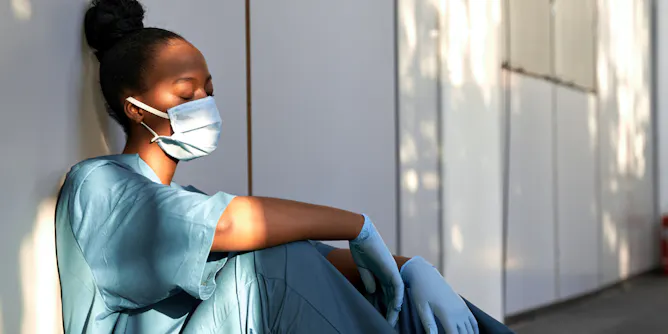
Disturbed sleep can worsen depressive symptoms of health care workers whose jobs come with high levels of emotional labor and work-family conflict.
Articles on Sleep deprivation
Displaying 21 - 40 of 67 articles

We live in a world where we frequently do not get enough sleep, but we need sleep if our brains are going to stay healthy and function efficiently.

Adolescent biology, early morning classes and too much evening screen time are a few of the key drivers behind teen sleep deprivation.

College students hit the hay earlier and sleep longer when they’re offered a modest monetary incentive. But can a little extra cash really make good sleeping habits last?
A new study found the amount of sleep you had last night can even overwhelm people who have a tendency for kindness.

Supporting mothers’ and infants’ sleep can decrease the stressors of motherhood, improve maternal mood and mental health and promote better infant development.

Two sleep doctors offer some survival tips to help you adjust to losing that hour of sleep as clocks spring forward into daylight saving time.
Could we capitalize on disruption schedules during the pandemic to make evidence-based changes in school start times to improve teens’ sleep?
Our study is the first to show that the cortex regulates sleep.
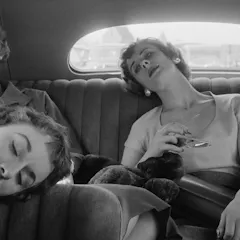
Springing forward for daylight saving time will be especially hard this year due to sleep loss from COVID-19. Why does the US keep doing this?

A lack of sleep increases appetite, makes us more likely to eat unhealthy foods, and even affects how body fat is lost while dieting.
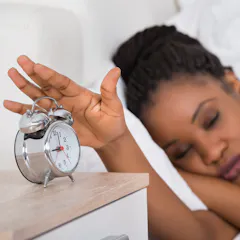
Our latest research also shows that retirement allows us to finally get as much sleep as our body needs each night.
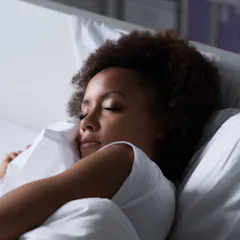
The time at home from the coronavirus crisis could be an opportunity to let our natural sleep rhythms take over.

The more businesses encourage their employees to sleep well, the better their employees perform.

Millions of people struggle with falling asleep. A review of thousands of studies shows a possibly simple solution: a warm bath.
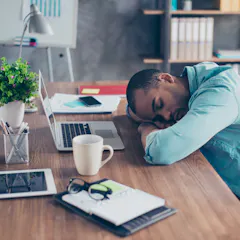
Progressive organizations recognize that fatigued employees can’t perform at their best. Naps at work can increase alertness and improve performance.

Springing forward onto daylight saving time means Americans will lose an hour of sleep. Two sleep doctors offer some survival tips as you adjust.

Research shows that daylight-saving time changes do more harm than good. It’s time to abolish the practice.
Are you sleep deprived? Don’t worry. That might make the situation worse. Instead, make some simple adjustments, such as staying off digital devices an hour before bedtime.

Few things seem to matter to our health as much as a good night’s sleep, but fewer and fewer of Americans are getting it. A neurologist explains why sleep is so important.
Top contributors
-

Penn State
-
Associate Professor of Neurology, University of Pittsburgh
-
Vice Chair, Department of Neurology, University of Florida
-
Director of the Pediatric Sleep Evaluation Center, UPMC Children’s Hospital of Pittsburgh, University of Pittsburgh
-
Research Professor and Director of the Behaviour-Brain-Body Research Centre, Adelaide University
-
Sleep Researcher, Appleton Institute, HealthWise Research Group, CQUniversity Australia
-
Co-Director Pediatric Sleep Evaluation Center and Associate Professor of Pediatrics, University of Pittsburgh
-
Conjoint Senior Lecturer, School of Medicine and Public Health, University of Newcastle
-
Professor of Psychology, Michigan State University
-
Professor of Criminal Justice Administration, California State University, Dominguez Hills
-
Senior lecturer, Victoria University
-
Research Fellow / Health Psychologist, Swinburne University of Technology
-
Professor of Psychology, Victoria University
-
Child Psychologist, St. Joseph's University
-
The Erdi Foundation Child Health Equity (COVID-19) Scholar, Centre for Community Child Health | Honorary, Department of Paediatrics, University of Melbourne | Team Leader / Senior Research Officer, Murdoch Children's Research Institute