
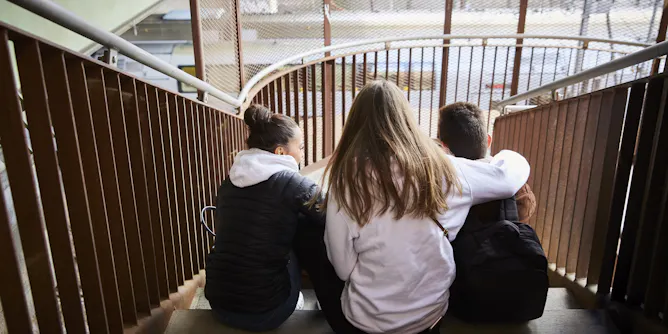
Having larger in-person networks appeared to protect young people against developing severe depression symptoms. But large online networks had the opposite effect.
Articles on Self-harm
Displaying 1 - 20 of 66 articles

Eighty-five per cent of teens have seen gore online, but only seven per cent searched for it. Current content moderation and safety features aren’t fixing the problem.

Human therapists have a legal duty to warn authorities and potential targets when patients say they plan to harm someone. The same can – in theory – be required of AI chatbots .
Young people across different cultures describe self-harm less as a symptom of mental health difficulties, and more as a response to unbearable pressures.

Children in family court cases face higher self-harm risk, but these moments could be opportunities to offer support and prevent harm.

Talking therapies and other treatments may not address the underlying issues that are causing men to harm themselves.

It isn’t just social isolation that’s a risk factor for self harm.
Police receive 50,000 missing reports in Australia each year. But not everyone goes missing by accident – for some people it’s a choice or a way to cope.
New research shows police specialising in family violence are concerned current approaches leave victim-survivors unprotected.

Human culture has changed too fast for evolution to keep up.
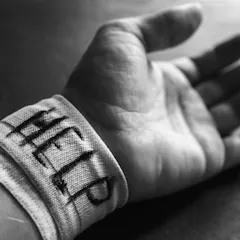
This is what I’ve learned from interviewing hundreds of people who harm themselves

How you respond is critical to their health and wellbeing. Here’s what to say to support someone who self-harms.
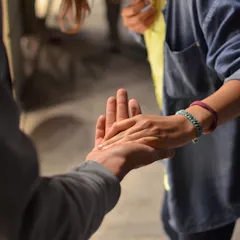
Teen depression is on the rise but effective help is available. We look at what parents can do to support their teen.

We analysed the primary care records of more than 9 million young patients across the UK.

Many studies show that consistent meditation practice lowers depression, anxiety and self-criticism.

There are a few reasons melatonin, a medication commonly taken for sleep difficulties, might have this effect.

The focus of suicide prevention is shifting toward protective factors: characteristics that make it less likely that individuals will consider, attempt or die by suicide.

Nursing has long been seen as a vocation, not a skill. This impacts nursing staff and patients both.
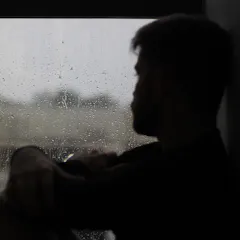
New research shows how threats of self-harm and suicide are a tactic of coercive control men use against female partners.

Data linkage, assessing information from over 113,000 teenagers in South London, addresses important gaps in research on the mental health and socio-economic risk factors for self-harm.
Top contributors
-

Clinical Professor of Public Health and Psychiatry, Swansea University
-
Senior Research Fellow, University of Manchester
-
Associate Professor in Medical Anthropology, University of Birmingham
-
Research Assistant & PhD Candidate in Mental Health, Swansea University
-
Professor of Psychology, University of Guelph
-
Professor of Psychology, Curtin University
-
Executive Manager, Longitudinal Studies, Australian Institute of Family Studies
-
Senior Lecturer in Psychology, University of the Sunshine Coast
-
Professor, University of Sydney; RMIT University
-
Research Project Manager, School of History, Queen Mary University of London
-
Clinical Psychologist, Deakin University
-
Honorary Postdoctoral Associate, Macquarie University
-
Research Associate, Wolfson College, University of Cambridge
-
Assistant Professor of Psychology, Heriot-Watt University
-
Senior research fellow, Australian Institute of Family Studies