
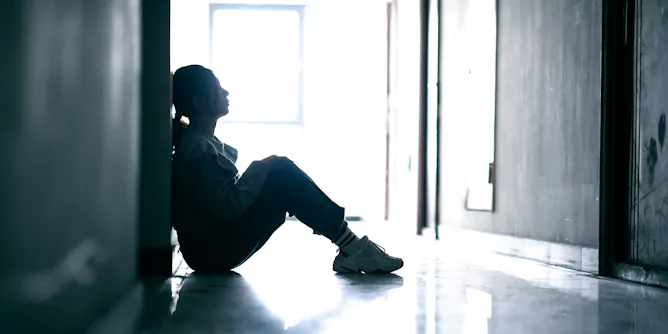
New research shows that many young people report a sense of temporary relief following episodes of self-harm. But there are clear ways to help teens replace injurious behaviors with healthy ones.
Articles on Self-harm
Displaying 21 - 40 of 66 articles

Care leavers are over-represented in the justice system. Rising rates of self-harm show an urgent need for greater mental health support.

Monitoring of student behavior often extends beyond schoolwork and normal school hours. A privacy expert explains the harmful effects.

It’s tempting to think limits would cause teens to riot in the streets. But Facebook’s own research reveals that young people are well aware of social media’s downsides.

Self-harm is often a response to mounting stress and uncertainty. So it’s not surprising rates have gone up during the pandemic. Self-harm can be a means to cope and establish control over emotions.

Social media doesn’t always offer comfort, but the space and support it can provide should be mirrored offline
During the first lockdown, the number of people seeking help for depression, anxiety and self-harm dropped by up to 48% in some cases.

New data shows self-harm incidents in immigration detention have spiked his year amid concerns over the pandemic. We must take steps to reduce asylum seekers’ vulnerability and prevent further harm.

Lockdowns have a key role in controlling COVID-19 but we must be aware of the risks of isolating people who are vulnerable to suicidal distress.
Comparing presentations to Victorian hospital emergency departments in May 2020 to those in May 2019 reveals some important differences.

There were 8,000 forced relocations in Australia’s immigration detention system in a nearly two-year span. New research shows how distressing and destabilising these movements are for refugees.

A new report offers data on mental health in young people.
And homelessness makes reoffending more likely.

Researchers found that between 2008 and 2016, self-harm rates among Danish teenagers actually decreased.

NICE guidelines suggest that boys who come to come to A&E because of self-harm should be admitted to hospital. Often, this isn’t happening.

New research uncovers the reasons for the chronic underspending on young people’s mental health services.

Stigma can make people who self-injure reluctant to disclose their experiences and seek help. One way to combat the stigma is to debunk some of the most common myths that surround self-injury.

Despite low crime rates, indiscriminate mass stabbings aren’t unheard of in Japan. But unlike recent mass killings in Western countries, they aren’t motivated by right-wing ideology.
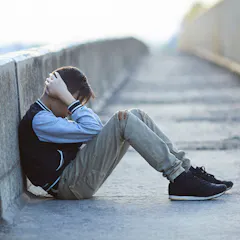
A doctor explains how he introduces mindfulness to self-harming youth in the emergency room.

It’s not just the media who fuel unnecessary concern about so-called suicide games.
Top contributors
-

Clinical Professor of Public Health and Psychiatry, Swansea University
-
Senior Research Fellow, University of Manchester
-
Associate Professor in Medical Anthropology, University of Birmingham
-
Research Assistant & PhD Candidate in Mental Health, Swansea University
-
Professor of Psychology, University of Guelph
-
Professor of Psychology, Curtin University
-
Executive Manager, Longitudinal Studies, Australian Institute of Family Studies
-
Senior Lecturer in Psychology, University of the Sunshine Coast
-
Professor, University of Sydney; RMIT University
-
Research Project Manager, School of History, Queen Mary University of London
-
Clinical Psychologist, Deakin University
-
Honorary Postdoctoral Associate, Macquarie University
-
Research Associate, Wolfson College, University of Cambridge
-
Assistant Professor of Psychology, Heriot-Watt University
-
Senior research fellow, Australian Institute of Family Studies