
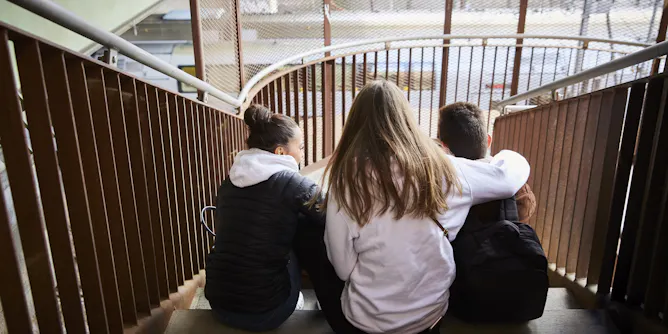
Having larger in-person networks appeared to protect young people against developing severe depression symptoms. But large online networks had the opposite effect.
Articles on Youth suicide
Displaying 1 - 20 of 47 articles
New Penn State research on nearly 200,000 Pennsylvania teens finds everyday bonds with family, school and community may help prevent youth suicide.

Despite high suicide risk, most teens can identify reasons to live, from family bonds to small future dreams – offering hope for prevention.

College students’ psychological well-being has deteriorated in the past two decades, but recent data suggests the tide could be turning.

Close to half of those who die by suicide saw a primary care doctor within a month of their death.

Allowing whānau to be more engaged in the coronial investigation into a suicide would help provide answers for family – and help mental health services improve preventative measures.

Fatalities from gun homicides, suicides and accidents are all up for Americans ages 18 and under.

Teen depression is on the rise but effective help is available. We look at what parents can do to support their teen.

Millions of young people in the US are suffering, whether from abuse at home, pressure from social media or exposure to violence. But navigating the mental health care system can be disheartening.

The 988 Suicide & Crisis Lifeline is for anyone experiencing suicidal thoughts, emotional distress, substance abuse issues or mental health problems.

New research points to feelings of failure, hopelessness, loneliness and sadness as some of the potential reasons Black young people are considering or carrying out suicide at unprecedented rates.

Self-blame was found to be associated with experiencing suicidal thoughts.
Nearly 1 in 5 US teenagers battle depression. But parents can help by communicating openly, creating a behavior contract and finding low-pressure opportunities to interact with their teen.

Imposing outright social media bans can do more harm than good.

Youth suicides in the US have increased by around 50% over the past decade – gun availability is a big part of that trend.

The risk of dying changes over the course of a lifetime. Very high at birth, it falls and then gradually rises again… except for a peak after adolescence. Why such a statistical anomaly?

New research shows that many young people report a sense of temporary relief following episodes of self-harm. But there are clear ways to help teens replace injurious behaviors with healthy ones.

A well-intentioned public health message has had serious negative impacts on the treatment of young people for depression.

Nearly all suicide-loss survivors experience guilt, wondering what they could have done to prevent it. But despite decades of research, experts struggle to identify risk factors and predict suicide.
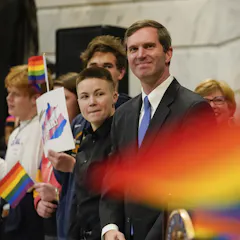
Kentucky lawmakers are trying to make the state the 21st to enact a ban on conversion therapy. In states that are ‘silent’ on the issue, nonprofessionals are allowed to continue the harmful practice.
Top contributors
-

Assistant Professor of Social Work, Policy, and Practice, University of Chicago
-
Professor of Psychology, Mississippi State University
-
Associate Professor of Counseling Psychology, Boston University
-
Professor, Critical Indigenous Studies and Director of The Centre for Global Indigenous Futures, Macquarie University
-
Professor, School of Population and Global Health, The University of Western Australia
-
Research Fellow, Centre for Mental Health Research, Australian National University
-
Research Fellow in Youth Suicide Prevention, The Kids Research Institute Australia
-
Professor of Health Promotion, Curtin University
-
Deputy Head of School, School of Rural Medicine, University of New England
-
Associate Professor of Sociology, University of British Columbia
-
Dean of The Carnegie School of Education, Leeds Beckett University
-
Senior Lecturer in Children's and Adolescent Literature, Queensland University of Technology
-
Lecturer in Musical Theatre, Griffith University
-
Lecturer in Neonatal Care, University of Salford
-
Professor of Psychology, Stetson University