

World Health Organisation guidelines on screen time lack nuance.
Articles on Screen time
Displaying 121 - 140 of 159 articles

In his new book, Teen Brain, David Gillespie suggests anxiety and other problems are on the rise among teenagers due to smartphones and tablets. This could be true, but his claims are overblown.

Software makers including Apple have been creating apps aimed at limiting how much time we spend using our smartphones. A behavioral scientist explains how – and whether – they work.

We blame electronic devices for our increasingly sedentary behaviours. So why not harness them to study our movement patterns and tackle urgent health crises?

Copious amounts of time spent looking at screens is likely affecting our health – so why aren’t we doing anything about it?

Children now spend more time at home and alone with their parents – new research.

Parents’ social media sharing about the potentially harmful impact of media on children reflects underlying questions about how to best protect and nurture impressionable minds.

Thanks to the prevalence of technology, children are exposed to thousands of commercials a year. How can parents make their children more aware of how commercials influence what they think and do?

Myopia is a major risk factor for serious eye diseases. It has become epidemic among children, particularly because of their heavy use of electronic devices.

Global experts warn that excessive screen time increases the risk of obesity, low physical fitness, anxiety and depression.

A new study in JAMA Pediatrics suggests higher levels of screen time at two and three years of age predict poorer child outcomes at three and five years, respectively.
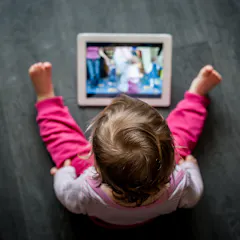
British three- and four-year-olds spend around four hours a day on screen time.

As their kids get older, should parents should be more – not less – vigilant?

Our unproductive ‘zombie’ screen hours can creep up – but they don’t need to rule us. Here are four steps to help you use new tools to monitor and change your technology habits.
A brief guide for teachers and parents on tech in the classroom.

School is out and screens make tempting babysitters. Follow these recommendations to allow your child some screen time without compromising their health and development.

Though the World Health Organization has declared “gaming disorder” an addiction, its – and others’ – concerns about technology use and alleged addiction don’t hold up to scholarly scrutiny.

Guidelines for screen use for students need to take more than just time into account. Sleep, eye health, posture and other wellbeing issues need consideration as well.

While politicians argue endlessly over gun control, here are 10 practical ways the rest of us can work to prevent school shootings.

Changes in how we’re spending our free time is a likely culprit.
Top contributors
-

Professor of Psychology, San Diego State University
-
Researcher, Digital Wellbeing, Western Sydney University
-
Associate Professor, Education, University of Canberra
-
Professor, Canada Research Chair in Determinants of Child Development, Owerko Centre at the Alberta Children’s Hospital Research Institute, University of Calgary
-
Professor of Education, Australian Catholic University
-
Professeur Titulaire. École d'optométrie. Expertise en santé oculaire et usage des lentilles cornéennes spécialisées, Université de Montréal
-
Assistant Professor, Psychology, University of Waterloo
-
Research Fellow, Curtin University
-
Associate Professor, School of Psychology, Scientist, Children's Hospital of Eastern Ontario Research Institute, L’Université d’Ottawa/University of Ottawa
-
Associate Professor at MRC/Wits Developmental Pathways for Health Research Unit, University of the Witwatersrand
-
Senior Lecturer in Psychology, University of the Sunshine Coast
-
Professor of Reading and Children’s Development, The Open University
-
Assistant Teaching Professor of Rehabilitation and Human Services, Penn State
-
Professor of Physiotherapy, Curtin University
-
Professor of Psychology, Bridgewater State University