

As the pandemic moves us indoors, it’s time to reconsider our understanding of ‘screen time’ – especially since we’re relying on our devices now more than ever.
Articles on Screen time
Displaying 101 - 120 of 159 articles
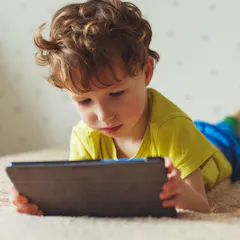
Screen “time” gets all the airplay, but with families confined to home – screen quality and screen buddies – are just as important, if not more, for healthy technology use.
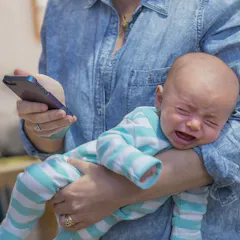
Mobile health apps, teleconferencing with experts and thoughtfully designed educational platforms can all help families during the chaotic and confusing early years.
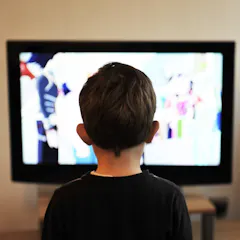
With parents trying to work from home while schools and daycare services are closed, some children may get more screen time than usual during COVID-19 social distancing.

It’s natural for children to be aware of the stress adults may be feeling about the COVID-19 pandemic. Child psychologists offer some practical advice for parents on how to talk to their kids.
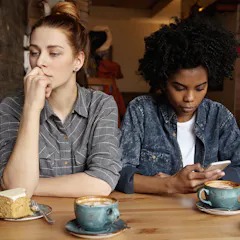
Facing up to phone interruptions.

Too many parents are on their phones when they would be better putting in quality time with their children.
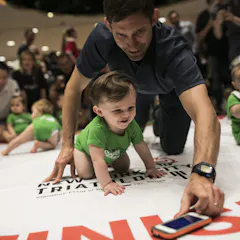
Parents who use screens excessively in front of their kids may unwittingly sow the seeds of screen addiction and its consequences.

New research finds that the different ways boys and girls use digital technology might explain the discrepancy.

Most of us spend hours each day glued to some type of screen for work or play. But is that a bad thing? Has anyone got the data to figure it out? Now is the time for ‘The Human Screenome Project.’

As the head of a media and communications program, my life’s digital-analogue balance was off. Four weeks at sea with no devices refocussed my views – even on things that had been there all along.

Since the second world war, every generation has worried that children are spoilt, cosseted, or being corrupted by new technologies. But, on many measures, today’s children are doing just fine.
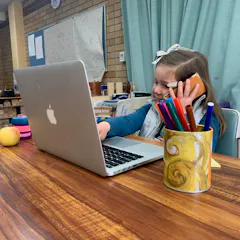
Children see adults on smartphones, looking up information they need to know, and being continuously connected. They want to copy this behaviour in their play and practise being an adult.

Parents shouldn’t fear putting tech under the tree. In fact, it could bring families closer together.
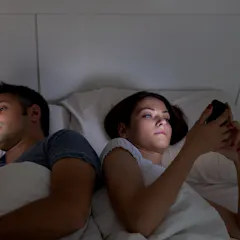
While there are negative impacts, many of the risks of too much screen time are overblown. A scholar who has studied the topic for years offers some tips for finding the right balance.

Blue light has been getting blamed for sleep interruption and eye strain. But the facts are that any bright light interferes with sleep, and computers themselves cause eye strain, an eye doctor says.
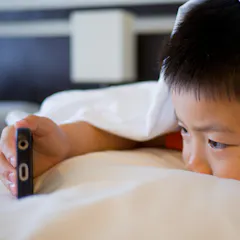
It is possible for teenagers to be addicted to screen-time activities such as video gaming. It is also possible for parents to do something about it.

Most Australians exceed the guidelines for screen time, and most parents feel guilty about the time their child spends on the screen. But not all screen time is bad. Content matters.

Although it’s not possible for parents to completely shield their kids from screens and junk food, in the home they have a unique opportunity to establish healthy behaviours.

Many adolescents have trouble sleeping - but limiting screen use is not the solution. When used correctly, bedtime use of devices can be beneficial to mental health, without harming sleep quality.
Top contributors
-

Professor of Psychology, San Diego State University
-
Researcher, Digital Wellbeing, Western Sydney University
-
Associate Professor, Education, University of Canberra
-
Professor, Canada Research Chair in Determinants of Child Development, Owerko Centre at the Alberta Children’s Hospital Research Institute, University of Calgary
-
Professor of Education, Australian Catholic University
-
Professeur Titulaire. École d'optométrie. Expertise en santé oculaire et usage des lentilles cornéennes spécialisées, Université de Montréal
-
Assistant Professor, Psychology, University of Waterloo
-
Research Fellow, Curtin University
-
Associate Professor, School of Psychology, Scientist, Children's Hospital of Eastern Ontario Research Institute, L’Université d’Ottawa/University of Ottawa
-
Associate Professor at MRC/Wits Developmental Pathways for Health Research Unit, University of the Witwatersrand
-
Senior Lecturer in Psychology, University of the Sunshine Coast
-
Professor of Reading and Children’s Development, The Open University
-
Assistant Teaching Professor of Rehabilitation and Human Services, Penn State
-
Professor of Physiotherapy, Curtin University
-
Professor of Psychology, Bridgewater State University