

Policymakers, tech companies and schools should all be part of conversations about how our society is responsible for the new realities of tech in the home after COVID-19 lockdowns.
Articles on Screen time
Displaying 61 - 80 of 159 articles
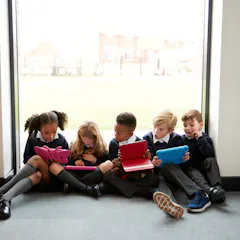
Parents should keep an eye on how screen-based activities influence their child’s development and behaviour.

Screen time overload? Here’s how to regain control and boost your health.

Addiction to social media can affect the emotional well-being of adolescents and young adults. But staying offline — even for only a few hours a day — can help.
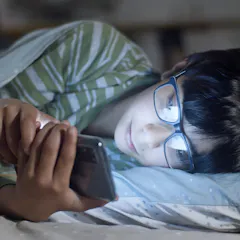
Parents may well feel the need to ‘crack down’ on kids’ screentime. But a whole-family approach might be more successful.

The impact of using electronic devices is critical during the first years of life, both visually and on the cognitive and social development of the child.

Persuasive design in kids’ apps is often overlooked in the screen-time debate.

Recent polling shows more than 90% of Australian parents think their kids’ screen time is a problem.

Research is revealing that fitness trackers alone can be helpful facilitators toward changing a sedentary lifestyle but don’t motivate people to increase their physical activity.

Making daily time to connect with their children is an important way of nurturing family experiences and relationships and to find restoration.

Even babies who are not yet standing or walking get lots of benefits from active movement – but most infants aren’t getting enough physical activity.

Psychologists and technology designers are working together to make digital experiences hard for kids to put down.

Ultimately, screens are a part of modern life – children need to learn how to navigate them.

Parents who spy on their children’s online activity run the risk of doing more harm than good, an expert says.

Newer screen technologies provide a more interactive experience for children using digital devices. The benefits can be similar to play time with traditional toys.

A widely reported study didn’t ring any alarm bells for children’s increasing screen time, but neither did it give heavy use of devices the all-clear.

Lockdowns and learning from home have further embedded digital technology in young people’s lives. Educational theory and practice need to catch up fast.
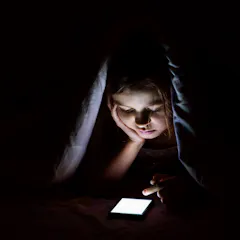
It’s tempting to think limits would cause teens to riot in the streets. But Facebook’s own research reveals that young people are well aware of social media’s downsides.

If you ever felt nauseous, fatigued or disoriented after using your phone or computer, you may be experiencing a condition similar to motion sickness.

Researchers are still uncovering how modern lifestyles may be causing this increase.
Top contributors
-

Professor of Psychology, San Diego State University
-
Researcher, Digital Wellbeing, Western Sydney University
-
Associate Professor, Education, University of Canberra
-
Professor, Canada Research Chair in Determinants of Child Development, Owerko Centre at the Alberta Children’s Hospital Research Institute, University of Calgary
-
Professor of Education, Australian Catholic University
-
Professeur Titulaire. École d'optométrie. Expertise en santé oculaire et usage des lentilles cornéennes spécialisées, Université de Montréal
-
Assistant Professor, Psychology, University of Waterloo
-
Research Fellow, Curtin University
-
Associate Professor, School of Psychology, Scientist, Children's Hospital of Eastern Ontario Research Institute, L’Université d’Ottawa/University of Ottawa
-
Associate Professor at MRC/Wits Developmental Pathways for Health Research Unit, University of the Witwatersrand
-
Senior Lecturer in Psychology, University of the Sunshine Coast
-
Professor of Reading and Children’s Development, The Open University
-
Assistant Teaching Professor of Rehabilitation and Human Services, Penn State
-
Professor of Physiotherapy, Curtin University
-
Professor of Psychology, Bridgewater State University