
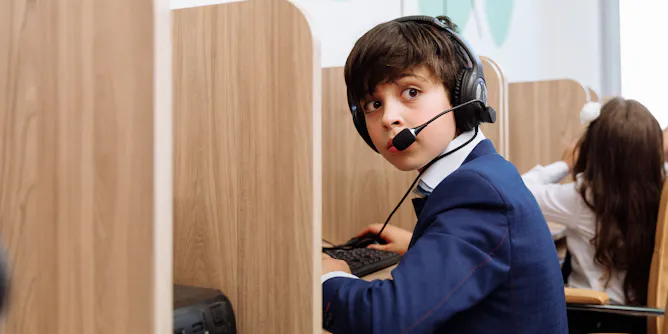
There is no comprehensive national data on how much time an Australian child spends on a device at school. The rules are just as patchy.
Articles on Screen time
Displaying 1 - 20 of 159 articles

Rather than considering how much time students spend on screens, the more useful question is whether they are asking questions and solving problems with the help of technology.
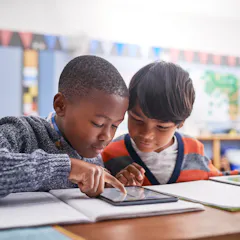
Studies increasingly show that how kids are using screens is more important than the exact amount of time they’re spending on them – and parents and caregivers tend to know what’s best for their families.
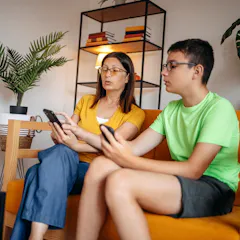
When phone use starts to affect our mood or interfere with relationships, it’s a sign our habits have crossed the line from healthy to unhealthy.

There are ways to help children better self-regulate their own digital activity and prepare for the digital demands in their future.

The research tells us there is no ‘magic screen time number’ to guarantee quality learning. It depends how the technology is used and for what.

The latest instalment of the film franchise addresses a dilemma many parents face: what happens to playtime when children become obsessed with screens?
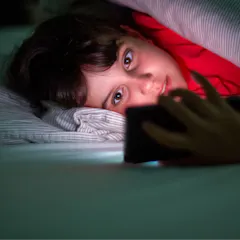
Sleep can be one of the trickiest things for families. New research closely examines the relationship between sleep and screen-use in young children.

Try to think consciously about how often you use your own device.

Children’s podcasts are a fast-growing part of the audio industry. Here are five that work particularly well for shared listening.
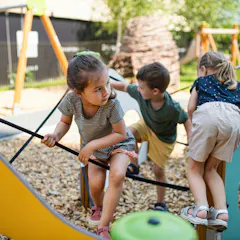
Habitually practising different motor skills can help ensure young children have the key competencies and abilities to move and use their bodies in ways that prepare them to lead healthy lives.

Rapid movement, abrupt edits and dynamic sound capture attention automatically.
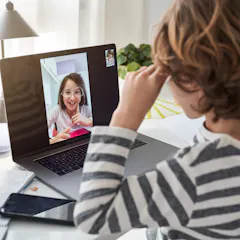
Interactive and engaging uses of technology can foster language development.

Younger siblings also spend less time per day on ‘enrichment activities’, such as music practise or reading.
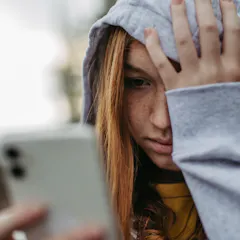
Tik Tok, Instagram, Youtube… Social Media is driving offline disorders among teenagers, suggests a large-scale report by French Agency for Food, Environmental and Occupational Health & Safety (Anses).

Many people may call it self-care to crash on the couch with your smartphone, but screen-based activities increase the load on your brain instead of resting it.

Boredom is a healthy part of life. Experiencing it can help children learn to set goals and make plans.
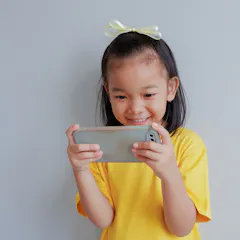
As adults interact with kids, they share views and create new knowledge. So what happens if screens take over that interaction?
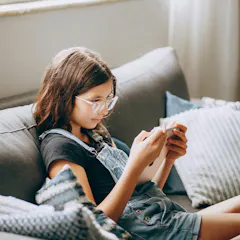
World-first legislation will ban under 16s from certain social media platforms in less than four months. This could be a shock - but there are ways to prepare.
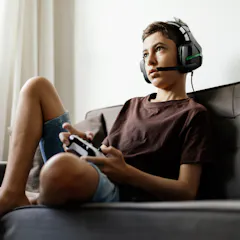
The digital world can be a vital space of empowerment and connection for children with special educational needs and disabilities.
Top contributors
-

Professor of Psychology, San Diego State University
-
Researcher, Digital Wellbeing, Western Sydney University
-
Associate Professor, Education, University of Canberra
-
Professor, Canada Research Chair in Determinants of Child Development, Owerko Centre at the Alberta Children’s Hospital Research Institute, University of Calgary
-
Professor of Education, Australian Catholic University
-
Professeur Titulaire. École d'optométrie. Expertise en santé oculaire et usage des lentilles cornéennes spécialisées, Université de Montréal
-
Assistant Professor, Psychology, University of Waterloo
-
Research Fellow, Curtin University
-
Associate Professor, School of Psychology, Scientist, Children's Hospital of Eastern Ontario Research Institute, L’Université d’Ottawa/University of Ottawa
-
Associate Professor at MRC/Wits Developmental Pathways for Health Research Unit, University of the Witwatersrand
-
Senior Lecturer in Psychology, University of the Sunshine Coast
-
Professor of Reading and Children’s Development, The Open University
-
Assistant Teaching Professor of Rehabilitation and Human Services, Penn State
-
Professor of Physiotherapy, Curtin University
-
Professor of Psychology, Bridgewater State University