
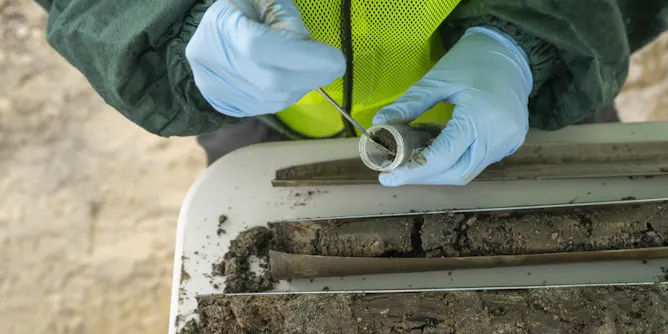
Decades of pollution at Pittsburgh brownfields left bacteria that evolved to survive it – and maybe help clean up contaminated soil.
Articles on Scientists at work
Displaying 1 - 20 of 94 articles
Scientists give caterpillars haircuts and put them in a room isolated from sound to figure out how they’re able to hear without ears.
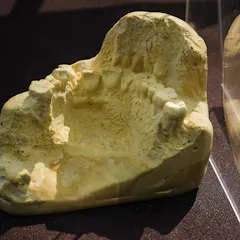
A team of historians, archaeologists and forensic anthropologists is trying to identify 15 German soldiers who were unceremoniously dumped in a ditch after trying to help the British capture Philadelphia.
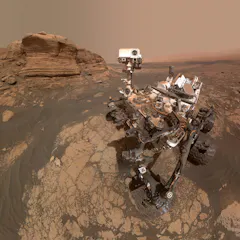
Each day in the control room of the Curiosity rover is jam-packed with important scientific decisions, as a NASA project scientist describes.
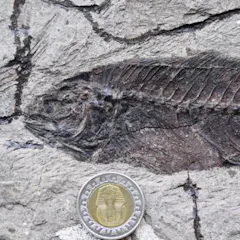
A team of researchers worked grueling, hot hours in the desert to understand the history of life in Earth’s oceans after a major extinction event.

Scientists are taking to the seas with new equipment to measure how much carbon the oceans are storing.
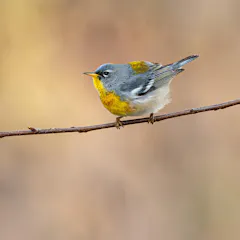
Males aren’t the only angry birds defending their territory. A clever test finds which songbirds step up to fight off intruders and the role monogamy plays.
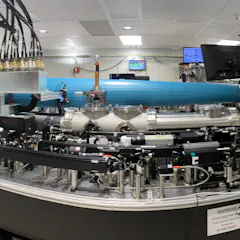
It would take hours to set up the perfect shot at the Texas Petawatt Laser facility. Once it fired, the beam released an incredible amount of energy.

Researchers are using machine learning models to identify gentrification in imagery. Community insights help keep the models on track
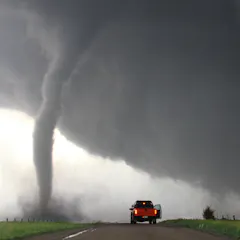
When you’re inside a vortex, your body experiences things the news cameras can’t capture.
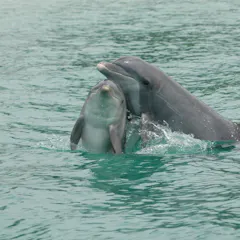
A database of sounds from a community of wild dolphins is proving to be a great resource for researchers studying dolphin communication.
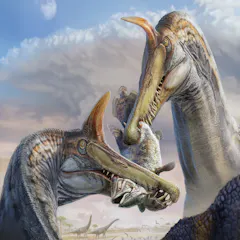
The hunt for a mythicized fossil hot spot took a team of researchers on a journey through the Sahara Desert.
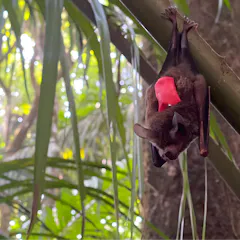
By listening in on their nightly hunts, scientists discovered that small, fringe-lipped bats are unexpectedly able to efficiently take down prey nearly their own size.

Cemeteries are a treasure trove of local history and family connection. Technology and ingenuity have made mapping them easier.
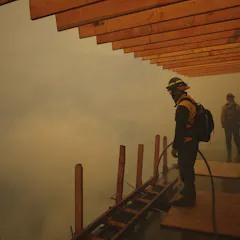
When cities burn, plastics, electronics, cleaning chemicals and much more create a toxic brew. Studies launched during the LA fires a year ago show exposure is often strongest inside homes.
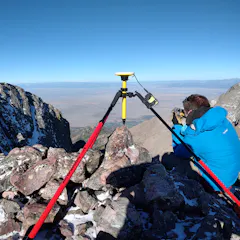
To most accurately measure mountain peaks, Eric Gilbertson lugs equipment all the way to the top.

The crucial reef-building corals were decimated by a marine heat wave in the Florida Keys. Can advances in restoration help them recover?

A planetary scientist who has participated in analog missions describes their value for planning space exploration – and learning about extreme environments on Earth.
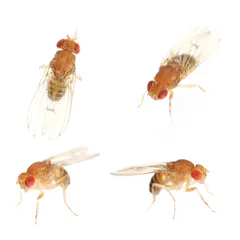
Variability in traits and increased individuality in behaviors is something that can evolve in response to selection, definitely in the lab and potentially also in nature.
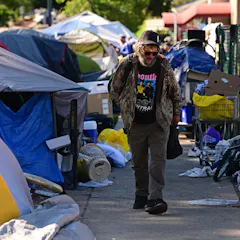
Homelessness is solvable through affordable and supportive housing. Hospitals should be part of the solution.
Top contributors
-

Staff Scientist, Smithsonian Tropical Research Institute, Smithsonian Institution
-
Professor of Planetary and Space Sciences, The Open University
-
Senior Research Associate, Cardiff University
-
Research Associate, Manchester Metropolitan University
-
Spacecraft Engineer, University of Bristol
-
Former Honorary Research Associate for the Endangered Archaeology in the Middle East and North Africa (EAMENA) Project, University of Oxford
-
Researcher, National Renewable Energy Laboratory
-
Professor of Epidemiology and Core Faculty of Disaster Research Center, University of Delaware
-
Head of Specialised Assay Service, University of Edinburgh
-
Professor of Environmental and Forest Biology, State University of New York College of Environmental Science and Forestry
-
Professor of Geosciences, University of Montana
-
Professor of Mathematics at Center for Atmosphere Ocean Science, New York University
-
Assistant Professor of Biology, Carthage College
-
Professor of Wildlife Conservation, Colorado State University
-
Himalayan geologist, Lancaster University