
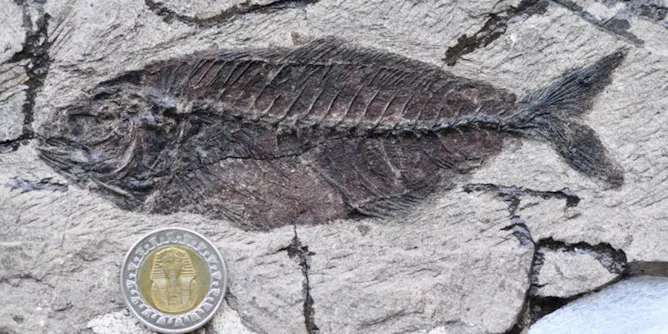
A team of researchers worked grueling, hot hours in the desert to understand the history of life in Earth’s oceans after a major extinction event.
Articles on Fieldwork
Displaying 1 - 20 of 21 articles
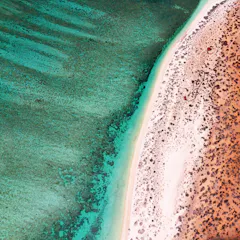
Every living thing leaves traces in its environment. By sampling water or even air for this environmental DNA, we can know which species live where.
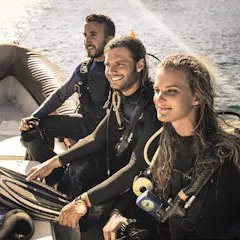
Growing awareness of sexual harassment and discrimination in the field prompted an international survey and research into potential solutions.
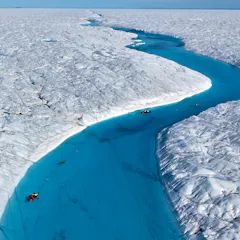
Glaciologists are discovering new ways surface meltwater alters the internal structure of ice sheets, and raising an alarm that sea level rise could be much more abrupt than current models forecast.
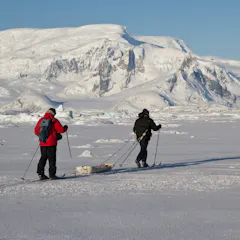
We’ve come a long time since women were deemed too “hormonal” to be sent into space. Yet gender bias is an issue women in the field still reckon with every day.
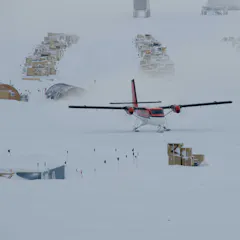
Pandemic restrictions have shuttered research projects - some, for good. The consequences for science, not to mention policy and decision making, must be addressed
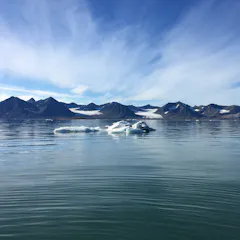
Three scientists describe the fieldwork they’ve had to delay in 2020 because of the pandemic. These are setbacks not just for their careers, but for the body of scientific knowledge.

Government policies and dangerous conditions affect the ability of researchers working on both sides of the US-Mexico border to conduct scientific fieldwork.
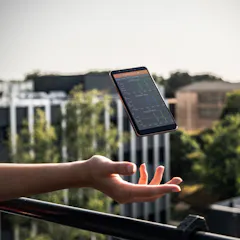
Practical work is essential for science education. But health measures compromise their traditional organization. Here are some game-changing solutions.

As I found, academics engaging in fieldwork research are in a particularly vulnerable position.

A paleooceanographer describes her ninth sea expedition, this time retrieving cylindrical ‘cores’ of the sediment and rock that’s as much as two miles down at the ocean floor.
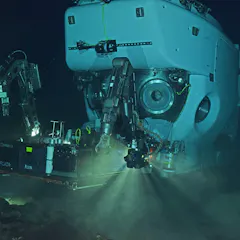
When you study volcanoes at mid-ocean ridges, doing fieldwork means becoming an aquanaut – diving thousands of feet to the ocean floor in the submersible Alvin, trading tight quarters for amazing views.
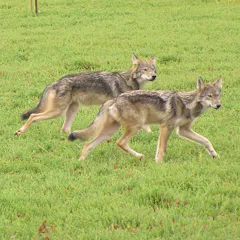
Tracking wild animals can provide lots of valuable data. New research suggests audio recordings of wild wolves can replace the typical radio collars, which can be expensive and intrusive.
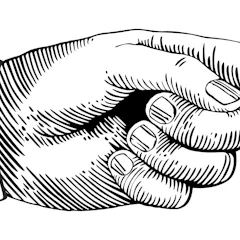
It was long thought that humans everywhere favor pointing with the index finger. But some fieldwork out of Papua New Guinea identified a group of people who prefer to scrunch their noses.
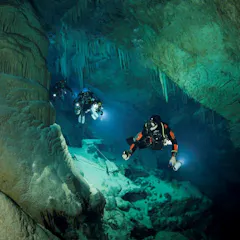
Scientific fieldwork that happens underground and underwater in spectacular but dangerous caves opens a window on a largely unknown world.
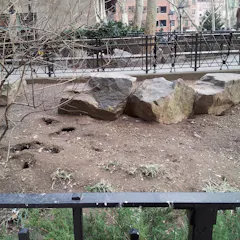
Rats foul our food, spread disease and damage property, but we know very little about them. A biologist explains how he tracks wild rats in New York City, and what he’s learned about them so far.

Cultural resource management archaeologists don’t choose where they dig. Instead they identify, evaluate and preserve cultural heritage sites in locations slated for development.
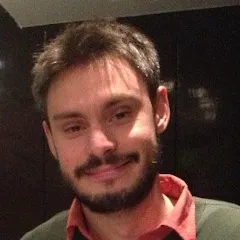
Giulio Regeni, a PhD candidate at the University of Cambridge, was carrying out research on the formation of independent trade unions in post-Mubarak Egypt.
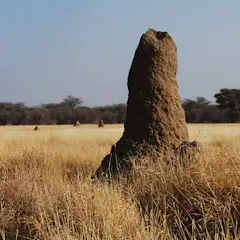
They’re the soil-builders that allow Africa’s arid savannas to be lush grasslands. What do they do inside their huge mounds – and how does a collective mind allow them to do it?
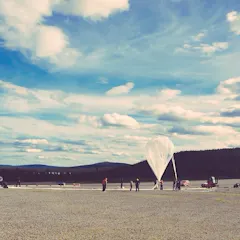
Geomagnetic storms can interact with particles near Earth, causing issues for satellites and other tech. Researchers send balloons 20 miles into the sky to figure out just what’s going on up there.
Top contributors
-

Researcher in Physics and Astronomy, Dartmouth College
-
Visiting Research Scholar, Fordham University
-
Professor of Marine Biology, Texas A&M University
-
Director Emerita, Public Archaeology Facility and Senior Research Associate, Anthropology, Binghamton University, State University of New York
-
Postdoctoral Scholar in Psychology, University of Chicago
-
Associate Professor in Strategy and International Business, University of Birmingham
-
Assistant Professor of Biology, Carthage College
-
Professor of Environmental and Forest Biology, State University of New York College of Environmental Science and Forestry
-
Assistant Professor of Mechanical and Aerospace Engineering, George Washington University
-
Physicien, Professeur des Universités, Université Paris-Saclay
-
Enseignant-chercheur, Université de Bordeaux
-
Associate professor, University of Wollongong
-
Enseignant-chercheur en physique, Université Paris-Saclay
-
Distinguished Professor of Geology, University of Florida
-
Assistant Professor of Environment, Geography & Marine Sciences, Southern Connecticut State University