
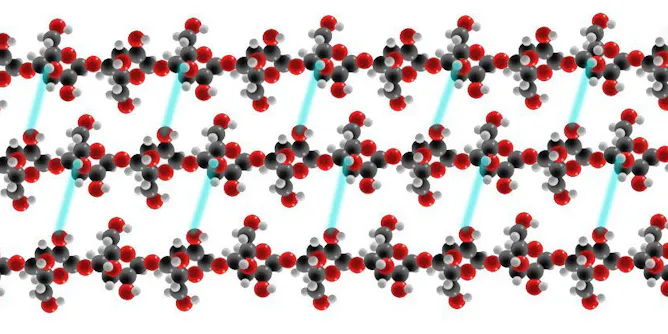
Bio-prospecting is the search for useful materials from natural sources. A biologist explains what we can learn from bacteria about breaking down plant material, and how we can use that knowledge.
Articles on Scientists at work
Displaying 61 - 80 of 94 articles

The new sub allows scientists to access some of the most remote and hazardous environments in the ocean.

How is rapid warming in the Arctic affecting animals that are adapted to cold? A wildlife biologist is using many techniques to find out, including stalking muskoxen in a polar bear costume.
A PhD candidate retells the moving stories of Syrian women, as they try to find a place in their new neighbourhoods.
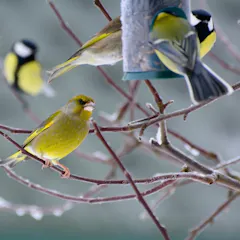
Our citizen science project was designed to record bird sounds but produced some surprisingly funny impressions.

A glaciologist develops a lightweight method for probing the depths of Greenland’s ice sheet to answer a crucial question: How fast is it melting?
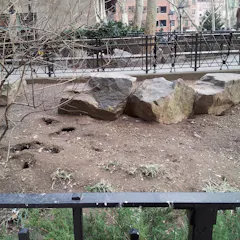
Rats foul our food, spread disease and damage property, but we know very little about them. A biologist explains how he tracks wild rats in New York City, and what he’s learned about them so far.

Cultural resource management archaeologists don’t choose where they dig. Instead they identify, evaluate and preserve cultural heritage sites in locations slated for development.

Glamorous award ceremonies and popular TV shows can only get you so far – finding the time to do the science is still the most important thing.
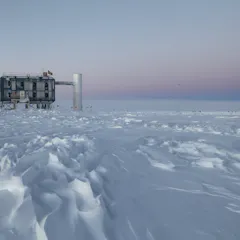
A cubic kilometer of clear, stable ice could help physicists answer big questions about cosmic rays and neutrinos. Hardy scientists collect data via a unique telescope at the frozen bottom of the world.
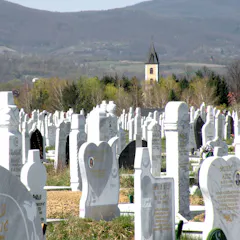
Louis Monroy Santander has been looking at how locals in the town of Sanski Most are moving on after a brutal conflict.
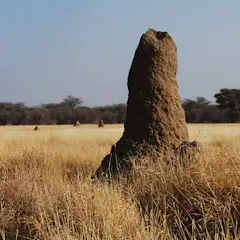
They’re the soil-builders that allow Africa’s arid savannas to be lush grasslands. What do they do inside their huge mounds – and how does a collective mind allow them to do it?
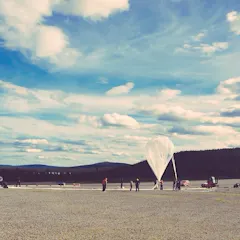
Geomagnetic storms can interact with particles near Earth, causing issues for satellites and other tech. Researchers send balloons 20 miles into the sky to figure out just what’s going on up there.
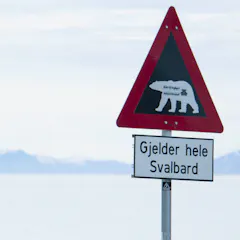
Stay alert, make lots of noise, and if all else fails, carry a big gun.
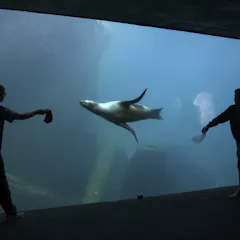
The way sea lions swim is unique among fish and marine mammals. Their technique provides a biomechanical model to design agile underwater vehicles… but first we have to figure out how they do it.

To create accurate models that predict how ice sheets and oceans will react to changing climate, modelers need precise current data. One researcher heads to the ends of the earth to collect just that.
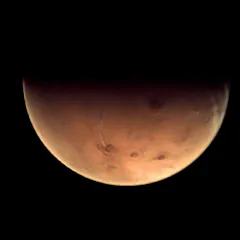
For centuries, scientists have wondered how water channels on Mars formed. Our model suggests that they were caused by water erupting from subsurface lakes on the ancient planet.
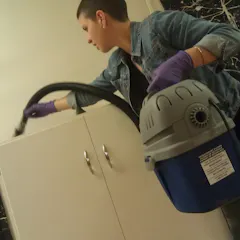
We spend much of our time inside buildings. What chemicals and microbes are in here with us? And how do they affect each other? One scientist collects dust to find out.
Astronomers aren’t mere stargazers these days. One researcher explains the ins and outs of how they collect data from far-off galaxies and what they do with it back at the office.
As scientific researchers, we are often surprised by some of the assumptions made about us by those outside our profession. So we put together a list of common myths we and our colleagues have heard anecdotally…
Top contributors
-

Staff Scientist, Smithsonian Tropical Research Institute, Smithsonian Institution
-
Professor of Planetary and Space Sciences, The Open University
-
Senior Research Associate, Cardiff University
-
Research Associate, Manchester Metropolitan University
-
Spacecraft Engineer, University of Bristol
-
Former Honorary Research Associate for the Endangered Archaeology in the Middle East and North Africa (EAMENA) Project, University of Oxford
-
Researcher, National Renewable Energy Laboratory
-
Professor of Epidemiology and Core Faculty of Disaster Research Center, University of Delaware
-
Head of Specialised Assay Service, University of Edinburgh
-
Professor of Environmental and Forest Biology, State University of New York College of Environmental Science and Forestry
-
Professor of Geosciences, University of Montana
-
Professor of Mathematics at Center for Atmosphere Ocean Science, New York University
-
Assistant Professor of Biology, Carthage College
-
Professor of Wildlife Conservation, Colorado State University
-
Himalayan geologist, Lancaster University