
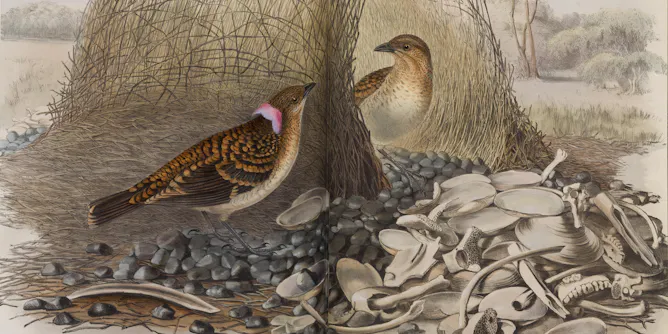
An expert taxidermist, she was the first professional female employee at any Australian museum – and was paid as much as the men.
Articles on Science history
Displaying all articles

Punch’s attachment to his plushie isn’t just the subject of a heart-wrenching video. It harks back to the story of a very famous set of 1950s psychology experiments.
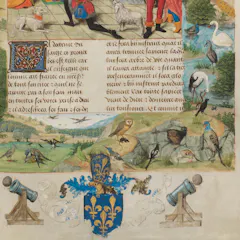
Modern researchers know about the cuckoo’s cross-species brood parasitism – but one Roman emperor observed this more than 700 years ago.

Is a thing still ‘natural’ if someone has subjected it to filtration?
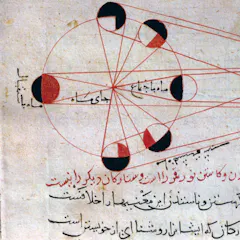
The West’s Eurocentric version of scientific history omits some of the most important events that shaped modern thinking.

We can celebrate the vision and ambition of the Dartmouth Conference. But we must also learn from its mistakes.
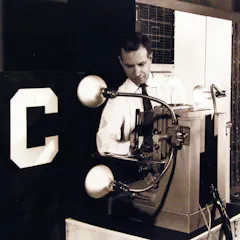
Enthusiasm for the capabilities of artificial intelligence – and claims for the approach of humanlike prowess –has followed a boom-and-bust cycle since the middle of the 20th century.

Two decades ago, the nanotechnology revolution avoided stumbling by bringing a wide range of people to the table to chart its development. The window is closing fast on AI following suit.
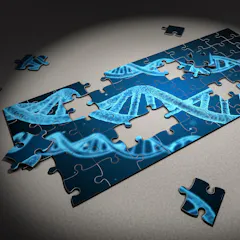
On DNA Day, Canada should be inspired by the lifesaving discoveries of its researchers. However, lack of funding threatens Canadian researchers’ ability to meet the challenges of the future.
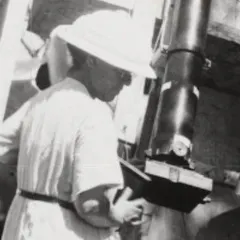
History might give you the impression astronomical discoveries were only done by men. But women were participating in scientific expeditions of eclipses too, even though it wasn’t easy.

The House of Wisdom was populated by a number of multitalented thinkers – at a time marked by fervent collaboration and intellectual prosperity in the Arabic-speaking world.
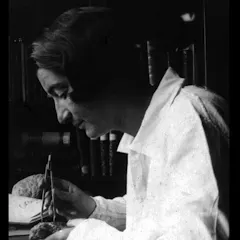
Tilly Edinger was the first person to apply a deep-time perspective into different species’ brain evolution. She did this by focusing on the hollow space within a dead animal’s skull.
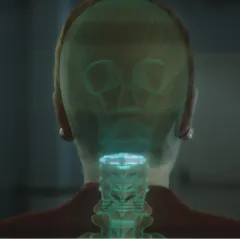
Leaving our earthly bodies and living forever as a machine isn’t just a thing of modern science fiction. These transhumanist ideas date back to the 18th century.
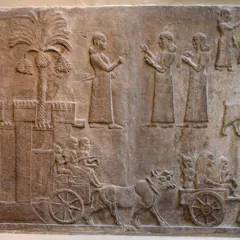
All cultures have communicated their knowledge in diverse and marvellous ways throughout time. Failing to see the significance of this is racist and lazy.
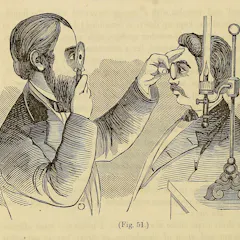
Screen time wasn’t a issue in the 19th century but that didn’t stop concerns over how new developments might damage eyesight
The 19th-century British anatomist Richard Owen downplayed the role of colonial contributors and largely ignored the importance of Aboriginal testimony and knowledge in describing the marsupial lion.
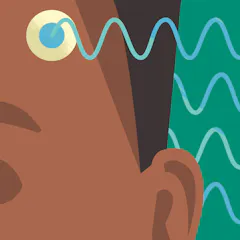
Brain-zapping, the curious case of the n-rays and other stories of evidence
The Conversation, CC BY70.4 MB (download)
You've had an x-ray before but have you had an n-ray? Of course not, because they're not real. But people used to think they were. Today, on Trust Me, I'm an Expert, we're bringing you stories on the theme of evidence.
Top contributors
-

Honorary Research Fellow, Centre for the Study of the Inland, La Trobe University
-
Associate professor, Australian National University
-
Senior Lecturer in Science Communication, Australian National University
-
Professor, UNSW
-
Professor of Psychiatry, UNSW & Black Dog Institute, UNSW
-
Research Associate in the College of Science and Engineering, Flinders University
-
PhD Researcher, Swansea University
-
Senior Lecturer, Australian National Centre for the Public Awareness of Science, Australian National University
-
Lecturer, Adelaide University
-
Professor, School of Biosciences & School of Historical and Philosophical Studies, The University of Melbourne
-
Senior Lecturer in Technology and Society, Responsible Innovation Lab, Australian National University
-
San Diego State University
-
Lecturer, The University of Queensland
-
Chief Research Information Officer and Associate Vice President for Research Technology, Arizona State University
-
Distinguished Professor of Near Eastern Studies, University of California, Berkeley