
The 2,500 questions that make up the exam are specifically designed to probe the outer limits of what today’s AI systems cannot do.
Articles on Artificial general intelligence
Displaying all articles

Vince Gilligan, who also made Breaking Bad, says he didn’t intend to make Plur1bus ahout AI – yet the links are undeniable.
Too many people still believe AI safety is a future problem that can be fixed with simple laws – but the truth is very different.
OpenAI’s o3 model scored at human level on a benchmark test for artificial general intelligence – far higher than any results before.
AI systems more intelligent than humans in some ways already exist – but general-purpose superhuman intelligence is probably still a long way off.

We can celebrate the vision and ambition of the Dartmouth Conference. But we must also learn from its mistakes.

Enthusiasm for the capabilities of artificial intelligence – and claims for the approach of humanlike prowess –has followed a boom-and-bust cycle since the middle of the 20th century.
I study artificial general intelligence, and I believe the ongoing fearmongering is at least partially attributable to large AI developers’ financial interests.
Some some said AI would not just reach human-level intelligence, but would probably surpass it.
Artificial general intelligence has suddenly become a pressing topic – but there’s more than one way to look at this issue.
Experts largely agree that AI with human-level capabilities is not that far off. How will this change out relationship with machines?
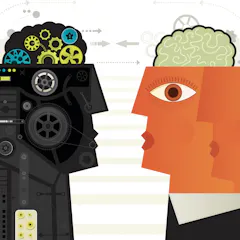
To build a true artificial mind, first map out how thinking works. Enter the Common Model of Cognition.
Imagine an advanced artificial intelligence took over from Santa. What could go wrong?
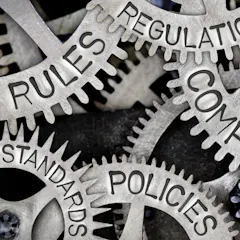
There are plenty of guidelines, policy documents and reports on how best we should use AI and avoid unethical practices. So how about we agree on one set of rules?
Artificial intelligence has the potential to transform the way we live, work, communicate and travel. So long as it’s designed that way.
We’re on the way to making machines that appear and act human, and can think for themselves. So how will they react to our behaviour towards them, especially the bad behaviour?
We’re on the road to developing artificial intelligence systems that will be able to do tasks beyond those they were designed for. But will we be able to control them?

The future and the past, money, technology and politics documented and imagined in fact and fiction, in an economist’s recommended reading.
Even the smartest AIs weren’t supposed to beat top humans at Go for another decade or more.
In the late 1700s, French scientist Antoine Lavoisier proved that the mechanism behind burning is oxidation. Lavoisier’s discovery killed off an eternity of dogma involving a non-existent substance called…
Top contributors
-

Professor of Human Factors, University of the Sunshine Coast
-
Adjunct Research Fellow, University of the Sunshine Coast
-
PhD Student, School of Computing, Australian National University
-
Director of Sydney Executive Plus, Business School, University of Sydney
-
Associate professor, Queensland University of Technology
-
Senior Principal Scientist, Strategy and Foresight, CSIRO
-
Research Fellow in Artificial Intelligence and Digital Games, University of York
-
Adjunct Associate Professor, Centre for Human Factors and Sociotechnical Systems, University of the Sunshine Coast
-
Lecturer in AI and Data Science, Swinburne University of Technology
-
Professor of Psychology, Civil and Environmental Engineering, and Industrial Engineering and Management Systems, University of Central Florida
-
Professor of Ethics, Te Herenga Waka — Victoria University of Wellington
-
Research Psychologist, Carnegie Mellon University
-
Lecturer in Business Analytics, University of Sydney
-
John L. Tishman Professor of Engineering, University of Michigan
-
Professor Emeritus of Computer Science, University of Southern California