
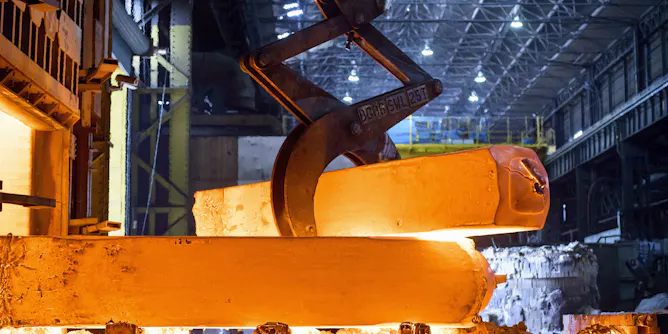
Materials science might seem very technical, but as a scientific discipline, it has led to many shifts in society over the past few centuries.
Articles on Science and society
Displaying all articles

Biden’s legacy includes elevating science’s influence in federal decision-making and considering the social and ethical effects of research.
Use-inspired research goes beyond translational research to build lasting connections between researchers and communities.

Loss of privacy is just the beginning. Workers are worried about biased AI and the need to perform the ‘right’ expressions and body language for the algorithms.
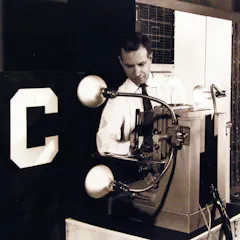
Enthusiasm for the capabilities of artificial intelligence – and claims for the approach of humanlike prowess –has followed a boom-and-bust cycle since the middle of the 20th century.
Pressure to ‘publish or perish’ and get results out as quickly as possible has led to weak study designs and shortened peer-review processes.

Tech companies are offering AI companions as a convenient cure for the loneliness epidemic, but there have been other forms of faux relationships, and they tend to have more to do with ego than heart.

Early human development is a complex, multistep process that’s even more complicated to study in the lab. Models made from stem cells avoid some of the trouble with using real human embryos.

Humanoid robots tend to be white or resemble white people. Here’s why this is a problem and what social scientists, designers and engineers can do about it.

Political mobilization among scientists has been growing in recent years. Two social scientists break down what this looks like and how it represents a culture shift among the scientific community.

The House of Wisdom was populated by a number of multitalented thinkers – at a time marked by fervent collaboration and intellectual prosperity in the Arabic-speaking world.
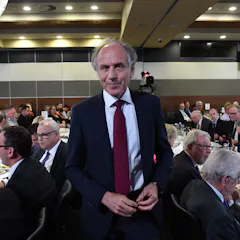
Outgoing Chief Scientist Alan Finkel leaves a legacy of closer ties between policy makers and scientific experts.
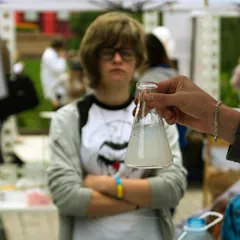
In Australia, the next government will need to meet the challenge of refreshing the social licence between science, government and the many and diverse communities that make up our nation.

There’s no shortage of problems facing humanity. Science’s role in how to tackle them has long been debated – including memorably by two of the 20th century’s greatest literary figures.
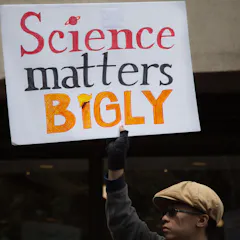
Scientists typically stay out of public policy debates, but an academic makes the case that they need to push back against politicians who distort research.
Is there an art - or a science - to figuring out what stories will soar from the lab to the front page?
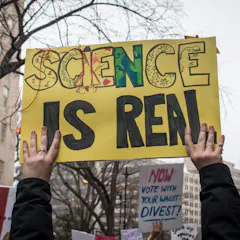
In the wake of the Flint water crisis and with a new notably anti-science president, U.S. scientists are reevaluating how to navigate the tension between speaking out and a fear of losing research funding.
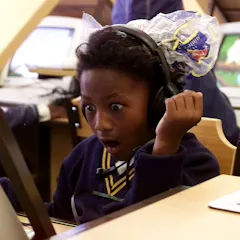
For science to have an impact there must be a genuine will to implement its advances. This requires promoting a greater understanding of science in broader society.
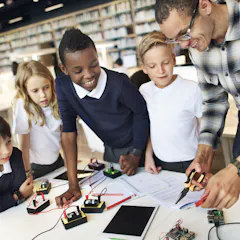
Science that students learn in context - rather than science as isolated knowledge items - can deliver both scientific literacy and positive learner interest.
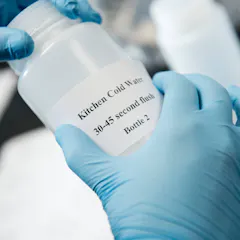
Virginia Tech University engineering students blew the whistle on Flint, Michigan’s toxic drinking water. Hailed as heroes, they’ve also learned that it isn’t easy to do science for the public good.
Top contributors
-

Visiting Lecturer, University of the Witwatersrand
-
Clinical Senior Research Associate, MRC Epidemiology Unit, University of Cambridge
-
Research Scientist, Virginia Tech
-
Distinguished Journalist In Residence, Arthur Carter Journalism Institute, Retraction Watch
-
Chancellor's Professor of Medicine, Liberal Arts, and Philanthropy, Indiana University
-
Adjunct Faculty for Advanced Academic Programs, Johns Hopkins University
-
Holcim (US) Professor of Sustainable Enterprise, Ross School of Business, School for Environment & Sustainability, University of Michigan
-
Ph.D. Student in Civil and Environmental Engineering, Virginia Tech
-
Science Communication Researcher, Stellenbosch University
-
Honorary Professor, University of the Witwatersrand
-
Ph.D. Student in Civil and Environmental Engineering, Virginia Tech
-
Professor of Biological Sciences, Boise State University
-
Professor of Sociology, University of Pittsburgh
-
Associate Professor in Tropical Plant and Soil Sciences, University of Hawaii
-
Philosopher of Mind, Neuroscience, Cognitive Science, and AI, Washington University in St. Louis