

The recent arrest of a Chinese-born scientist at MIT raises questions about the value of international science collaboration and its impact on the American innovation system.
Articles on Science funding
Displaying 41 - 60 of 163 articles
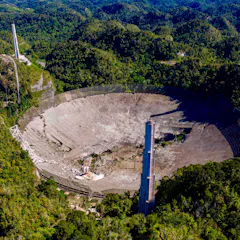
The collapse of the Arecibo Observatory in Puerto Rico was a result of financial neglect – and was a long time coming.

Hopefully, Joe Biden’s presidency will mark the end of using cherry-picked science to suit a political agenda. As Trump’s successor, however, he’s placed in a difficult position.

It’s one of the largest funding cuts to any university course, and will leave Australia ill-equipped to deal with the environmental challenges of the future.

A symposium celebrated a roadmap for the American scientific enterprise laid out 75 years ago. What should be included in a US research plan that would last through the rest of this century?

In the past, governments have worked much more closely with scientists to respond to emergencies.
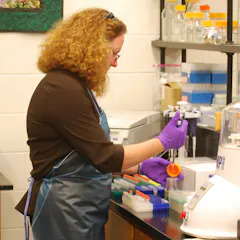
On average, important new lab techniques like CRISPR take 23 years to develop – but there is a public expectation that scientific breakthroughs occur quickly and efficiently.
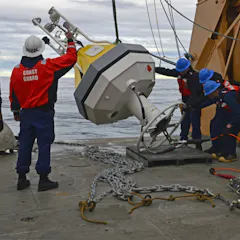
Lots of academic scientists collaborate with federal employees and resources on their research projects. And at the moment they can’t. A climatologist explains the bind they’re in.
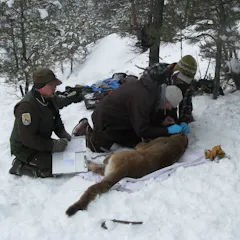
Setting aside personal hardships for workers who don’t see a paycheck during the shutdown, the research enterprise itself loses out, too. And unlike back pay, this lost time can never be made up.
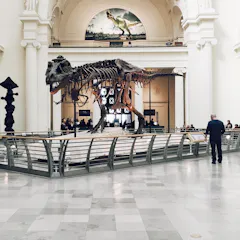
The scientific community always wants more cash to fund research. A new study examines whether more concrete knowledge of science or more general interest in it is likelier to loosen the pursestrings.

Money always seems tight for university scientists. A sociologist conducted hundreds of interviews to see how they think about funding sources and profit motives for basic and applied research.

President Trump’s first year was a rough one for scientists and others who value truth and expertise. Many rallied to the cause, while others used research to make the case for the value of science.
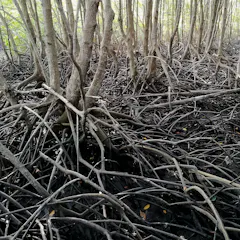
A new study connects the dots between published science and patented innovations, mapping just how society benefits from basic scientific research.

Research dollars don’t stay locked up in academia and government labs. R&D collaborations with the private sector are common – and grow the innovation economy.

Science is supremely beautiful, but can also be brutal and unforgiving if you stray from the well-worn pathways.

The Conversation’s political experts react to the 2017-18 budget’s key measures in the areas of welfare, foreign aid, defence spending and more.

In its broadest sense, the March for Science aims to cause US legislators to reflect a little and understand what they risk if they choose to erode their global scientific leadership.

Some Australians feel they are missing out on the benefits of scientific and technological progress.
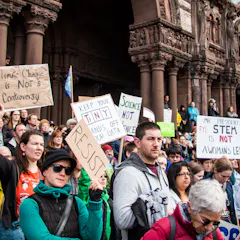
The research community tends to assume advocacy doesn’t mix with objectivity. One study suggests there’s room for scientists to make real-world recommendations without compromising their trusted status.
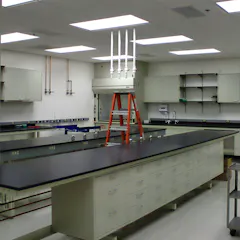
What are research dollars actually spent on? Rather than looking at artifacts like publications and patents, a new initiative directly tracks the people and businesses that receive research funding.
Top contributors
-

Secretary for Science Policy at the Australian Academy of Science, and Senior Deputy Vice-Chancellor, UNSW
-
Chair, The Conversation Media Group
-
Laureate Professor of Mathematics, University of Newcastle
-
Senior Lecturer, Australian National Centre for the Public Awareness of Science, Australian National University
-
Adjunct Professor, University of Sydney
-
Associate Professor (hon) at the Centre for Public Awareness of Science, Australian National University
-
Distinguished Professor, Australian National University
-
University Distinguished Professor of Astronomy, University of Arizona
-
Senior Research Associate in Health Services Research, UCL
-
Emeritus professor, Australian National University
-
Professor and Deputy Vice-Chancellor (Research), University of Sydney
-
Lecturer in Science and Technology Policy, University of Manchester
-
Professor of Experimental Physics Emerita, University of Cambridge
-
Research Scientist, The University of Queensland
-
Professor of Innovation, Science and Technology Policy, The University of Melbourne