
We’ve had ten federal ministers with titular responsibility for science since 2007 – five under the coalition and five under Labor. That variation and a lack of consistent vision has an impact.
Articles on NCRIS
Displaying 1 - 20 of 22 articles
“Soft” infrastructure includes the services, policies or practices that keep academic research working and open. Without a funded, coordinated national approach the private sector may take control.

Many Budget 2018 measures appear to have origins in proposals advanced by the science community.

The new minister for science has some challenges ahead, but there is an opportunity to build on the foundations laid by his predcessors.
How does Australia fare in science and research funding? Where have recent cuts been made? This infographic shows the state of science funding in Australia.
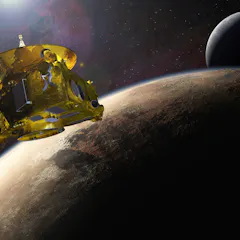
2015 was a year where we expanded our view of the universe, embraced new technologies and got a hint of the profound changes to come.
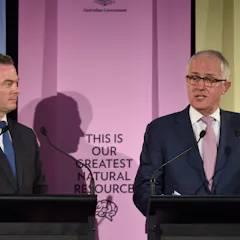
Prime Minister Malcolm Turnbull today announced the National Innovation and Science Agenda (NISA). Here’s what it means for science, commercialisation and industry in Australia.

Interdisciplinary research is a lofty ideal, but the realities of how science is conducted mean that silos should not be so quickly dismissed.

The government has proposed changes to how Australia’s publicly funded research agencies are supported and how their performance is managed to boost the commercialisation of research.
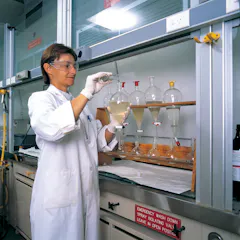
Australian scientists are listened to by government and business, but must do more to ensure their advice and work contributes to a stronger future for Australia.

The federal government’s 2015 budget has done little to restore confidence in the government’s support for science in Australia.
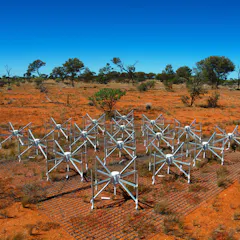
The National Collaborative Research Infrastructure Strategy and Future Fellowships schemes have won a reprieve in this year’s budget.

One way to protect researchers from funding cuts in May’s budget is to make sure they explain the importance of their work to a wider audience.

The Future Fellowships scheme is a great success. Scrapping it would hurt Australia’s future as a smart nation.
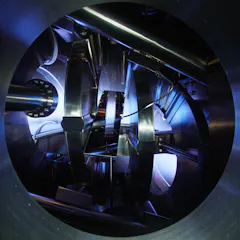
Australia needs to take a longer term view of research infrastructure funding in order to prevent it from becoming politicised.
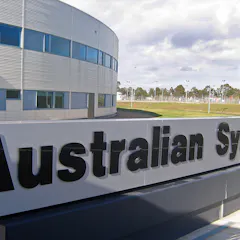
The National Collaborative Research Infrastructure Strategy funds 27 individual facilities that provide a wide range of services to Australian scientists.

Education Minister Christopher Pyne has backed down on his threat to defund NCRIS if the Senate failed to pass the government’s university deregulation bill.
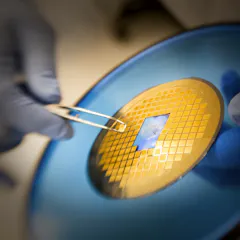
The government believes innovation will be crucial to our future productivity, yet it is threatening cuts to research infrastructure that is instrumental to promoting innovation and new technologies.

The NCRIS-funded Terrestrial Ecosystem Research Network (TERN) benefits pastoralists, business, tourism and Indigenous communities in the Northern Territory. Cutting it will hurt them all.

Cutting vital research infrastructure funding because the higher education reforms are stuck in the Senate could end up costing the country dearly.
Top contributors
-

Secretary for Science Policy at the Australian Academy of Science, and Senior Deputy Vice-Chancellor, UNSW
-
Chair, The Conversation Media Group
-
Media Officer
-
Vice-Chancellor, University of Newcastle
-
Director, Science Policy and Projects, Australian Academy of Science
-
President of the Australian Academy of Science, Laureate Professor Emeritus, The University of Melbourne
-
Adjunct Professor, University of Sydney
-
Director, Environment Institute, Adelaide University
-
Research Scientist, The University of Queensland
-
Distinguished Professor, Australian National University
-
Professor of Environmental Science, Charles Darwin University
-
Winthrop Professor, Entrepreneurship, Innovation, Marketing and Strategy, The University of Western Australia
-
Managing Director, Triple Helix Consulting; Honorary Professor, ANU Fenner School for the Environment and Society, Australian National University
-
Professor of Mathematics, University of Sydney
-
Editor in Chief, Medical Journal of Australia, Queensland University of Technology