

Science and innovation in the UK may seem out of the woods following the spending review. But the EU referendum and changes to how funding is organised are potential threats.
Articles on Science funding
Displaying 81 - 100 of 163 articles

A review by Paul Nurse, president of the Royal Society, has said the UK’s research councils should continue to be exist as part of a new quango.

Women are just as successful as men at winning grants, but there are far fewer of them applying. The ARC’s new Gender Equality Action Plan aims to redress that.

The latest round of research grant funding has been announced, and many worthy researchers have not made the cut. Why?

A new policy on research outputs and funding will be introduced in South Africa in 2016. But it leaves too much unchanged from the old policy.

A Turnbull government has an opportunity to redirect Australia towards being a science and innovation nation.

Some activists use open records requests to bully researchers – distracting them from their actual work and silencing others who don’t want to draw attention.
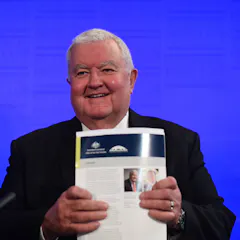
The nine science and research priorities will help focus and coordinate our efforts, and aid government departments in supporting the future of Australian science.

A shift in our research funding model to fund individual people rather than whole projects could help support the best science.

If we want to boost innovation in this country, we should emulate a scheme that has proven highly successful in the United States.

Interdisciplinary research is a lofty ideal, but the realities of how science is conducted mean that silos should not be so quickly dismissed.
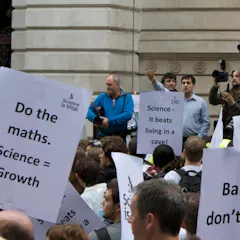
Science funding is changing – let’s make sure it’s for the better.

Academic metrics are only problematic if they’re poorly implemented. If they’re used carefully, they can be a powerful tool to allow talent to rise to the top.

Metrics are changing the way research is conducted and funded, and for the worse. They need to be radically revised to measure genuine scientific output.

Another retracted paper in the social sciences underscores the need for greater vigilance and reflection upon the causes of scientific fraud.

Australian scientists are listened to by government and business, but must do more to ensure their advice and work contributes to a stronger future for Australia.

A new policy by publisher Elsevier is threatening to wind back the gains made by the open access movement.

The federal government’s 2015 budget has done little to restore confidence in the government’s support for science in Australia.

Science communication and outreach can be motivated in ways other than reforming research funding bodies.
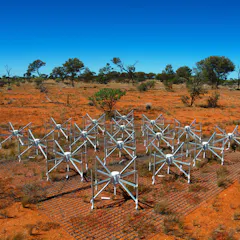
The National Collaborative Research Infrastructure Strategy and Future Fellowships schemes have won a reprieve in this year’s budget.
Top contributors
-

Secretary for Science Policy at the Australian Academy of Science, and Senior Deputy Vice-Chancellor, UNSW
-
Chair, The Conversation Media Group
-
Laureate Professor of Mathematics, University of Newcastle
-
Senior Lecturer, Australian National Centre for the Public Awareness of Science, Australian National University
-
Adjunct Professor, University of Sydney
-
Associate Professor (hon) at the Centre for Public Awareness of Science, Australian National University
-
Distinguished Professor, Australian National University
-
University Distinguished Professor of Astronomy, University of Arizona
-
Senior Research Associate in Health Services Research, UCL
-
Emeritus professor, Australian National University
-
Professor and Deputy Vice-Chancellor (Research), University of Sydney
-
Lecturer in Science and Technology Policy, University of Manchester
-
Professor of Experimental Physics Emerita, University of Cambridge
-
Research Scientist, The University of Queensland
-
Professor of Innovation, Science and Technology Policy, The University of Melbourne