

Jobs are not created or lost because of a single technology, but because of the business models designed to leverage the power of it.
Articles on Science and innovation for development
Displaying 201 - 220 of 251 articles
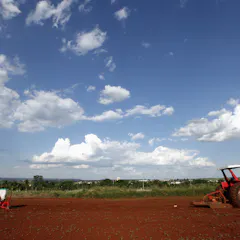
To stimulate innovation in the agriculture sector education and training is in dire need of substantial reform for greater integration, cooperation and accountability.
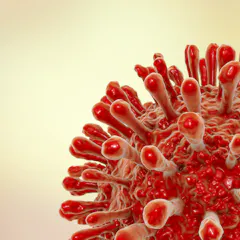
A South African child, who has been in HIV remission for nearly nine years, could help researchers understand how to make remission possible for millions of other HIV positive people.
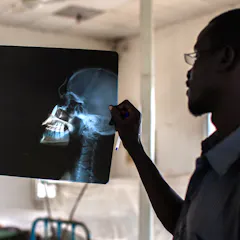
African countries need to start producing and developing their own medical devices. Suitably skilled biomedical engineers are needed for this sort of innovation to take root.

Linking policymakers with research relevant for implementing the SDGs is difficult. But building strong relationships between them and researchers is a good place to start.
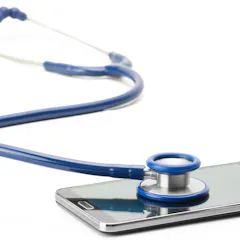
In most developing countries hearing services are not available at primary healthcare clinics and those who need it the most are not screened for hearing loss.
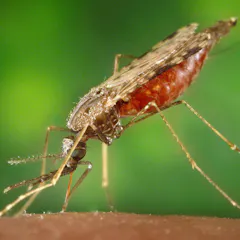
The history of malaria prevalence in Africa is a long term cycle of highs and lows. However, there’s been little change in the high transmission belt that covers parts of West and Central Africa.

The affective domain - motivation, interest and values and their inter-relationships - forms an integral component in facilitating learners’ construction of physics knowledge.

For decades, African universities have placed greater focus on what they teach, rather than how they teach it. But the job market now demands graduates that have been taught to think, not regurgitate

Astronomy on the continent has been given a much needed boost with Ghana’s converted radio telescope between it and South Africa, to conduct scientific observations.
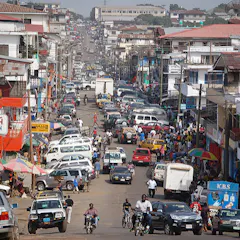
The 17 Sustainable Development Goals have distinct functions but are interrelated and requires an integrated approach from both scientists and policymakers.
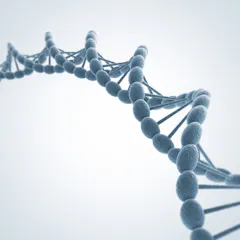
Massive online DNA databases can be used as a resource to discover viruses – even if the data had not been explicitly collected for that purpose.
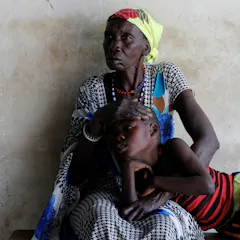
Stronger malaria prevention like a vaccine is urgently needed for effective response in endemic regions.
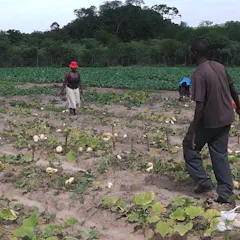
Information to weather changes is often unavailable to Africa’s farmers and even if it does exist, the quality is poor or inaccessible to those who need it most.
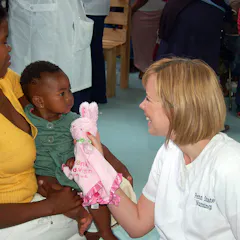
South Africa has become the first country on the continent to purchase a national licence to the Cochrane library – giving everyone access to evidence-based information about health care.
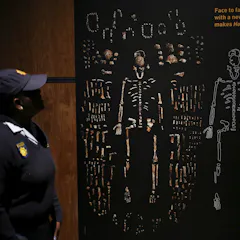
South Africans will not see the value that science and technology adds to their daily lives until there is more interest in areas of science.
Africa’s overall contribution to research might be small, but smart people are undertaking smart and important work on and about the continent.

Evidence suggests a strong relationship between sustainability and the global competitiveness of a country. Nigerian businesses need to embrace it in order to thrive.
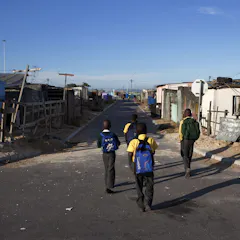
Policies must seek to improve the manner in which the language of instruction is taught to learners who don’t speak that language at home.

How can African research universities be more responsive to African countries’ needs? And how can these universities work together to leverage funding for research informed by African realities?
Top contributors
-

Senior Lecturer International Law, Bioethics, Emerging Tech, University of KwaZulu-Natal
-
Fellow, Nigerian Academy of Science
-
Professor of medicine and deputy director of the Desmond Tutu HIV Centre at the Institute of Infectious Disease and Molecular Medicine, University of Cape Town
-
Professor of Organic Chemistry, Neville Isdell Chair in African-centric Drug Discovery & Development, and Director of the Holistic Drug Discovery and Development (H3D) Centre, University of Cape Town
-
Dean Faculty of Health Sciences and Professor of Vaccinology at University of the Witwatersrand; and Director of the SAMRC Vaccines and Infectious Diseases Analytics Research Unit, University of the Witwatersrand
-
Professor of the Practice of International Development, Harvard Kennedy School
-
Post Doctoral Fellow, University of KwaZulu-Natal
-
Professor in Biochemistry, Genetics and Microbiology, and Professor at Future Africa, University of Pretoria, University of Pretoria
-
Principal Medical Scientist and Head of Laboratory for Antimalarial Resistance Monitoring and Malaria Operational Research, National Institute for Communicable Diseases
-
Head of the Centre of Excellence for Biomedical TB Research, University of the Witwatersrand
-
Chair of Policy Innovation, School for Data Science and Computational Thinking, Stellenbosch University
-
Head of the Division of Pulmonology, University of Cape Town
-
Associate Professor, Cape Peninsula University of Technology
-
Professor and Chair of Genomic Diversity, Queen Mary University of London
-
Tutorial Fellow, School of Medicine, University of Nairobi, University of Nairobi