
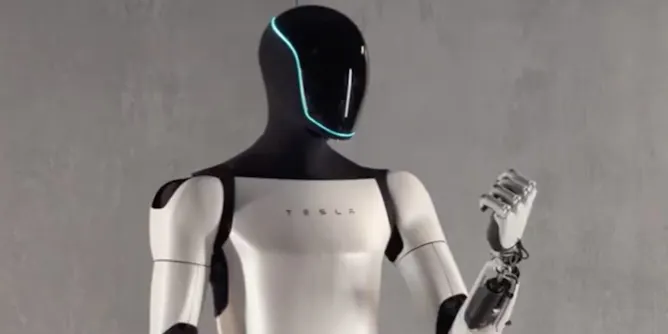
The leading designers are all focused on a ‘brain-first’ approach that insists on controlling everything centrally rather than delegating it around their bodies.
Articles on Robotics
Displaying 21 - 40 of 260 articles

The use of armed drones is not new, but they are gaining importance in current conflicts as combat units. Their automation is likely to accentuate this phenomenon.

Robots in challenging places like disaster zones need energy-efficient systems to find their way.
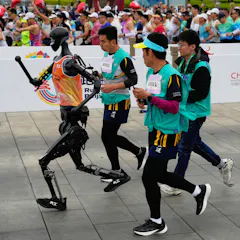
Even the best batteries fall far short of animal metabolism for energy storage. Fueling robots with ‘food’ could narrow the gap.

Science has done many things that seem miraculous. Why not transfer your consciousness to a machine?
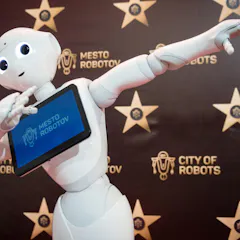
The future of university robotics research is on the line with the potential collapse of the maker of the popular Pepper and Nao machines.

Do a manu jump and you’ll likely make the biggest splash at the pool party.
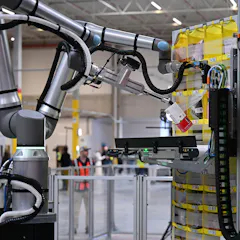
The Vulcan robot will reduce the physical strain of repetitive tasks for human workers.
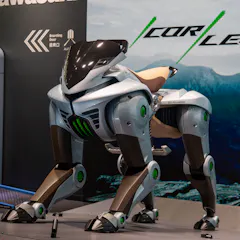
Kawasaki has unveiled a concept robotic horse, but can it actually be achieved?
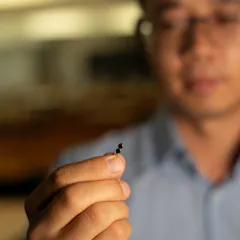
Robotic tools are too big for ‘keyhole’ brain surgery – but a new miniature technology using magnets could change all that.

This unsung research area involves 3D-printing smart materials that can change shape when they come into contact with stimuli like heat or light.
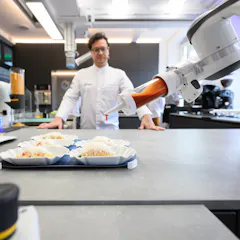
Can automated restaurants still be community and cultural spaces, or will they become feeding stations for humans? These and other questions loom, as AI and robot cooks reach the market.
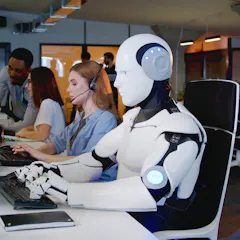
The technology behind ChatGPT could help put humanoid robots in homes and workplaces.

Disabled people are experts in using – and designing – assistive technologies. They have lessons to offer everyone about keeping control when help is offered.

New research has found that the two ‘fingers’ on the tip of an elephant’s trunk exert different forces. The finding will be used to improve the abilities of bio-inspired robots.

Stereotypes can creep in if ‘culturally sensitive’ robots are not designed with great care.
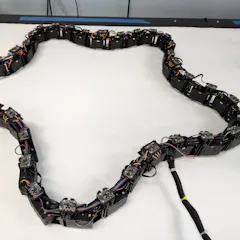
‘Loopy’ is a multicellular robot inspired by biology and designed to react to its environment without instructions on how to do so.

Robots often have a hard time navigating through debris, but robots designed based on worms and snakes could move around obstacles faster, thanks to an idea called mechanical intelligence.

Cotton is one of the world’s largest crops and is harvested with large, heavy machines. Robotic harvesting could yield higher-quality cotton with less damage to plants and soil.

Humanoid robots tend to be white or resemble white people. Here’s why this is a problem and what social scientists, designers and engineers can do about it.
Top contributors
-

Professor in Robotics, Queensland University of Technology
-
Professor of AI, Research Group Leader, UNSW
-
PhD in machine ethics, University of Canterbury
-
Professor, Director of the Centre for Robotics, Queensland University of Technology
-
The University of Melbourne
-
Professor Emeritus, Swinburne University of Technology
-
Reader in Autonomous Intelligent Robotics, University of Birmingham
-
Senior Lecturer, Department of Engineering, Nottingham Trent University
-
Senior University Teacher in Robotics, University of Sheffield
-
Researcher in Artificial Intelligence Regulation, Australian National University
-
Honorary Associate Professor, UNSW
-
Professor, School of Systems and Computing, UNSW
-
Lecturer in Robotic Systems, University of Manchester
-
Professor of Management, Co-Director of the MIT Sloan Institute for Work and Employment Research, MIT Sloan School of Management
-
Professor of the Practice of International Development, Harvard Kennedy School