

Scientists studied active matter systems by racing worms through tubes – to unexpected results.
Articles on Soft robotics
Displaying all articles

The 1986 science fiction thriller features everything from robotic exoskeletons to terraforming.
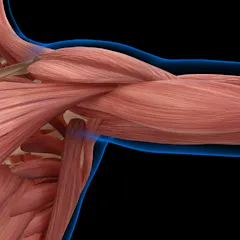
Coordination appears to emerge spontaneously from muscle fibres.
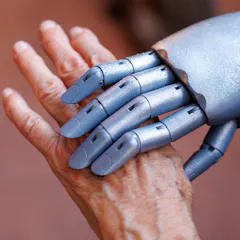
To learn in the way humans do, robots need bodies that feel.
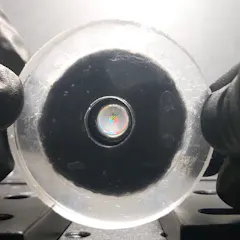
This lens modeled on biological eyes could make it easier to give soft machines and bio-safe tools the ability to see.

Researchers used an old theory on vibrating plane wings to study how fish swim so well. They were able to double the swimming efficiency of their robotic fish over a range of speeds.
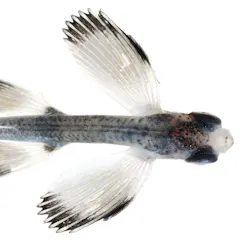
Fish fins are extremely flexible yet also strong. A special segmented fin design is the key to this useful combination of properties and could inspire new morphing materials.
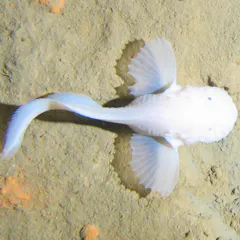
The device ventured nearly 11km below the surface to the Mariana Trench.
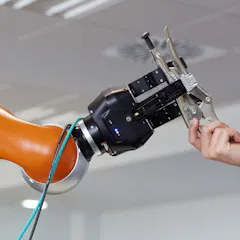
Engineers predict a time when people and robots physically interact all day long. For that to happen safely will require new soft materials that can do things like sense touch and change shape.

Soft robots printed in the home? Not as far off as you might think.
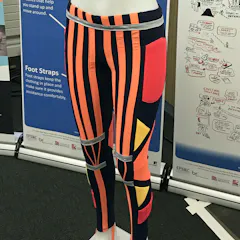
‘The Right Trousers’ combine soft artificial muscles and electric stimulation to get people moving.
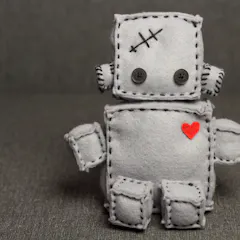
Why we’re developing a soft robot inspired by an elephant’s trunk.

Soft robotics could help move us closer to more human-like robots.
A new hopping robot shows how unusual 3D printed structures could pave the way for machines that better mimic living creatures.
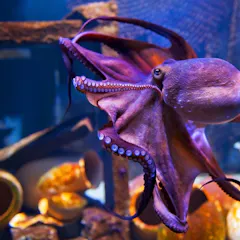
A new robotic tentacle has the potential to revolutionise keyhole surgery.
Bionic trousers could use artificial muscles to help wearers move about – and soft robotics technology will make the clothing comfortable and maybe even stylish.
Top contributors
-

Reader in Robotics, University of Bristol
-
PhD candidate, Nottingham Trent University
-
Lecturer in mechatronics, University of Cambridge
-
Professor of Robotics Engineering, King's College London
-
Research Fellow, Electronic and Electrical Engineering, University of Strathclyde
-
University of Salford
-
Professor of Computational Intelligence, Nottingham Trent University
-
Postdoctoral researcher in biomedical engineering, University of Reading
-
Associate Professor of Engineering Science, member of the Oxford Robotics Institute, University of Oxford
-
Professor of Mechanical Engineering, University of Colorado Boulder
-
Postdoctoral Research Associate in Materials Engineering, Carnegie Mellon University
-
Reader in Intelligent Robotics, Aberystwyth University
-
Assistant Professor of Mechanical and Aerospace Engineering, University of Virginia
-
Mathematician, University of Bristol
-
Assistant Professor of Biomedical Engineering, Georgia Institute of Technology