

Computerized systems that automatically determine whether a pitch is a ball or strike promise to make umpiring more accurate, but at what price?
Articles on Robotics
Displaying 81 - 100 of 260 articles
Amazon’s planned upcoming ‘Just Walk Out’ technology will let customers take items off a store’s shelf, bag them, and walk straight out.

A high-tech twist on an old idea – running on springs – could give human-powered movement its biggest boost in more than a century.
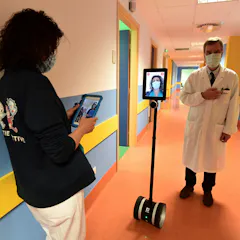
Robots are helping health care workers and public safety officials more safely and quickly treat coronavirus patients and contain the pandemic. They have something in common: They’re tried and tested.

Pedestrians are wary of autonomous cars, but they trust traffic lights. Researchers suggest driverless cars could communicate directly with the signals to make their own actions more predictable.

Having robots and other AI systems tell people what the AIs are doing makes them more trustworthy. A study finds that how a robot explains itself matters.
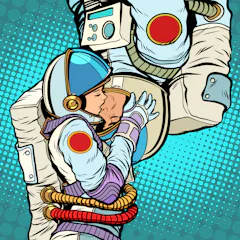
Sex technologies and ‘erobots’ could help address issues related to human desire, and physical and emotional needs of astronauts in space.
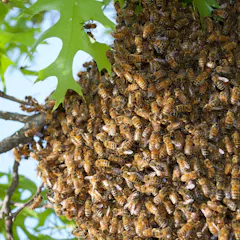
A swarm of honeybees can provide valuable lessons about how a group of many individuals can work together to accomplish a task, even with no one in charge. Roboticists are taking notes.

At the heart of the debate is that most fundamental question: what does it mean to be human?

For decades, animators have attempted to recreate realistic human faces without entering what’s called the ‘uncanny valley.’
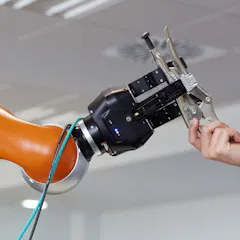
Engineers predict a time when people and robots physically interact all day long. For that to happen safely will require new soft materials that can do things like sense touch and change shape.
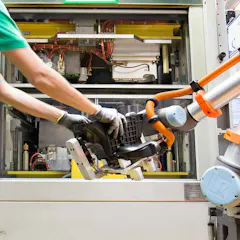
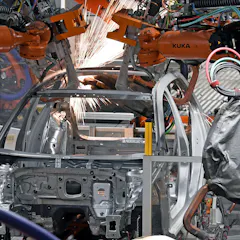
A safer, more flexible type of industrial robot is disrupting manufacturing.

If artificial intelligence can amaze us with its prowess, there are many areas where it falls flat when compared to human and animal intelligence.
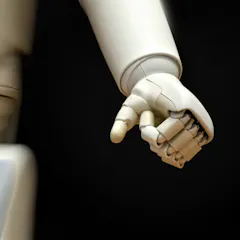
We are far from defenseless against the rise of robots, although they’ll take many of our routine jobs. Our special strength is our ability to apply rules that don’t exist.

With space at a premium, robotic furniture can transform a room in seconds. How will this affect our sense of belonging and feeling at home, when everything can change with a voice command?

Alan Turing devised a way to test if AI is functionally the same as a human – we’ve done the same for androids.
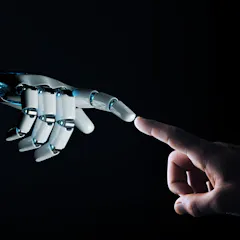
Our sense of touch lets us know how hard or soft something is, how solid or pliable it is to handle. That’s an important skill if you want robots to handle things safely.

Teaching robots to care for us in old age will be child’s play.
The robot revolution is happening right but how much do you know about the impact of programmable machines in your everyday life?
In an era of rapid technological advance, devastating climate change, increasing inequality and a steadily aging society, health-care leadership development is vital.
Top contributors
-

Professor in Robotics, Queensland University of Technology
-
Professor of AI, Research Group Leader, UNSW
-
PhD in machine ethics, University of Canterbury
-
Professor, Director of the Centre for Robotics, Queensland University of Technology
-
The University of Melbourne
-
Professor Emeritus, Swinburne University of Technology
-
Reader in Autonomous Intelligent Robotics, University of Birmingham
-
Senior Lecturer, Department of Engineering, Nottingham Trent University
-
Senior University Teacher in Robotics, University of Sheffield
-
Researcher in Artificial Intelligence Regulation, Australian National University
-
Honorary Associate Professor, UNSW
-
Professor, School of Systems and Computing, UNSW
-
Lecturer in Robotic Systems, University of Manchester
-
Professor of Management, Co-Director of the MIT Sloan Institute for Work and Employment Research, MIT Sloan School of Management
-
Professor of the Practice of International Development, Harvard Kennedy School