
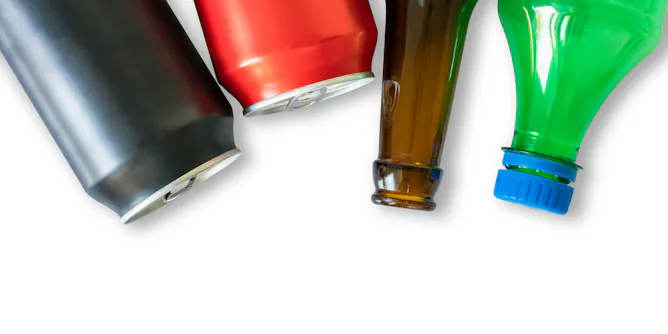
Here’s how to quench your thirst in an environmentally responsible way.
Articles on Reuse
Displaying 21 - 32 of 32 articles

A building designed to be easily taken apart so the components can be reused is a model for much less wasteful construction. It reduces resource use and environmental impacts, and can be cheaper too.
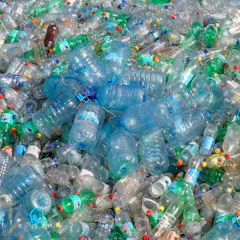
Life-cycle assessments of food packaging often omit the impact and possible toxicity of plastics leaking into the environment. Excluding these factors gives plastics an unjustified advantage.

In places where reusable cups are allowed, coffee drinkers, cafe owners and local governments can use insights from behavioural science to discourage use of throwaway cups.

We shouldn’t try to banish waste entirely. We need to rethink it.

Government agencies have detailed plans for responding to disasters, like the Dec. 10-11, 2021 tornados. But one issue doesn’t get enough attention: cleaning up the mess left behind.
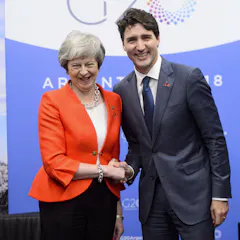
As 2019 dawns, a worldwide circular economy could be created through international trade and trade agreements like the one that could be forged between Canada and the U.K., post-Brexit.

Trump’s plan to slap $200 billion more in tariffs on Chinese goods is premised on yesterday’s waste-fueled economy. Tomorrow’s economy is ‘circular.’
Under a new target, 100% of Australian packaging will be recyclable, compostable or reusable by 2025. But this is not enough - we also need to ensure that recyclable materials are actually recycled.

Time for a little more make do and mend.

Coating paper with an inexpensive thin film can allow users to print and erase a physical page as many as 80 times. That reduces both the cost and the environmental effects of paper use.

There will be huge environmental impact if we keep using raw materials as we did in the 20th century.
Top contributors
-

Associate Professor in Arts and Sustainability, University of Portsmouth
-
Senior Science Leader, CSIRO
-
Professor of Management, Rochester Institute of Technology
-
Professor of Chemistry, University of California, Riverside
-
Professor of Sustainable Resource Use, Alpen-Adria University Klagenfurt
-
Associate professor, Curtin University
-
Associate Professor, Global Management Studies, Toronto Metropolitan University
-
Research associate, Loughborough University
-
Doctor of Environmental Science, University of Southampton
-
Associate Professor of Operations Management, Georgia Institute of Technology
-
Professor of Global Environmental Politics, University of California, Berkeley
-
Research Fellow at the Global CO2 Initiative, University of Michigan
-
Professor of Accounting, Adelaide University
-
Professor of Applied Environmental Science, University of Southampton
-
Nottingham Trent University