

China has a lot of vacant retail space, including many underused shopping malls. An urban policy scholar describes how the Chinese are rethinking what the mall is for.
Articles on Retail sector
Displaying 1 - 20 of 42 articles
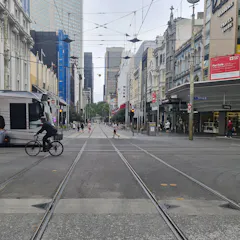
The four Cs – convenience, choice, competitive prices and COVID-19 – will decide the retail battle and how it affects the structure and function of our cities.
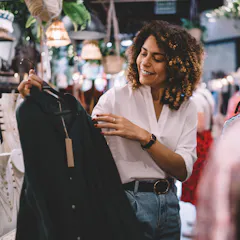
Retail stores change the prices of their products based on the shopping habits of consumers. But consumers come in a variety of types, and not all of them influence prices equally.

The perspective that U.S. retailers are somehow more prone to failure than Canadian retail chains is unconvincing, but the Canadian retail landscape is challenging for newcomers.
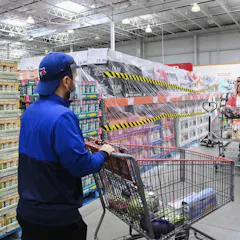
Retailers are grappling with anti-maskers during the pandemic. That’s because of the complicated relationship between businesses and customers when it comes to accommodating health conditions.
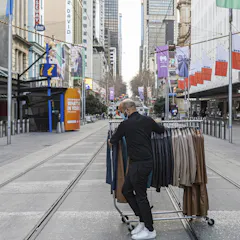
The COVID-19 crisis is stretching long strained relations between shopping centre landlords and tenants to breaking point.
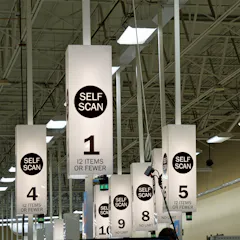
To curb opportunistic shoplifting, supermarkets want you to know you are being watched. But they’re also hoping for self-reflection.

There are strong psychological drivers underpinning the impulse to splurge hard-earned money online. There are also some simple ways to stop.
Target’s fall from grace involves poor market positioning, confusing strategies, and a declining middle class consumer market.
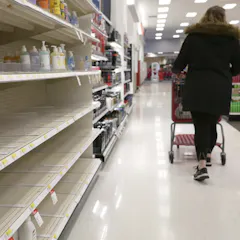
Amid the coronavirus pandemic, people are stockpiling essential supplies. But policy-makers may be able to influence both the supply and demand through public announcements and advisories.
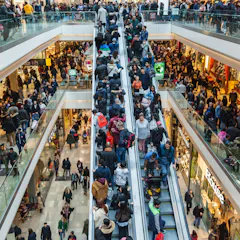
The retail sector relies on a little festive excess.
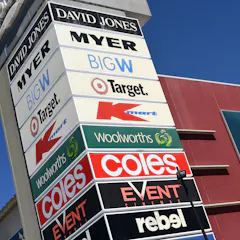
Big W store closures signal deeper problems for the discount department store sector.

Traditional retailers want to lure you back with a shopping experience that online stores just can’t provide.

Chinese customers spend billions on Nov. 11. Why, and what does it mean for the global retail marketplace?
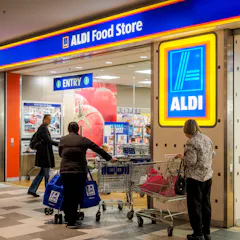
ALDI appeals to a particular market segment. It is unlikely to abandon it to go after Woolworths and Coles.
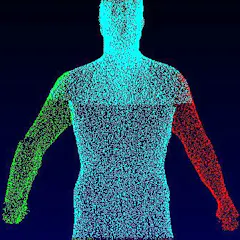
When people see their bodies in 3D, they feel worse about themselves and more negative in general. That might not put shoppers in a buying mood even for clothes that fit better.

When thinking about regulating them, it’s useful to know Facebook, Amazon, Google, Apple and Microsoft have some similarities. But generally they’re not competing with each other – or anyone else.
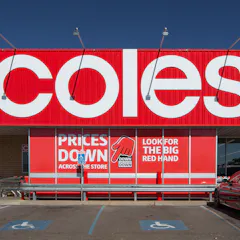
Coles plans to compete with competitors by moving away from low prices to a focus on other attributes, such as sustainability, local produce and community.
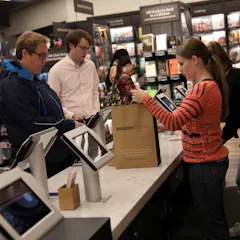
Urban retail space is being transformed yet again. Predictions of the demise of physical retailing in the face of online competition overlook its resilience over two centuries of disruptive innovations.

As businesses’ branded mobile apps become more common and popular, how are they affecting shoppers’ buying habits?
Top contributors
-

Senior Research Associate, Nottingham Business School, Nottingham Trent University
-
Professor of Marketing and Consumer Behaviour, Queensland University of Technology
-
Emeritus Professor of Marketing, University of Birmingham
-
Coleman Chair Professor of Marketing and Director of Research, Texas A&M University
-
Associate Professor of Marketing, Tasmanian School of Business and Economics, University of Tasmania
-
Lecturer in Law, Lancaster University
-
Assistant Professor, University of Illinois Urbana-Champaign
-
Professor of Media Studies, Queensland University of Technology
-
Lecturer, College of Business and Economics, Australian National University
-
Professor, North Dakota State University
-
Associate Professor of Corporate Sustainability, Copenhagen Business School
-
Laurie Carmichael Distinguished Research Fellow at the Centre for Future Work, Melbourne; and Professor Emeritus, Griffith Business School, Griffith University
-
Senior Lecturer in Communication, Deakin University
-
Associate Professor, John Molson School of Business, Concordia University
-
Professor of Organisational Behaviour, Bayes Business School, City St George's, University of London