
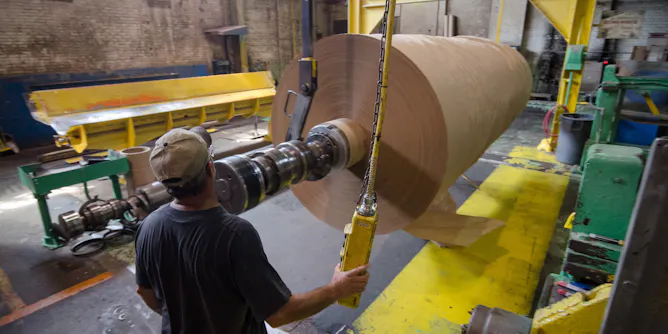
Pulp and paper production is a major industry with a large environmental footprint. Recently, though, paper companies have worked to reduce pollution and promote sustainable forestry and recycling.
Articles on Recycling
Displaying 341 - 360 of 411 articles
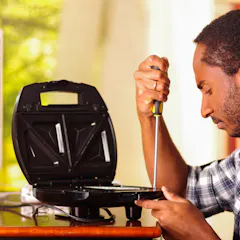
Time for a little more make do and mend.
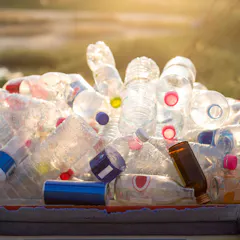
Would a chance to win a big cash prize make you more likely to recycle your old drinks bottles? Economic analysis suggests so.
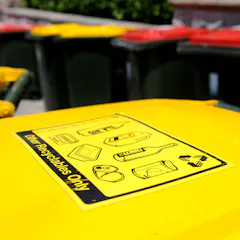
Australia’s recycling rules can seem horrendously complicated. But there a few golden rules to follow.
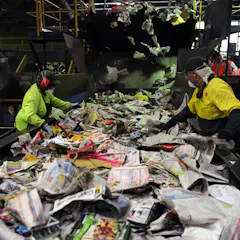
More Australians are recycling than ever, but let’s not forget that avoiding waste in the first place is the best option.
CC BY-ND38.5 MB (download)
This episode explores how one person's waste can be another's treasure. We talk to scientists trying to eke something useful out of big piles of rubbish and discuss making the economy more circular.
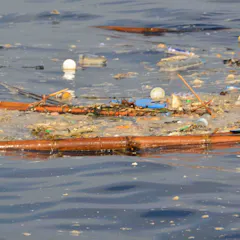
A new documentary highlights the plight of marine animals living among the estimated 5 trillion pieces of plastic rubbish generated by humans.

Coating paper with an inexpensive thin film can allow users to print and erase a physical page as many as 80 times. That reduces both the cost and the environmental effects of paper use.

There will be huge environmental impact if we keep using raw materials as we did in the 20th century.

Recycling, rental, durability: How three strategies from the “circular economy” can help automobile manufacturers reduce waste and improve profitability, all while helping preserve the environment

Adaptive reuse and recycling of heritage architecture may be all the rage, but are not new. Making new buildings from old has a long history in the ancient world.

From turkeys to salmon and brussels sprouts, modern living is putting mounting pressure on the festive feast.
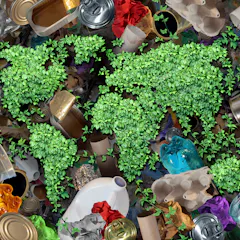
Every little helps, but saving the environment requires a global effort.

Our cities need to become much more efficient not just to conserve precious resources but to improve the economy, wellbeing and resilience to environmental change and disasters.

How we can change the business model of a £50 billion industry to make clothing work better for everyone.
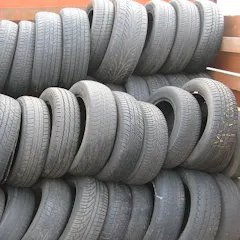
The world’s landfills are growing, which has prompted the search for new industrial processes that can use everyday waste items in some surprising ways.

As a remedy to rampant consumerism and the throwaway culture of fast-fashion, a few clothing brands actively encourage their customers to buy less.
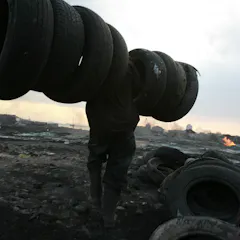
Used tyres pose a serious environmental challenge. So far, traditional recycling methods have proved insufficient to solve the problem. New, eco-friendy alternatives are now being explored.
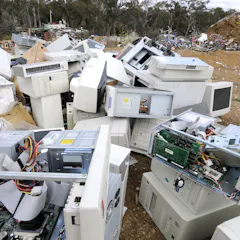
Australia is among the world’s top ten users of electronic and electrical products. But our systems for recycling the resulting ‘e-waste’ fall a long way short of other rich nations.
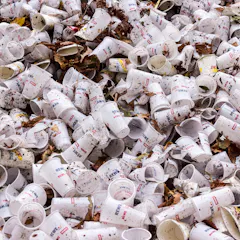
The high street chains cop the heat, but shouldn’t you be doing your bit too?
Top contributors
-

Senior Research Fellow, BehaviourWorks Australia, Monash University
-
Lecturer, School of Life and Environmental Sciences, Deakin University
-
Associate Professor and Research Director, Institute for Sustainable Futures, University of Technology Sydney
-
Professor of Global Environmental Politics, University of California, Berkeley
-
Professor of Applied Environmental Science, University of Southampton
-
Research Principal, Institute for Sustainable Futures, University of Technology Sydney
-
Chair professor - Circular Economy, The University of Melbourne
-
Research Chair, Indigenous Approaches to Environmental Management, Keele University
-
Senior Lecturer, School of Property, Construction and Project Management, RMIT University
-
Associate Dean and Head of Project Management, RMIT University
-
Professor of Sustainable Development, Keele University
-
Research Director, Institute for Sustainable Futures, University of Technology Sydney
-
Research associate, Loughborough University
-
PhD Candidate in Environmental Science, Policy, and Management, University of California, Berkeley
-
Birkbeck, University of London