

The first truth commission to research lynchings has been established in Maryland. It has the potential to educate the public about and support racial reconciliation. But it also faces obstacles.
Articles on Reconciliation
Displaying 101 - 120 of 148 articles
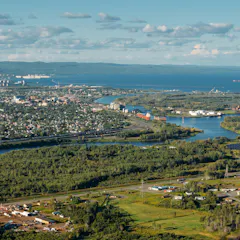
Thunder Bay has received national press for its historically inequitable relationship between Indigenous and non-Indigenous populations. Local journalism could help the city face those challenges.
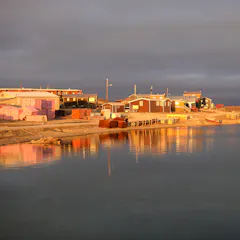
A new federal program aims to reduce diesel-dependency in remote Indigenous communities. But are these communities able to do this on their own terms?
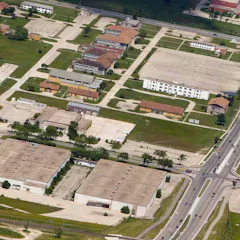
Kapyong Barracks in Winnipeg is set to be transferred to Treaty One First Nations to become an urban reserve. A 64-hectare parcel in an affluent area, the reserve will be a test of reconciliation.
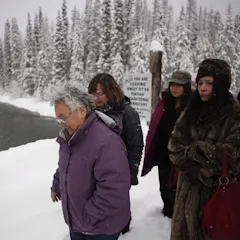
It’s time to engage with Indigenous people through the governance systems built prior to European settlement.
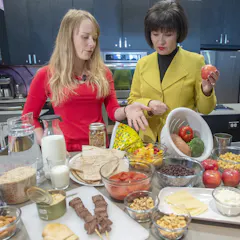
Canada’s Food Guide is a political document. It does not represent those who are poor, culturally marginalized and most at risk for food insecurity.
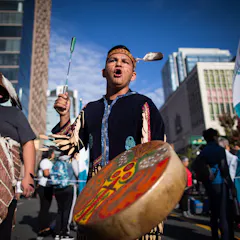
It’s been three years since the TRC released its report on the lasting impact of residential schools in Canada but responses to the 94 Calls to Action have been slow. A new framework hopes to change that.
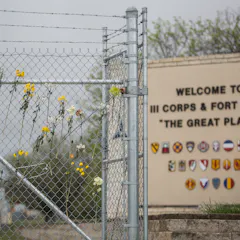
In scrutinizing statues honoring Confederate figures, journalists have overlooked military bases named after generals who fought to defend the slavery of black people.
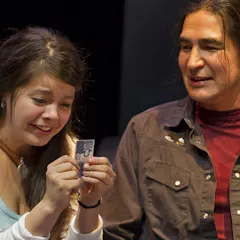
Indigenous theatre and storytelling provides an opportunity for all Canadians to honour the directives of the Truth and Reconciliation Commission. The Canadian government should support this mission.
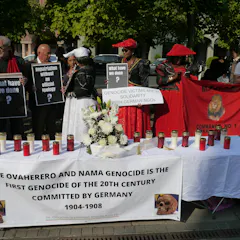
The third repatriation of human remains in August this year was another missed opportunity for reconciliation between Germany and Namibia.
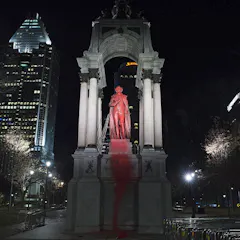
Removing statues of historical figures may be important symbolic statements when it comes to reconciliation, but action on important Indigenous issues like land claims and education are needed more.

A right-to-roam movement has never developed in Canada the way it has in the U.K. Here’s how it could benefit Canadian society as a whole, including reconciliation efforts with the Indigenous.
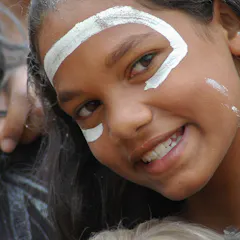
As treaty negotiations begin in Victoria, each party will have to accept the other’s legitimacy; that their own power is not absolute and unconditional.
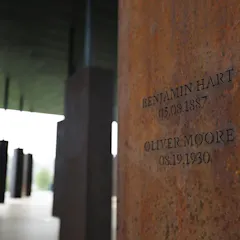
The National Memorial for Peace and Justice helps demonstrate that the lynching of black people was not the fault of victims. But telling this history risks re-traumatizing the black community.
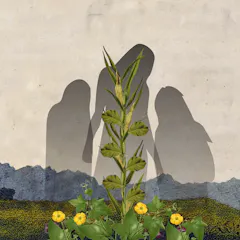
Innovative teaching resources in the province of Manitoba, Canada, introduce schoolchildren to concepts of interdependence and reciprocity with the land.
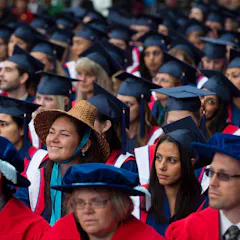
Wilful under-funding of Indigenous education is producing an Indigenous underclass.
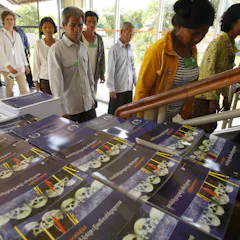
Research on profound human suffering requires more than intellectual understanding of legal and political mechanics. It requires a human journey that goes deeply into victims’ experiences and needs.

The role of universities in the shameful Indian residential school system needs to be addressed. The president of one of Canada’s leading universities explains why it’s time to apologize.

The genocide memory in Rwanda is diverse and dynamic.
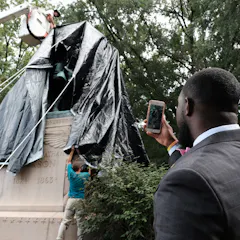
The US has yet to fully undergo a process of truth and reconciliation.
Top contributors
-

Professorial Fellow, University of Canberra
-
Assistant Professor, Political Science, Brock University
-
Professor, Australian and Aboriginal History, Faculty of Arts, Design and Architecture, Convenor: Indigenous Land & Justice Research Group, UNSW
-
Senior Research Fellow, Indigenous Land & Justice Research Group, UNSW
-
Professor, Department of Geography, Environment and Geomatics, University of Guelph
-
Professor, Department of Psychology, University of Manitoba
-
Associate Professor of Economics, University of Manitoba
-
Researcher, University of Tasmania
-
Professor in Political Science, Arnold Bergstraesser Institute
-
Associate professor emeritus, Journalism, Virginia Commonwealth University
-
Extraordinary Professor, Department of Political Sciences, University of Pretoria
-
Associate Professor, University of Tasmania
-
Professor, Faculty of Education, University of Manitoba
-
Professor of Sociology, University of the Witwatersrand
-
Associate Vice President (Indigenous Engagement), University of Regina