

The controversy over the misuse of Jordan’s Principle has been used to justify cuts to services, when the real problem is a deep, systemic gap in services for First Nations children.
Articles on Truth and Reconciliation Commission
Displaying 1 - 20 of 61 articles

Despite a decade of commitments, audits and Calls to Action, the federal government has failed to deliver meaningful and measurable improvements in First Nations health services.

Research from a project about thinking historically for Canada’s future finds curricula must do far more to challenge dominant narratives and value Indigenous worldviews.
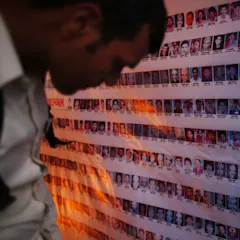
A newly amended law may push the country beyond what has been a drawn-out and sluggish process to account for the country’s civil war.
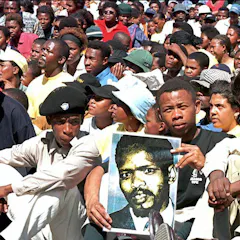
The history of scientific racism can help us to improve medical ethics.

Opponents of the U.K. government’s Northern Ireland Troubles Act argue it violates the Good Friday Agreement by denying victims their right to justice.

Saskatchewan’s provincial government must work with Indigenous nations on a shared vision for the future that is more likely to withstand the tests of time and litigation.

To honour Truth and Reconciliation Day, we spoke with Terri Cardinal, who headed up one of the many community searches for the children who went missing while attending an Indian Residential School.
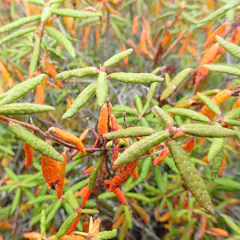
Some boreal plant species are classified — and treated — as weeds, affecting Indigenous communities’ access to important cultural, medicinal and ceremonial resources.
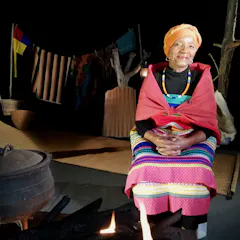
From domestic worker to matriarch of South African literature, the book is a reflection on her writing journey.

The revitalization of Indigenous languages is essential because language reflects philosophies that guide social, political, cultural and ecological relationships.

Engineers say the current ‘iron ring’ ritual is steeped in colonial worldviews and excludes the public from understanding engineers’ ethical obligations.

Spirituality is a vital part of Indigenous identities. Incorporating spiritual education can create space in schools where Indigenous students can learn and grow.

The Pope’s apology could mark a new way forward if the Catholic Church makes genuine reparations for the evils it perpetrated.

Apologizing for people versus the establishment that upheld not only the Indian Residential Schools system but protected – and continues to protect — the people who committed the crimes is horrifying.

Whether this apology has truly advanced the goal of healing may become evident only in years and decades to come.
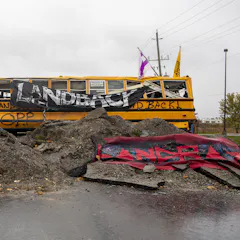
Settler Canadians have a responsibility to build respectful, reciprocal relationships with Indigenous nations on our shared geographic space. This relationship starts with land restitution.
The famous writer turns 70 this year. She is driven by how South Africans see and hear one another.

It may be possible to expand people’s circle of moral concern and, in turn, promote reconciliation through connecting people to nature.

Secret burials are the stuff of gothic fiction, but these gothic events actually happened to Indigenous children.
Top contributors
-

Professor of Journalism and Media Studies, Rhodes University
-
Professor of Geography and Senior Research Associate in the Rock Ethics Institute, Penn State
-
Professor, Faculty of Education, University of Manitoba
-
Assistant Professor, Political Science, Brock University
-
Senior Lecturer (Radical Humanities Laboratory, University College Cork), University College Cork
-
Senior Lecturer, Department of Historical and Heritage Studies, University of Pretoria
-
Professor of Political Studies, University of Johannesburg
-
Post-doctoral fellow in History, University of South Africa
-
Professor of Divinity, Harvard University
-
Research Chair in Studies in Historical Trauma and Transformation, Stellenbosch University
-
Professor Emeritus of History, University of Saskatchewan
-
Professor, History of Education, Queen's University, Ontario
-
Derek H. Alderman is a Friend of The Conversation.
Chancellor's Professor of Geography, University of Tennessee
-
Senior Research Fellow, Centre for the Advancement of Scholarship, University of Pretoria., University of Pretoria
-
Senior Lecturer, Edge Hill University