
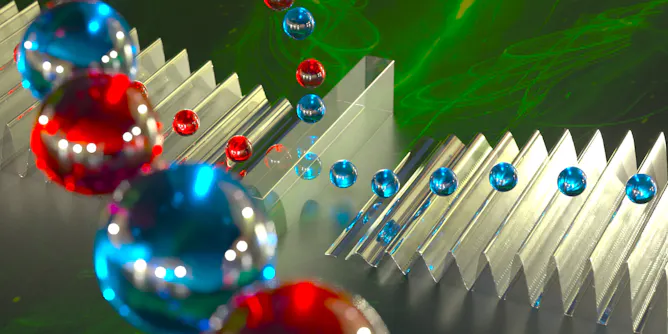
Scientists show they can create quantum superpositions of sound particles, pointing to the potential for mechanical quantum computers.
Articles on Quantum computing
Displaying 41 - 60 of 129 articles

Quantum machine learning models could help us create AI systems that are almost impenetrable by hackers. But in the hands of hackers, the same technology could wreak havoc.
Countries around the world are racing to develop quantum technologies for computing, sensing and communication. Australia is trying not to get left behind.

Superconductors make highly efficient electronics, but the ultralow temperatures and ultrahigh pressures make them costly and difficult to use. Room-temperature superconductors promise to change that.

In the age of AI, people might wonder if there’s anything computers can’t do. The answer is yes. In fact, there are numerous problems that are beyond the reach of even the most powerful computers.
To protect against future quantum cyber attacks, two technological paths are being explored. Decryption.

When it comes to physics experiments, quantum simulations aren’t quite the real thing – but in some cases they’re much closer than you’d expect.
Canada is well positioned to gain far-reaching economic and social benefits from the rapidly developing quantum industry, but it must act now to secure its success.

Recent suggests quantum computers could solve problems with breathtaking speed by comparison to current supermodels.
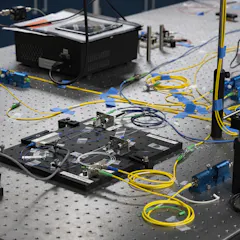
Quantum entanglement is the stuff of sci-fi, advanced physics research and, increasingly, technology used by governments, banks and the military.

Various innovations after the past century have improved the world for many - but there’s still much more for universities to do.
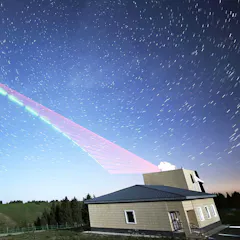
China and the US are racing for quantum technology breakthroughs in weapons, communications, sensing, and computing that could tilt the balance between the world’s military forces.
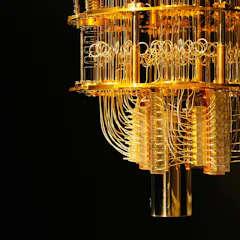
Like a coffee you can’t finish stirring, a ‘time crystal’ is a strange quantum state of matter than never settles down to equilibrium.
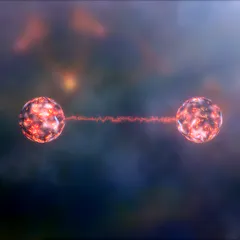
The quantum nature of light can be harnessed for a variety of purposes.
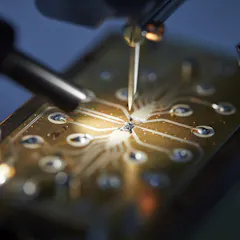
So far researchers have only been able to control a handful of qubits — the basic units of information in a quantum computer. A new approach could help them control millions at a time.
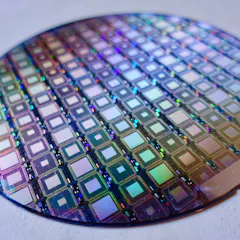
The focus of quantum science has shifted from theoretical physics to the advent of new technologies such as quantum computers. The benefits could be immense, but there are also potential pitfalls.

Plus new research finds a way to speed up the search for dark matter. Listen to episode 4 of The Conversation Weekly.
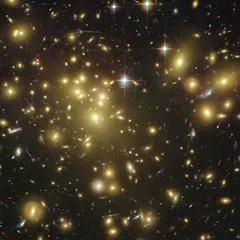
Researchers have found a way to speed up the search for dark matter using technology from quantum computing. By squeezing quantum noise, detectors can now look for axions twice as fast.
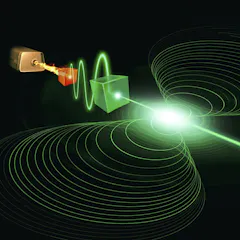
For 60 years, physicists thought they knew exactly how coherent a laser could get. Now the ultimate quantum limit to laser coherence has been found, and it’s much much bigger than anybody thought.
Nobody expected that allowing more communication would make computational problems more reliable.
Top contributors
-

Professor, Quantum Nanosystems, UNSW
-
A/Prof, UTS Chancellor's Postdoctoral Research and ARC DECRA Fellow, University of Technology Sydney
-
Professor, Information Security Group, Royal Holloway, University of London
-
Head of Quantum Systems and Principal Research Scientist, Monash University
-
Professor in Physics, The University of Queensland
-
Director, Centre for Quantum Dynamics, Griffith University
-
Professor of Quantum Physics and Quantum Technology, University of Sydney
-
Professor of Mathematics, University of Sydney
-
Associate Professor of Photonics and Quantum Sciences, Heriot-Watt University
-
Postdoctoral Fellow in Quantum Physics, University of Colorado Boulder
-
Chancellor's Fellow, Department of Physics, University of Strathclyde
-
Postdoctoral researcher, Imperial College London
-
Professor of Quantum Technologies (Physics and Astronomy), University of Sussex
-
Professor of Physics and Director of the Lancaster Quantum Technology Centre, Lancaster University
-
Scientia Professor in Quantum Engineering, UNSW