

Experiment produces thousands of entangled atoms, raising hopes that we can soon create real quantum computers.
Articles on Quantum computing
Displaying 81 - 100 of 129 articles
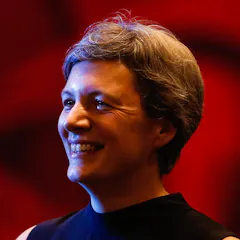
Maths and science featured strongly in the 2018 Australian of the Year Awards. Along with physicist Michelle Simmons, maths teacher Eddie Woo and biologist Graham Farquhar were recognised.

A future that continues to have increasingly fast computing depends on quantum physics – but research is showing that there are limits to how fast quantum computers can go.
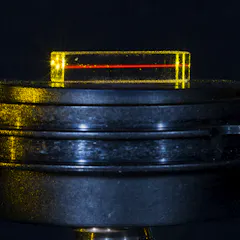
Rare earth elements aren’t actually that rare - but they certainly are useful. Erbium is used right now in the internet’s optical fibre network, and could one day be applied in quantum networks.
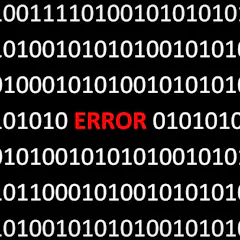
One of the challenges for quantum computing is knowing how to detect and correct errors that may occur in the data. And we can do that without even knowing what the data says.
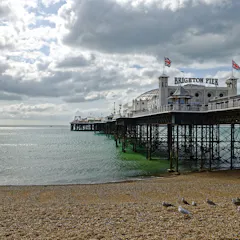
Anthill 17: Science by the seaside
CC BY-ND44.8 MB (download)
From the man who gave away his genome under open consent, to the 'Mathematikado', this episode of the podcast features highlights from the British Science Festival in Brighton.
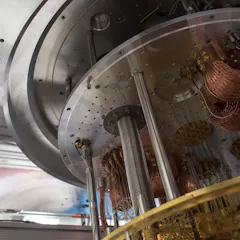
As companies make quantum computers available through their cloud services, take a look at what it means for computing to move beyond classical mechanics and into quantum physics.
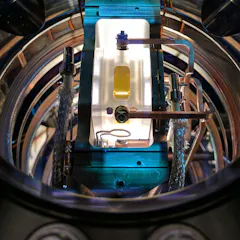
Quantum computing is being described as “just around the corner”. Is it?

Many scientists thought it was impossible, but one team has finally done it. They say operating their quantum computer is just like playing a game of Pacman.

How Messrs Thouless, Haldane and Kosterlitz could hold the key to the future.
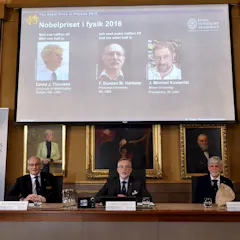
Don’t worry, understanding the work is a piece of cake. But it may make you hungry.
Freezing light in mid-air isn’t just the realm of Star Wars, as new research shows. But what do you do with the light once it’s trapped? One option is to use it to develop new forms of computers.

A new type of computer means we’ll need a new way to make our data secure.
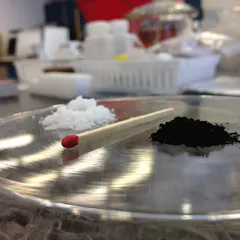
Much of the current research in quantum computing involves work at close to absolute zero. A simple breakthough with an everyday material could see them work at more acceptable temperatures.

Researchers face stiff fines or even jail time if they inadvertently communicate with foreign colleagues about matters deemed to have a military use.
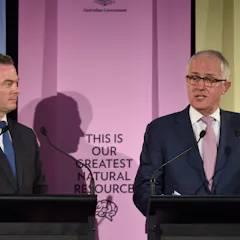
Prime Minister Malcolm Turnbull today announced the National Innovation and Science Agenda (NISA). Here’s what it means for science, commercialisation and industry in Australia.
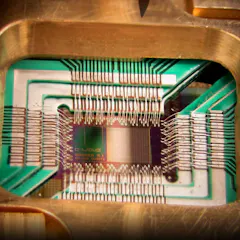
Quantum computing may still have the status of a rank outsider, but it’s making gains.
From researchers into the future of quantum computing to those working on low cost energy storage or explaining why onions make you cry, all were winners in the annual Eureka Prizes.
A new report on the future of humanity explains what we really need to be worrying about over the next 35 years.
As hackers get more sophisticated in their cyber crime efforts we need to look to new technology to make our systems more secure, and potentially unhackable. So how can quantum physics help?
Top contributors
-

Professor, Quantum Nanosystems, UNSW
-
A/Prof, UTS Chancellor's Postdoctoral Research and ARC DECRA Fellow, University of Technology Sydney
-
Professor, Information Security Group, Royal Holloway, University of London
-
Head of Quantum Systems and Principal Research Scientist, Monash University
-
Professor in Physics, The University of Queensland
-
Director, Centre for Quantum Dynamics, Griffith University
-
Professor of Quantum Physics and Quantum Technology, University of Sydney
-
Professor of Mathematics, University of Sydney
-
Associate Professor of Photonics and Quantum Sciences, Heriot-Watt University
-
Postdoctoral Fellow in Quantum Physics, University of Colorado Boulder
-
Chancellor's Fellow, Department of Physics, University of Strathclyde
-
Postdoctoral researcher, Imperial College London
-
Professor of Quantum Technologies (Physics and Astronomy), University of Sussex
-
Professor of Physics and Director of the Lancaster Quantum Technology Centre, Lancaster University
-
Scientia Professor in Quantum Engineering, UNSW