
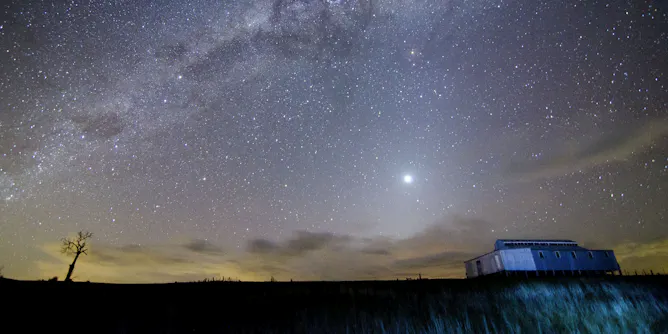
The planets we can see in the sky were known to the ancient Greeks as ‘wandering stars’. But they appeared much earlier in the stories and traditions of Australia’s Indigenous people.
Articles on Planets
Displaying 101 - 120 of 175 articles
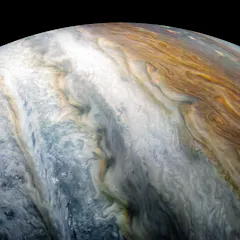
Jupiter’s bands are one of its most striking features – and can be seen from Earth – but they only go so deep within the giant planet. Now scientists think they know why.
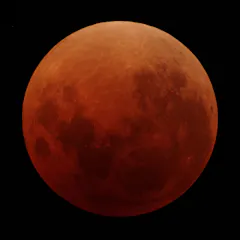
All five five planets visible to the naked-eye are on show in the night skies over Australia, and a Blood Moon on the way too.
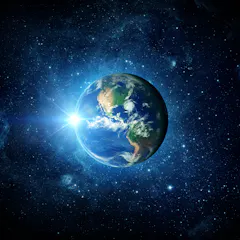
To answer this tricky question, we have to look back in time to when the Earth was born, 4.5 billion years ago.
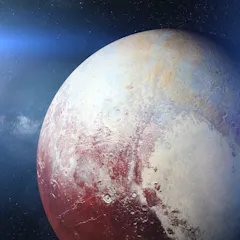
Images from New Horizons spacecraft provide more evidence about the surface of Pluto.
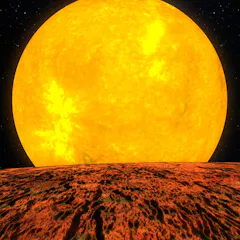
When NASA first started planning the Kepler mission, no one knew if the universe held any planets outside our solar system. Thousands of exoplanets later, the search enters a new phase as Kepler retires.
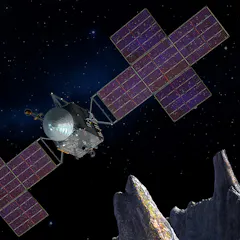
A new trajectory means the mission to uncover core facts about the asteroid belt will happen sooner than planned.
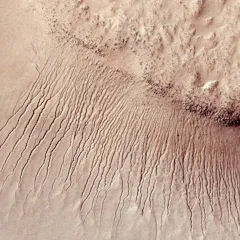
Simulations in a special chamber suggest how the Mars landscape could have been shaped under certain conditions.
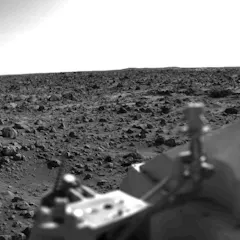
Planetary protection protocols try to make sure we don’t seed places like Mars with life from our planet. An astrobiologist argues they’re misguided – especially with human astronauts on the horizon.
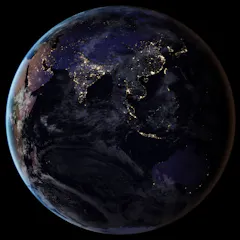
Imagine the Earth pulling everything it is made up of, all of its mass, towards its centre. This happens evenly all over the Earth, causing it to take on a round shape.
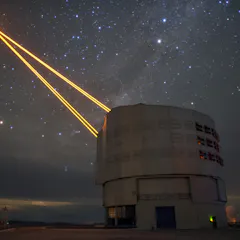
How exactly do the stars twinkle in the night sky? As it turns out, the answer is full of hot air… and cold air.
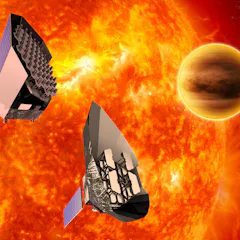
While we on Earth are familiar with our own star, the Sun, the European Space Agency’s PLATO mission will explore solar systems similar to ours as well as those that are more exotic.
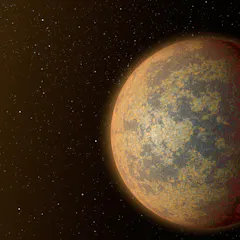
The planets closer to the Sun are indeed hotter than the Earth is. But they are still not hot enough to melt the rocks they are made from.
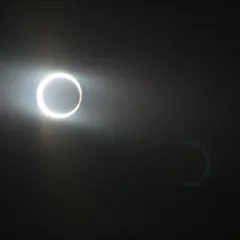
More than 2,000 years ago, the Babylonians understood the cycle of eclipses. They also regarded them as signs that could foretell the death of a king.

What caused the Big Bang is still a mystery. And that’s just one of the many unanswered questions, in spite of everything we do know about the birth of the Universe.
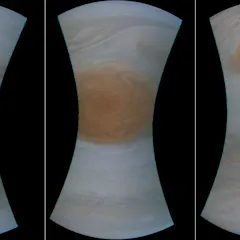
The images are in from the Juno probe’s closest flyby so far of Jupiter’s Great Red Spot. Citizen scientists are now getting involved in processing those images.
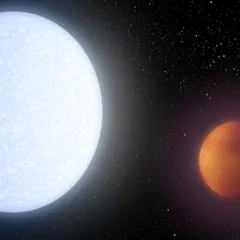
Researchers recently discovered the hottest planet known. But which one is the coldest? And the biggest?
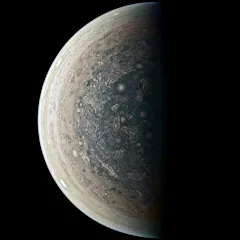
We may need to re-think our models of Jupiter’s formation thanks to the first results from Juno probe orbiting the planet, and new observations from Earth.
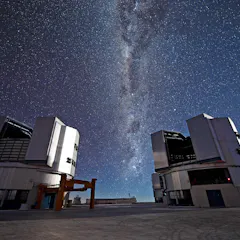
Australia’s new partnership with the European Southern Observatory will give our astronomers access to much bigger telescopes.
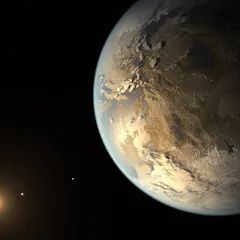
Plants on other planets are bound to be even weirder than the strangest ones we find on Earth – if they even exist.
Top contributors
-

Professor (Astrophysics), University of Southern Queensland
-
Senior Curator (Astronomy), Museums Victoria Research Institute; The University of Melbourne
-
Senior Lecturer in Physics, Nottingham Trent University
-
Professor of Planetary Geosciences, The Open University
-
Professor of Physics, Deputy Director (Solar System) at the Mullard Space Science Laboratory, UCL
-
PhD Candidate, University of Southern Queensland
-
Associate Professor in Astronomy, Monash University
-
Postdoctoral research associate, University of Oxford
-
Associate Professor, School of Physics, The University of Melbourne
-
University Distinguished Professor of Astronomy, University of Arizona
-
Scientist, Max Planck Institute for Solar System Research
-
Professor of Astronomy, Vanderbilt University
-
Research Scholar, Academia Sinica
-
Associate Professor in Archaeology and Space Studies, Flinders University
-
Professor of Planetary and Space Sciences, The Open University