

New mathematical technique enables astronomers to predict the whereabouts of missing worlds around nearby stars.
Articles on Planets
Displaying 81 - 100 of 175 articles
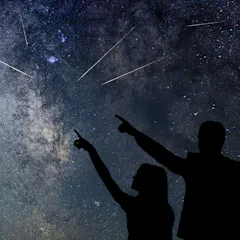
COVID-19 may have messed up school and shut down a lot of entertainment venues. But you can still brighten things up by doing a little stargazing at night, an astronomer says.
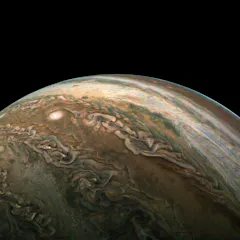
Atmospheres can be all different colours, depending on what’s in them.

We’re not sure how the rings work or how they formed, but there are a few theories.
Why isn’t there an endless variety of planets in the universe? An astrophysicist explains why planets only come in two flavors.

The Babylonians’ calendar was passed down from civilization to civilization.

Beautiful art can provide hope and healing.
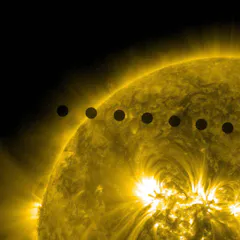
This hot, acidic neighbor with its surface veiled in thick clouds hasn’t benefited from the attention showered on Mars and the Moon. But Venus may offer insights into the fate of the Earth.

Yes, the Sun absolutely spins. In fact, everything in the universe spins. Some things spin faster than the Sun, some are slower and some things spin ‘backwards’.

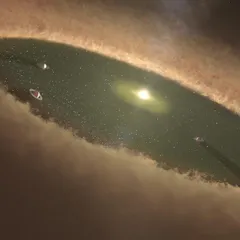
Astronomers have found the first observational evidence for a disc of material around a giant young planet at a distant star. It’s a place they think moons can form.
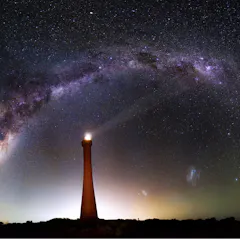
Science is full of surprises. While searching for planets orbiting nearby stars, researchers stumbled across the remains of a star that once outshone the Sun.
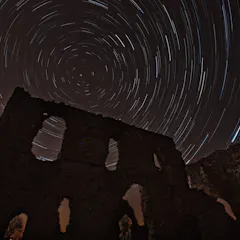
When you look up at the vastness of space you can see hundreds, thousands and even millions of years into the past.
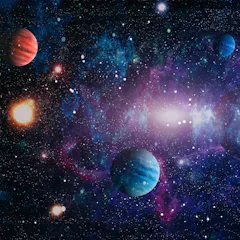
There are probably more than a million planets in the universe for every single grain of sand on Earth. That’s a lot of planets. My guess is that there probably is life elsewhere in the Universe.
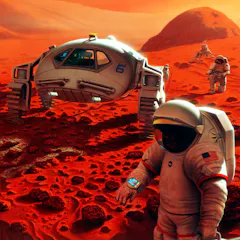
NASA’s InSight Mars lander touches down Nov. 26, part of a careful robotic approach to exploring the red planet. But human exploration of Mars will inevitably introduce Earth life. Are you OK with that?

There are lots of places where it’s much, much hotter than the Sun. And the amazing thing is that this heat also makes new atoms - tiny particles that have made their way long ago from stars to us.

Whether you call it Planet X or Planet Nine, talk of another planet lurking in our Solar system won’t go away. So what does the discovery of a new object – nicknamed “The Goblin” – add to the debate?
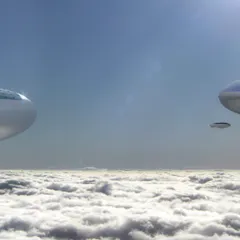
The upper atmosphere of Venus is the most Earth-like extra-terrestrial location in the solar system. It could even host life.
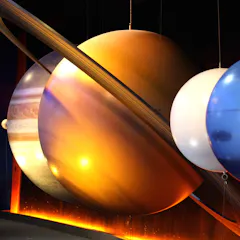
The five planets visible to the naked eye since ancient times are putting on a dazzling display this month, in a night-sky dance along with the Moon.

Pluto has a density between that of rock and ice – so that immediately suggests the dwarf planet is made of a mix of both. But how do we know?

We are in the Milky Way. If you travelled on an extremely fast spaceship for more than two million years, you would reach our neighbour, the Andromeda galaxy. All other galaxies are even further away.
Top contributors
-

Professor (Astrophysics), University of Southern Queensland
-
Senior Curator (Astronomy), Museums Victoria Research Institute; The University of Melbourne
-
Senior Lecturer in Physics, Nottingham Trent University
-
Professor of Planetary Geosciences, The Open University
-
Professor of Physics, Deputy Director (Solar System) at the Mullard Space Science Laboratory, UCL
-
PhD Candidate, University of Southern Queensland
-
Associate Professor in Astronomy, Monash University
-
Postdoctoral research associate, University of Oxford
-
Associate Professor, School of Physics, The University of Melbourne
-
University Distinguished Professor of Astronomy, University of Arizona
-
Scientist, Max Planck Institute for Solar System Research
-
Professor of Astronomy, Vanderbilt University
-
Research Scholar, Academia Sinica
-
Associate Professor in Archaeology and Space Studies, Flinders University
-
Professor of Planetary and Space Sciences, The Open University