
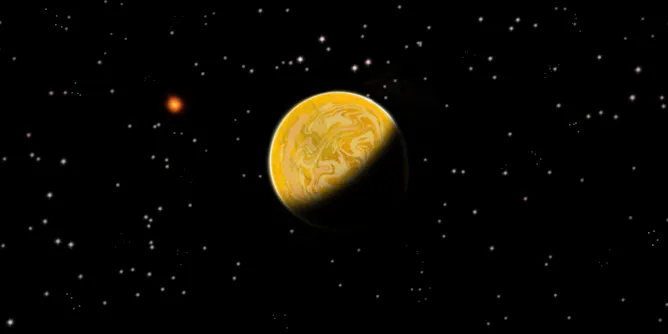
Astronomers have detected possible signs of gases released by volcanic activity.
Articles on Planets
Displaying 21 - 40 of 175 articles
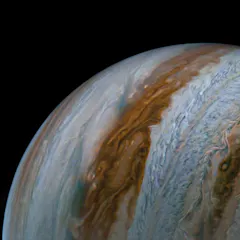
Jupiter’s composition is more similar to that of the Sun than that of the Earth.
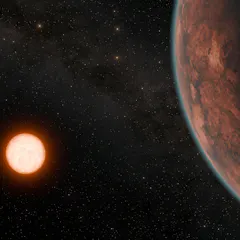
The groundbreaking discovery of a temperate Earth-size planet just 40 light-years away may hold the key to understanding stellar habitability.
The Netflix series ‘3 Body Problem’ is based on Liu Cixin’s scifi novel that follows what happens to the alien residents of a planet that orbits two stars.
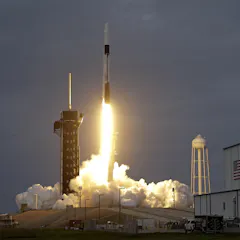
Space exploration is not a waste of resources, but a source of technological and medical advances, a tool for climate monitoring and a source of educational inspiration for youth.
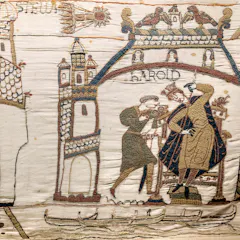
Medieval scholars connected celestial events to changes that happened on the ground, such as the overthrow of the king.
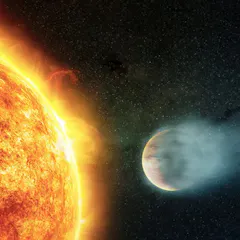
There are several ways in which stars can destroy and swallow their own planets.
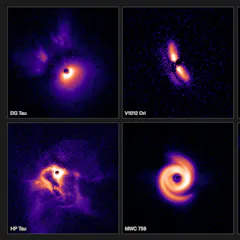
Astronomers have spotted a surprisingly diverse set of planet-forming disks.
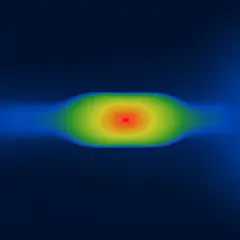
The observation could fill in gaps in our knowledge about planet formation.
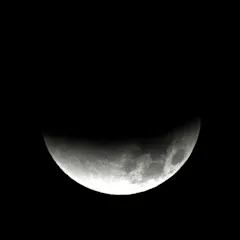
Projects under NASA’s CLPS program – including the Odysseus lander that made it to the lunar surface – will probe unexplored questions about the universe’s formation.
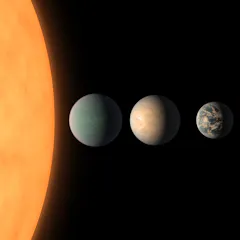
Orbital resonance is kind of like musical harmony, but systems that display it are far more rare than songs with harmonic melodies.

Over two billion years from now, Earth will no longer be able to sustain life. A new study looks at how much life has ever existed and what this means for the discovery of new life-supporting planets.
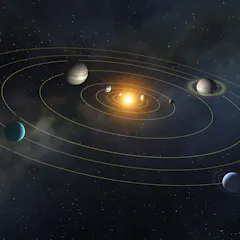
You might hate winter, but at least you know what to expect every year. Other planets have wobbly axes that lead to wild, unpredictable seasons.
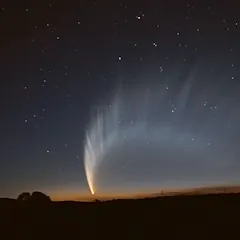
In 2024 we will see meteor showers, Saturn disappearing behind the Moon, and – if we’re lucky – a comet bright enough to see with the naked eye.

People have been looking up at the stars for thousands of years. Here’s where to start if you want to learn more about the night sky – from spotting easy-to-find constellations to using the best apps.
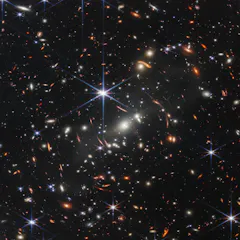
Sound needs matter to propagate, so the vast vacuum of space is not just empty − it’s silent.

A newly discovered planet that should be too big to have formed around a tiny star is throwing into question what researchers know about planet formation.
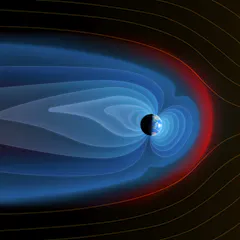
Ever seen the northern lights? You have a magnetic layer in Earth’s atmosphere to thank for those beautiful displays. But the magnetosphere does a lot more than create auroras.
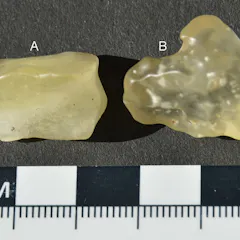
Libyan desert glass originated from the impact of a meteorite on the Earth’s surface.
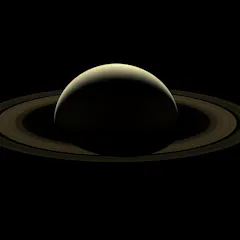
Viral headlines would have you think Saturn’s rings will vanish in just 18 months. Here’s what that really means and why you don’t need to worry.
Top contributors
-

Professor (Astrophysics), University of Southern Queensland
-
Senior Curator (Astronomy), Museums Victoria Research Institute; The University of Melbourne
-
Senior Lecturer in Physics, Nottingham Trent University
-
Professor of Planetary Geosciences, The Open University
-
Professor of Physics, Deputy Director (Solar System) at the Mullard Space Science Laboratory, UCL
-
PhD Candidate, University of Southern Queensland
-
Associate Professor in Astronomy, Monash University
-
Postdoctoral research associate, University of Oxford
-
Associate Professor, School of Physics, The University of Melbourne
-
University Distinguished Professor of Astronomy, University of Arizona
-
Scientist, Max Planck Institute for Solar System Research
-
Professor of Astronomy, Vanderbilt University
-
Research Scholar, Academia Sinica
-
Associate Professor in Archaeology and Space Studies, Flinders University
-
Professor of Planetary and Space Sciences, The Open University