
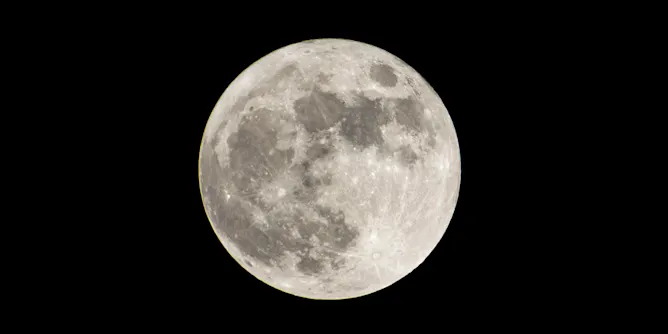
Despite the distances involved, people as far apart as the UK and Australia can see the Moon at the same time.
Articles on Planets
Displaying 41 - 60 of 175 articles
Studying the sample could help answer how water arrived on Earth and how life started.
The asteroid is interesting from a scientific perspective as well as a commercial one.
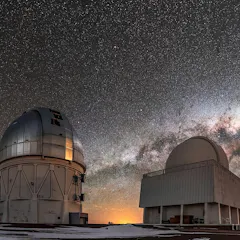
Controlled experiments are impossible in astronomy, as are direct measurements of physical properties of objects outside our solar system. So how do astronomers know so much about them?
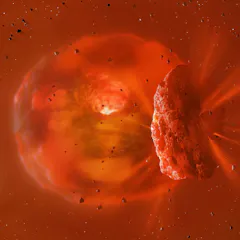
The discovery provides a way to study the birth of an entirely new planet in real time.

There’s a flurry of excitement every time a comet comes into view from Earth. But what are these celestial objects, and where do they come from?
Measuring the ages of planets and stars is tricky. An observational astrophysicist describes the subtle clues that provide good estimates for how old different space objects are.
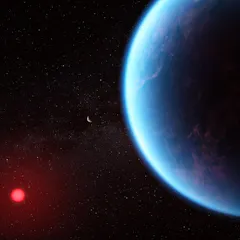
The results are intriguing, but analysing the atmospheres of exoplanets is no easy task.
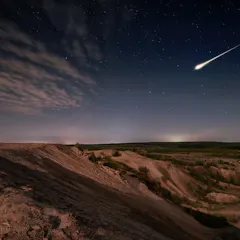
Studying impact craters can broaden our understanding of the Earth’s evolution and life, as well as its possible future.
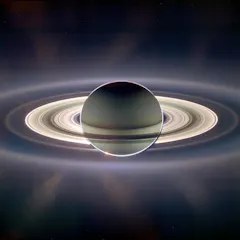
New research suggests Saturn’s rings may be surprisingly young.
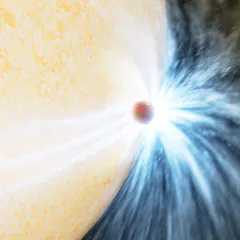
Stars begin to expand when they run out of fuel and can become thousands of times larger, consuming any planets in the way. For the first time, astronomers have witnessed one such event.
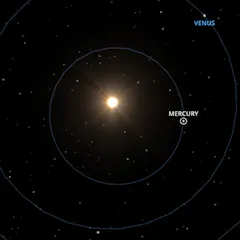
There’s nothing weird happening with Mercury. In fact, most days of the year there’s at least one planet in retrograde.
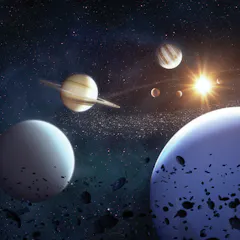
It all starts with a cloud of gas and dust.
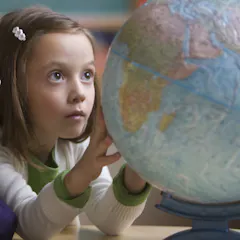
An astronomer takes us on a tour of the universe to learn about the birth of stars and planets and how they get their spin.
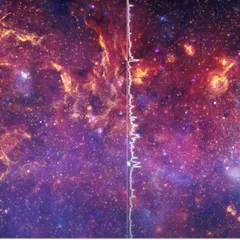
Since ancient times, the stars have been set to music. Modern technology now enables scientists to convert images of space into real compositions.
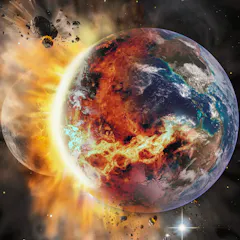
Believe it or not, this sort-of happened before in Earth’s history – and now we have the Moon.
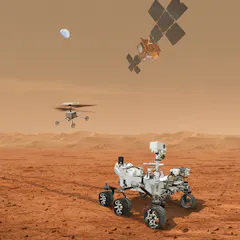
Sophisticated equipment on the Perseverance rover is helping answer some of the many questions researchers have about Mars’ geology over time.
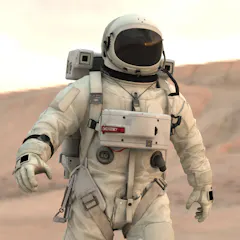
Mars is the fourth planet from the Sun and one of our closest neighbors in space. But it’s not a very welcoming place for an Earthling to visit.

The dwarf planets in our Solar System are cold, dark, far away and full of surprises.

The sun has entered a phase causing more chances to see the northern lights in the UK, an expert explains.
Top contributors
-

Professor (Astrophysics), University of Southern Queensland
-
Senior Curator (Astronomy), Museums Victoria Research Institute; The University of Melbourne
-
Senior Lecturer in Physics, Nottingham Trent University
-
Professor of Planetary Geosciences, The Open University
-
Professor of Physics, Deputy Director (Solar System) at the Mullard Space Science Laboratory, UCL
-
PhD Candidate, University of Southern Queensland
-
Associate Professor in Astronomy, Monash University
-
Postdoctoral research associate, University of Oxford
-
Associate Professor, School of Physics, The University of Melbourne
-
University Distinguished Professor of Astronomy, University of Arizona
-
Scientist, Max Planck Institute for Solar System Research
-
Professor of Astronomy, Vanderbilt University
-
Research Scholar, Academia Sinica
-
Associate Professor in Archaeology and Space Studies, Flinders University
-
Professor of Planetary and Space Sciences, The Open University