

To survive dry spells, trees stop the water-rich process of photosynthesis. When nature’s natural carbon capture machine grinds to a halt entire forests end up producing more CO₂ than they absorb.
Articles on Photosynthesis
Displaying 1 - 20 of 92 articles
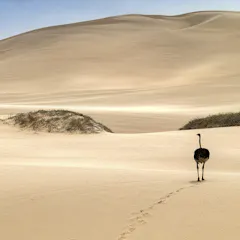
Scientists have extracted atoms from eggshells that are 15 million years old which reveal how plants responded to high levels of carbon dioxide.
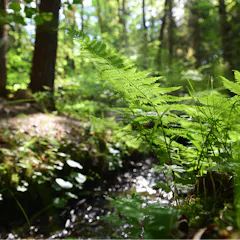
Plants changed the atmosphere, built soil and created ecosystems that allowed animals like us to thrive. But first they had to make their way from the water to the land.
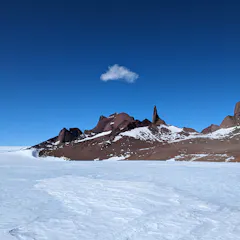
New study provides evidence that Antarctic microbes make energy from the air at temperatures as low as -20°C.
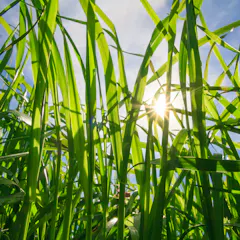
Better photosynthesis could boost crop yields by up to 60% – and a tiny box made of proteins could help.

Until now, it’s been very hard for scientists to establish a detailed timeline of the early evolution of bacteria.

Plants shape Earth’s atmosphere by moving carbon and water vapour. New research sheds light on how they learned to do it – and how it may change in future climates.

Scientists are exploring the deep ocean to understand how oxygen can be produced there without sunlight.

Plastic and climate change are interfering with how plants make food. It will blow back on us.

A new study concluded that microplastics could reduce photosynthesis by as much as 12% in certain plants.
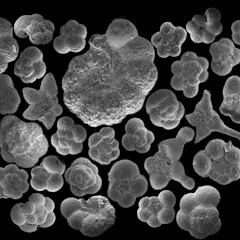
Foraminifera have lived almost everywhere in the ocean for millions of years. Their fossilised remains hold a record of Earth’s past.
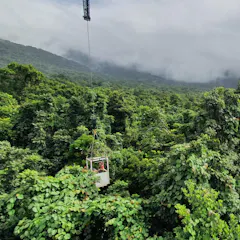
An experiment in the Daintree rainforest found the rate of photosynthesis in leaves warmed by 4°C dropped by an average of 35% compared to non-warmed controls.

Organic soils, one of the pillars of Québec’s food self-sufficiency, could disappear within 50 years. Fortunately, the application of straw or wood chips could regenerate these soils.

A study of Arctic microalgae could benefit everyone from farmers to astronauts.
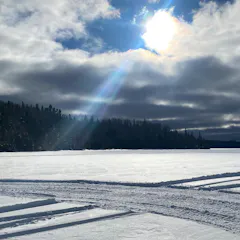
Canadians are no strangers to cold winters, when everything in nature appears to be frozen solid. However, under the ice cover of lakes, many animals remain active during the winter.

At first glance, duckweed may seem innocuous and even a little too common to be of any interest. But it’s an excellent source of protein.
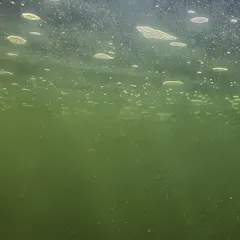
Some plant plankton engage in predatory behaviour and consume bacteria. This can contribute to climate change as these plankton stop photosynthesis in warmer temperatures.

In winter 2023-24, the Great Lakes’ ice cover was near record lows, peaking at just 16%. Researchers explain how diminishing ice could have consequences for fisheries, and how species are evolving.
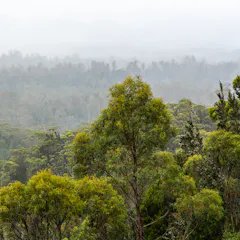
Trees are supposed to grow faster as a result of increased CO₂ in the atmosphere - but this research suggests there are many exceptions to the rule.

Trees – and all plants – harvest sunlight to gain the energy they need to live and grow.
Top contributors
-

Associate Professor in Biophysics, University of Pretoria
-
Senior Research Associate, School of Agriculture, Food and Ecosystem Sciences, The University of Melbourne
-
Chief Research Scientist, CSIRO Environment; Executive Director, Global Carbon Project, CSIRO
-
Postdoctoral researcher in photosynthesis, Vrije Universiteit Amsterdam
-
Lecturer, University of Essex
-
Professor, Microbiology, Monash University
-
Associate Head of Research and Knowledge Exchange - Reader in Plant Science, Edge Hill University
-
Senior Lecturer, School of Science and Hawkesbury Institute for the Environment, Western Sydney University
-
Associate Professor, Biological Sciences, University of Sydney
-
Associate Professor of Botany, University of Hawaii
-
Professor of Chemistry, Monash University
-
Professor, Water and Landscape Dynamics, Fenner School of Environment & Society, Australian National University
-
ARC Future Fellow, Australian National University
-
Chief research scientist, CSIRO
-
Professor of Geology, Adelaide University