

At its best, a national team’s style reflects a national footballing philosophy. But honouring our sporting identity may conflict with our desire to win.
Articles on Philosophy
Displaying 141 - 160 of 746 articles

The subject of philosophy is specifically designed to promote critical thinking skills and teach people how to have difficult conversations about controversial issues.

Formulaic appeals to “free speech” do not remove the need to critically challenge extreme and antidemocratic views.

Critics have scoffed at the AI-written review, but haven’t acknowledged the threat implicit in the reduction of the human to the machine.
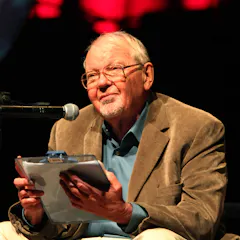
Utopia was, for Jameson, more than a hope deferred or a crazy workbench covered with unfinished social blueprints. It was a habit of thought we cultivate among ourselves.

Real wisdom is about a balance between thoughtful reasoning, social understanding and emotional awareness.

Ahead of the Jewish High Holidays, repentance and forgiveness are on many people’s minds. But self-forgiveness is important for personal growth, too.

Arendt maintained that our ‘common sense’ depends on our good will and curiosity, our adventurous enjoyment of testing opinions and perspectives against those of others.

When scientists claim that a policy is ‘just’, they sometimes can’t or don’t explain what they actually mean.

Autonomous AI is still designed by people − so who or what is really responsible for its actions? For centuries, theologians have posed similar questions about mankind and God.

Freud wanted to know how da Vinci combined supreme artistic accomplishments with a technological imagination that seemingly anticipated modern science and engineering.

André Weil was a mathematician. His sister Simone Weil was a philosopher. They both thought deeply about the nature and value of mathematics and mathematics education.

There are many greetings that provide a unique glimpse into the culture of its speakers, reflecting different traditions and ways of acknowledging, respecting and honouring others.

Space may be considered the final frontier, but the US was once a frontier, too. How can space industry leaders avoid repeating practices that led to colonialism in the 18th century and beyond?

Dogs and infants may not be able to tell us what they’re thinking, but we are developing the tools that will help us find out.

In the absence of clear-cut regulation, who should decide on where and how a technology that could change the course of human health should be applied?
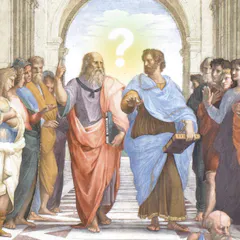
Paradoxes point to conceptual glitches or bugs. How to fix the bugs, or whether they can be fixed, is rarely obvious.
Philosophy has been instrumental to AI since its inception.

What makes a relationship last when feelings fade or circumstances change? Can you force yourself to love someone you hate or don’t care about?
In a rapidly changing world, some conservatives are turning to Christianity for stability. But can they gain its societal benefits without full belief?
Top contributors
-

Professor in Philosophy, Australian Catholic University
-
Associate Professor of Philosophy, Deakin University
-
Associate Professor of Philosophy of Education, University of Birmingham
-
Professor of Philosophy, La Trobe University
-
Senior Lecturer in Philosophy and Education; Curriculum Director, UQ Critical Thinking Project, The University of Queensland
-
Deputy Director, Institute for Ethics, Governance & Law, Griffith University
-
Associate Lecturer, University of Notre Dame Australia
-
Honorary Associate in Philosophy, University of Sydney
-
Professor, Philosophy of Science, The University of Melbourne
-
Professor of Philosophy, University of Pretoria
-
Senior Lecturer in Philosophy and Ethics, Nottingham Trent University
-
Assistant Professor in Philosophy and History, Bond University
-
Researcher, UQ Critical Thinking Project, The University of Queensland
-
Associate Professor in Philosophy, University of Nottingham
-
Lecturer in Philosophy, Queen's University Belfast