

Before she became a singer-songwriter, Del Rey gained her philosophy degree at Fordham University.
Articles on Philosophy
Displaying 81 - 100 of 746 articles

Roland Barthes’ notion that the author is dead has been incredibly influential, though it was not as original or revolutionary as it seemed.
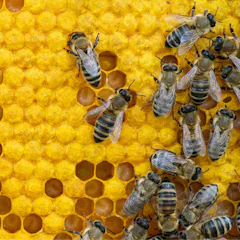
Humans are inescapably moral animals. Yet it is rare for most of us to reflect on how well our moral compasses are working.

Instant evaluations narrow your perspective and limit your mind’s potential to connect and engage with other aspects of your experiences.
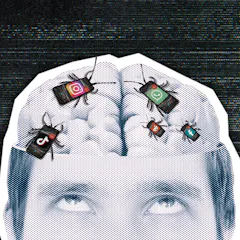
Many of us are hostage to our phones – and it’s not unlike having head lice.

Figuring out whether de-extinction is possible is as much a technical puzzle as a philosophical one. Add two kinds of DNA to the mix, and it gets even more complex.

‘With philosophy, people care about what I think. Nobody listens when you’ve been in prison. Everything you think is wrong, rubbish, you’re nothing.’

It might seem odd to look to someone who lived over 2,000 years ago for answers about AI. But Aristotle has enduring insights about friendships – and which ones are particularly valuable.

Anguish is the result of conflict between two values we cherish equally – such as love and freedom.

A. C. Grayling’s new book Discriminations explores the history and ethics of cancelling and exclusion, sounding a warning against ideological intolerance.

The novel explores how people retain dignity, compassion and philosophical depth in the face of adversity.

The problem of pain measurement is not technological, but philosophical. Biomarkers won’t solve it.

Philosopher Immanuel Kant teaches us that even amid turmoil, it is possible — and necessary — to work toward a freer, more just future.

When it comes to consciousness, theories are like toothbrushes. Everybody has their own and nobody wants to use anybody else’s.

An object’s color appears differently under different lighting and against different backgrounds − for different viewers. But that doesn’t mean colors are subjective.

Corporations are ‘legal persons’ under the law. But their ability to be ‘owned’ by shareholders embeds a system of exploitation at the heart of capitalism.

A psychologist explains how group identity, polarizing issues and social media are driving people apart – and suggests some remedies.

German philosopher Paul Tillich’s writings about affirming oneself in the face of anxiety, repression and meaninglessness ring as true today as in the 1950s.

Ten comedians, one room, last comic to laugh wins. But what makes comedy – and not laughing – so funny?

Rawson, in burrowing from question to question, draws on a vibrant array of thinkers and essayists in environmental philosophy.
Top contributors
-

Professor in Philosophy, Australian Catholic University
-
Associate Professor of Philosophy, Deakin University
-
Associate Professor of Philosophy of Education, University of Birmingham
-
Professor of Philosophy, La Trobe University
-
Senior Lecturer in Philosophy and Education; Curriculum Director, UQ Critical Thinking Project, The University of Queensland
-
Deputy Director, Institute for Ethics, Governance & Law, Griffith University
-
Associate Lecturer, University of Notre Dame Australia
-
Honorary Associate in Philosophy, University of Sydney
-
Professor, Philosophy of Science, The University of Melbourne
-
Professor of Philosophy, University of Pretoria
-
Senior Lecturer in Philosophy and Ethics, Nottingham Trent University
-
Assistant Professor in Philosophy and History, Bond University
-
Researcher, UQ Critical Thinking Project, The University of Queensland
-
Associate Professor in Philosophy, University of Nottingham
-
Lecturer in Philosophy, Queen's University Belfast