
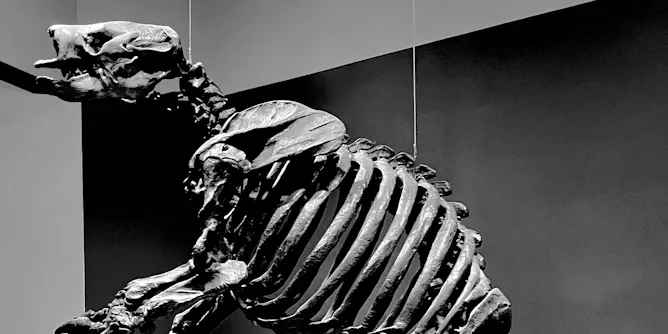
Researchers often rely on fossil teeth for clues about what extinct animals ate. Giant ground sloths’ teeth have been tricky to analyze, though – until now.
Articles on Paleoecology
Displaying all articles

Not everything dies in a mass extinction. Sea life recovered in different and surprising ways after the asteroid strike 66 million years ago. Ancient fossils recorded it all.
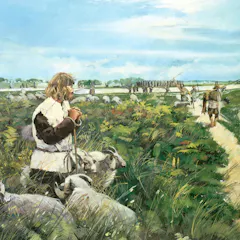
Scientists analysed thousands of years of pollen data and made a surprising discovery.
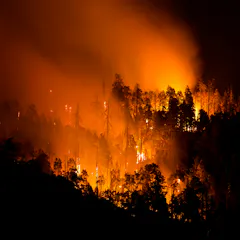
A changing climate, humans and fire were a deadly combination for the big animals that used to roam southern California. Listen to The Conversation Weekly podcast.
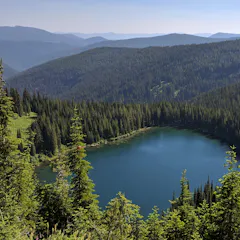
As the climate warms, devastating fires are increasingly likely. The 2020 fires pushed the Southern Rockies beyond the historical average. Is there hope for the Northern Rockies?
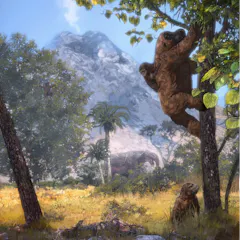
Contrary to the idea that apes evolved their upright posture to reach for fruit in the forest canopy, the earliest known ape with this stature, Morotopithecus, lived in more open grassy environments.

Megalodon, the world’s largest known shark species, swam the oceans long before humans existed. Its teeth are all that’s left, and they tell a story of an apex predator that vanished.
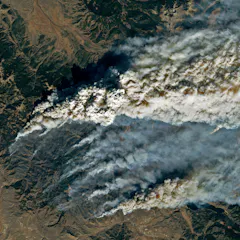
Scientists studied charcoal layers in the sediment of lake beds across the Rockies to track fires over time. They found increasing fire activity as the climate warmed.
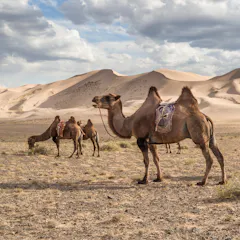
We found evidence of irreversible ecological breakdown millions of years ago – this time round, we should heed the warning signs.

A new environmental record for a prehistoric site in Kenya helped researchers figure out how external conditions influenced which of our ancient ancestors lived there, with what way of life.
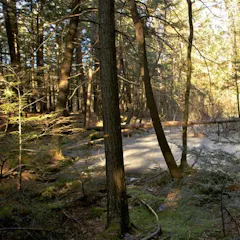
Evidence shows Native Americans in New England lived lightly on the land for thousands of years. It wasn’t until Europeans arrived that the landscape experienced major human impacts.
Top contributors
-

Research Scientist in Ecological Transformation, University of Colorado Boulder
-
Professor of Fire Ecology, University of Montana
-
Assistant Professor of Paleoecology, University of California, Merced
-
Professor of Anthropology, University of Michigan
-
Professor of Paleoclimatology and Paleoecology, University of Wyoming
-
Postdoctoral Researcher, Palaeoecology, University of York
-
Host, The Conversation Weekly Podcast, The Conversation
-
Associate Curator, La Brea Tar Pits; Adjunct Faculty, Institute of the Environment and Sustainability, University of California, Los Angeles
-
Postdoctoral Research Associate, Leverhulme Centre for Anthropocene Biodiversity, University of York
-
Director of the Human Origins Program, Smithsonian Institution
-
Professor of Anthropology, University of Minnesota
-
Specialist in Geoscience, Goethe University Frankfurt am Main
-
Postdoctoral Research Fellow in Geosciences, University of Cambridge
-
Senior postdoctoral fellow in palaeoecology, Stockholm University
-
Associate Professor of Geosciences, Baylor University