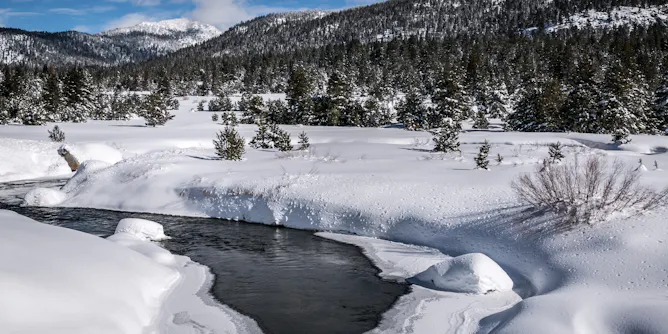
Streamflows the West relies on for drinking water and farms used to follow a fairly predictable arc as winter snow melted. Rising temperatures are changing that.
Articles on Rocky Mountains
Displaying all articles

Climate change is altering not only how much snow falls, but where snowpack persists and how long it lasts.
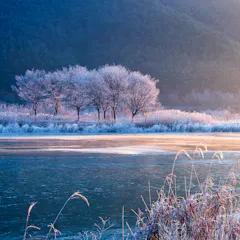
Over a three-decade experiment in the Rocky Mountains, fungi and plant life fundamentally changed. The result has consequences for cattle and wildlife.
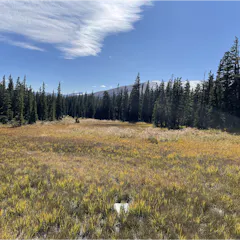
Subalpine wetlands in the Rocky Mountains are warming, creating the perfect conditions for producing methylmercury, a potent neurotoxin.

A new exhibition at Colorado State University highlights 100 years of women’s work.
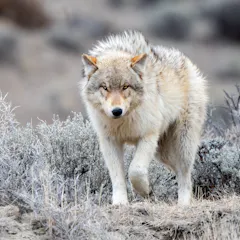
At one time, perhaps as many as 2 million gray wolves roamed the North American continent. But now those numbers are down to a few thousand.
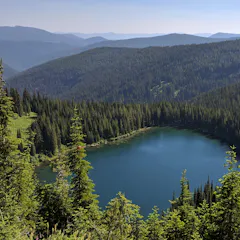
As the climate warms, devastating fires are increasingly likely. The 2020 fires pushed the Southern Rockies beyond the historical average. Is there hope for the Northern Rockies?
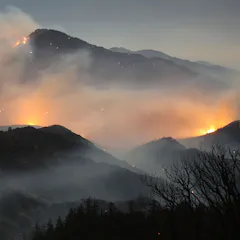
As the risk of fires rises in areas once considered too wet to burn, it creates hazards for mountain communities and for downstream water supplies.
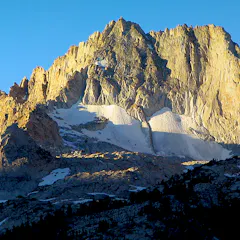
As rivers run dry in the Rocky Mountains and the West, it’s easy to wonder where all the snow you see on mountain peaks goes. Some of it ends up in the air, but researchers aren’t sure how much.
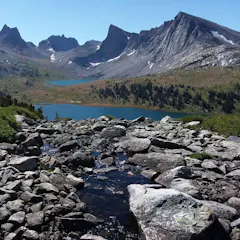
The area’s iconic national parks are home to grizzlies, elk and mountain snowfall that feeds some of the country’s most important rivers. A new report show the changes underway as temperatures rise.
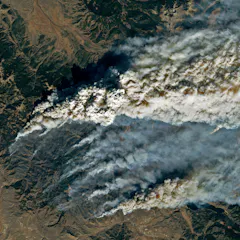
Scientists studied charcoal layers in the sediment of lake beds across the Rockies to track fires over time. They found increasing fire activity as the climate warmed.
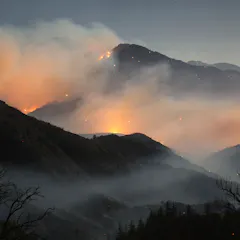
As the risk of fires rises in areas once considered too wet to burn, it creates hazards for mountain communities and for downstream water supplies.

Mice pups living on mountain tops reserve their energy for growth rather than warmth. When they get too cold, they conserve energy by slowing down their metabolic processes.
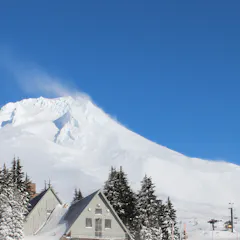
New research forecasts that climate change will make multiyear stretches with low snow levels more common across western North America – bad news for water managers, farmers, foresters and skiers.
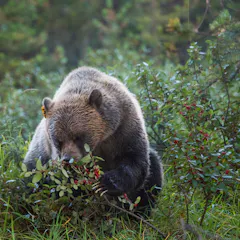
As warming temperatures shift the availability of key food sources, Alberta’s grizzly bears will be forced to adjust.
Top contributors
-

Professor of Fire Ecology, University of Montana
-
Research Associate in Climate Science, Massachusetts Institute of Technology (MIT)
-
Associate Professor of Civil Engineering, Boise State University; United Nations University
-
Professor of Engineering, University of California, Merced
-
Research Scientist in Ecological Transformation, University of Colorado Boulder
-
Professor of Paleoclimatology and Paleoecology, University of Wyoming
-
Postdoctoral Fellow in Comparative Physiology, McCall MacBain Teaching and Leadership Fellow, McMaster University
-
Professor of Ecology and Evolutionary Biology, University of Michigan
-
Associate Professor of Plant Biology, University of Oklahoma
-
Associate Professor of Ecology, University of Tennessee
-
Senior Food Scientist at the CSU Spur Food Innovation Center, Colorado State University
-
Professor of English, Colorado State University
-
Associate Professor, Building, Civil, and Environmental Engineering, Concordia University
-
Associate Professor of Biogeochemistry, University of Colorado Boulder
-
Assistant Professor of Geology and Geological Engineering, Colorado School of Mines