
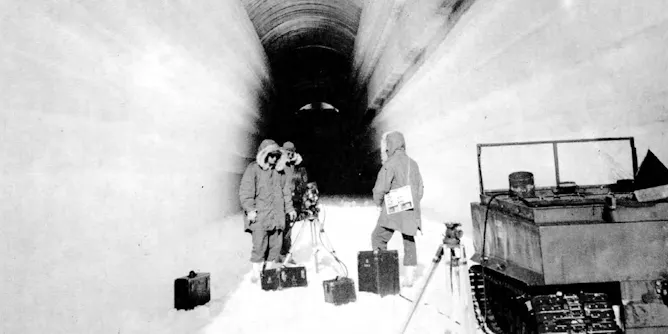
Listen to Paul Bierman, an expert on Greenland’s ice, talk to The Conversation Weekly podcast about the history of the island’s ice sheet.
Articles on Ice cores
Displaying 1 - 20 of 22 articles
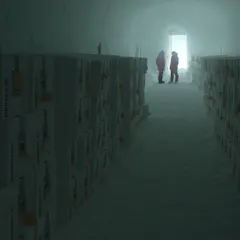
With an average temperature of -50°C, Antarctica’s first-ever 100% natural sanctuary protects endangered ice cores from global warming.
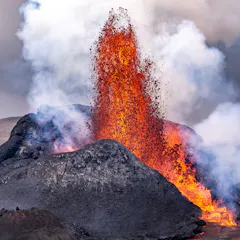
New research suggests that a mystery platinum signature found in Greenland’s ice may have come from a volcanic eruption in Iceland.

From ice cores extracted from the Tibetan Plateau, scientists recovered the equivalent of 1,705 virus species. Reading their genomes tells the story of 41,000 years of climate change.
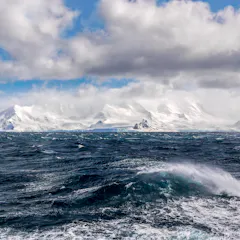
Howling winds take sea salt from the Southern Ocean and lay it down in Antarctica as snow, then ice. Hidden in these ice cores is a warning about Australian fire seasons.
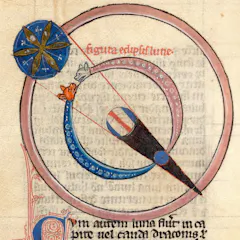
Medieval monks recorded hundreds of lunar eclipses. Centuries later, their descriptions are helping scientists unravel the role of volcanoes in historical climate change.

Evidence in Earth’s natural archives, from tree rings to seafloor sediments, points to one trend. Some climate models suggest another.
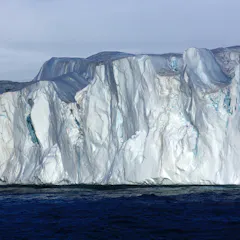
An earlier study used only one charcoal record to assess Patagonia’s fire history. But analysis of multiple records changes the picture substantially.
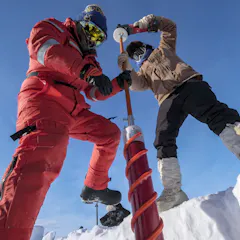
Ice cores can preserve evidence of ‘black swan’ events like pandemics and droughts, but the glaciers from which they are collected are disappearing.
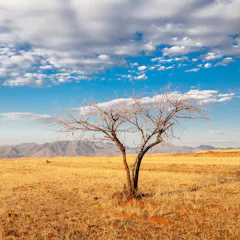
The last time global carbon dioxide levels were around 400ppm was four million years ago. On average, the world was 3°C warmer, but in high northern latitudes, it was up to 14°C warmer than today.

New research suggests ancient climate change shaped the fate of western civilisation.
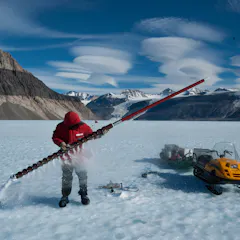
Analysis of 12,000-year-old Antarctic ice reveals that methane leaks from fossil fuel extraction play a larger role than previously thought.

During a Q&A discussion about climate change, Tasmanian Senator Jacqui Lambie said it was four degrees hotter 110,000 years ago. Is that right?
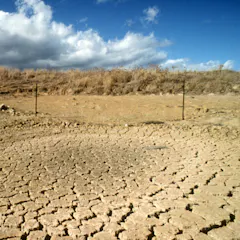
A new millennium-long record reveals that Australia has suffered longer droughts and wet periods than those recorded in the past century’s weather observations.

Ice cores tell us vital information about how the world’s climate has changed - and how it will change in the future.
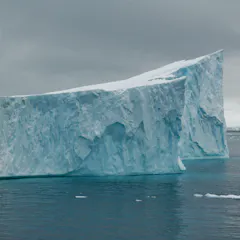
An international study of ice cores has helped researchers pave the way for a better understanding of how Antarctica’s volcanoes have affected the global climate over the past 2,000 years. The research…
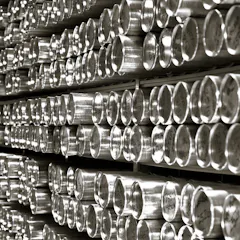
Ice cores are cylinders of ice drilled from glaciers and ice sheets. When snow falls it takes with it a record of many aspects of the atmosphere. As long as no melting takes place, this information is…
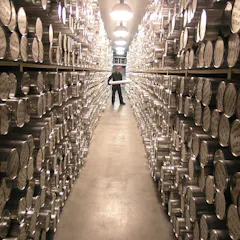
How can air bubbles trapped in ice for millions of years, or fossilised fern fronds, or the chemical make-up of rocks that were underwater in the distant past provide us with an inkling of our future…
The cause of dramatic losses in glaciers and ice sheets in the West Antarctic is still unclear. A recent research team has…
A new study clarifies the link between carbon dioxide and temperature increases. Ice core samples from the last glacial period…
Top contributors
-

Adjunct Professor in Climate Science, University of Tasmania
-
Palaeoclimatologist, Australian Antarctic Program Partnership, University of Tasmania
-
Chief Scientist, Australian Antarctic Division and Professor of Climate Science, Australian National University
-
Distinguished University Professor, Earth Sciences, The Ohio State University
-
Professor of Geography, The Ohio State University
-
Associate Professor – Hydroclimatology, University of Newcastle
-
Research Scientist Trace Gases, National Institute of Water and Atmospheric Research (NIWA)
-
Professor (Astrophysics), University of Southern Queensland
-
Adjunct professor, UNSW
-
Professor of Ocean and Climate Dynamics, University of Tasmania
-
Adjunct Professor, University of Queensland, and Professor and Head of School of Earth and Environment, University of Canterbury
-
Professor in Physical Geography, Te Herenga Waka — Victoria University of Wellington
-
Research associate in Climatology, University of Tasmania
-
Associate professor, Curtin University
-
Emeritus Professor of Climate and Environmental Physics, University of Bern