
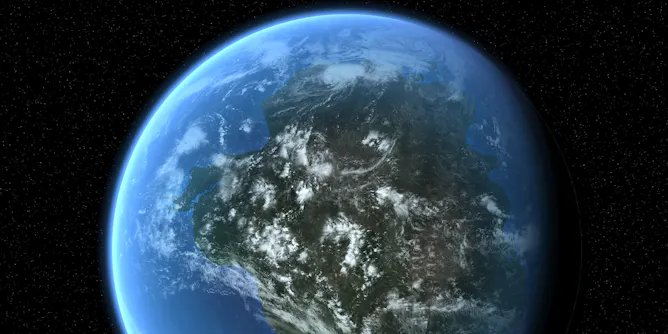
The discovery of Gondwana’s buried bits helps settle the question of whether it was a supercontinent.
Articles on Cambrian explosion
Displaying 1 - 20 of 27 articles
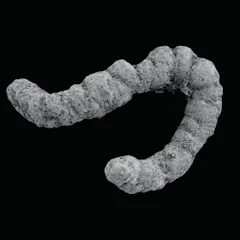
Is the evolution of excrement the reason we exist?
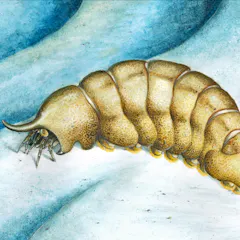
The fossil is a reminder of how incomplete our understanding of Earth’s history remains.

Did Earth’s major diversification event really happen in one sudden explosion? Our fossil discovery suggests not.

Environmental stress in evolution can be reframed as a powerful engine of innovation, not simply a barrier to survival.
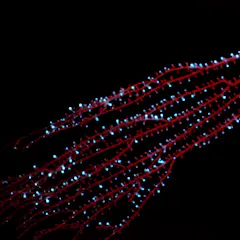
Dozens of animals, some on land but many in the ocean, can produce light within their bodies through chemical reactions. Scientists are still trying to understand when and why this trait developed.
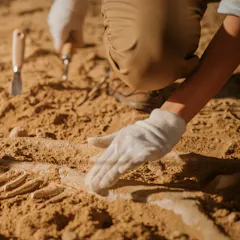
Charles Darwin knew the evidence from fossils contradicted evolution. Researchers are still trying to work out the problem today.
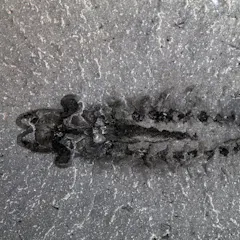
The discovery of a fossil over 500 million years old reveals new information. Its brain and nervous system are remarkably preserved, filling in some gaps in what we know about arthropod evolution.
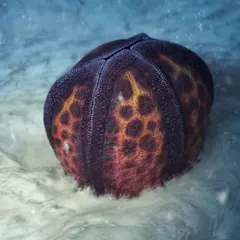
The discovery of a unique 510 million-year-old fossil in a Pennsylvania churchyard offers new clues into how early life evolved on Earth.
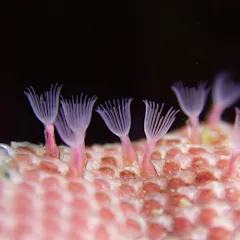
Most modern animals have their roots half a billion years ago in the Cambrian Explosion, but one group was curiously missing from the fossil record - until now.
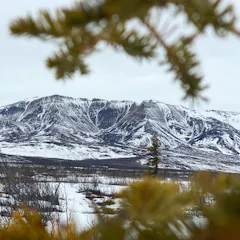
A recent discovery of a sponge fossil may be the oldest known animal fossil, extending the evolutionary timeline by hundreds of millions of years.
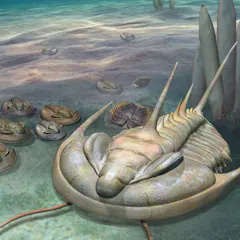
Looking a bit like enlarged woodlice, ancient trilobites crawled along the seabed and had an exoskeleton made of calcite — nature’s version of a suit of armour.
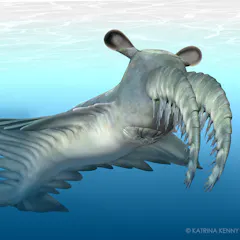
Our study on weird ancient marine animals called radiodonts supports the idea that vision played a crucial role during the Cambrian Explosion, a rapid burst of evolution about 500 million years ago.
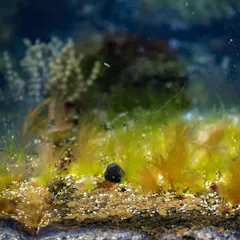
Ancient fatty molecules, once believed to be traces of some of the first animals to live on Earth, may have been produced by algae instead.
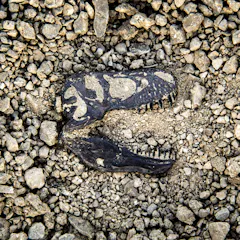
Every cloud has a silver lining – even the debris cloud from an asteroid impact
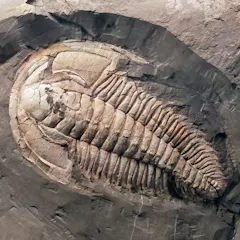
There is evidence to show this monster of the ancient sea was a cannibal, feeding on its own kind.
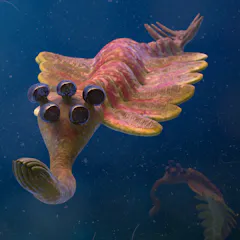
Exceptionally well preserved 500m year old fossils show Cambrian seas were more diverse than scientists had thought.
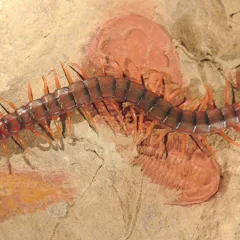
Modern animals took over our planet much more quickly than previously thought. This has both welcome and disturbing implications for the future of life on our rapidly changing planet
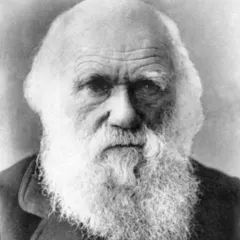
Strange frond-like sea creatures are among the planet’s earliest animals, but new research dates them and the entire animal kingdom to much earlier than first thought.
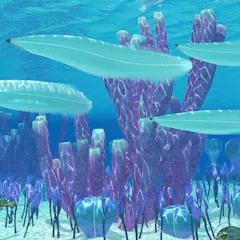
New research suggests life on Earth became more diverse because of a change in biology related to stem cells, not just rising oxygen levels.
Top contributors
-

Professor of Earth Sciences, University of New England
-
Post-doctoral researcher in Palaeobiology, Flinders University
-
Merit Researcher, Natural History Museum
-
Head of Palaeontology Division at the Natural History Museum Karlsruhe
-
Associate Professor, Geobiology, Lund University
-
Senior Research Scientist, South Australian Museum; Flinders University
-
Postdoctoral researcher, Uppsala University
-
Associate Professor, Adelaide University ; South Australian Museum
-
Lecturer, University of Essex
-
Professor, Australian National University
-
Junior Research Fellow, University of Oxford
-
Senior Lecturer in Paleontology and Evolutionary Biology, Life Sciences at the University of Bath, University of Bath
-
Lecturer in Macroevolution, University of Bristol
-
Professor of Palaeobiology, University of Leicester
-
Assistant Professor of Earth and Environmental Sciences, Vanderbilt University