
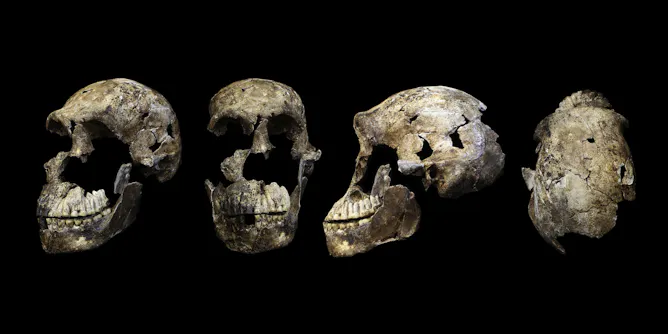
Homo naledi had a brain less than half the size of our own. Yet the new research claims it had cognitive abilities far beyond what we might expect.
Articles on Paleoanthropology
Displaying 21 - 40 of 47 articles
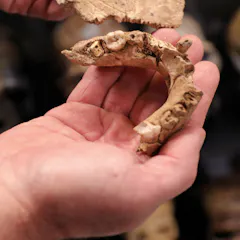
Scientists had figured a fossil found in Spain more than a century ago was from a Neandertal. But a new analysis suggests it could be from a lost lineage of our species, Homo sapiens.
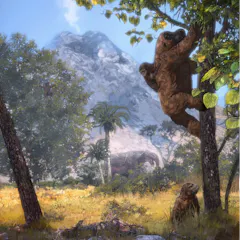
Contrary to the idea that apes evolved their upright posture to reach for fruit in the forest canopy, the earliest known ape with this stature, Morotopithecus, lived in more open grassy environments.
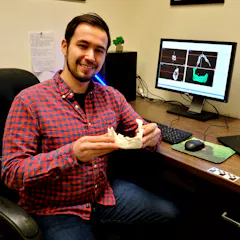
Using a new equation based on today’s primates, scientists can take a few molar teeth from an extinct fossil species and reconstruct exactly how fast their offspring grew during gestation.

Ancient DNA from Neanderthal fossils in southern Siberia reveals a small community with close family ties – including a father and his teenage daughter.
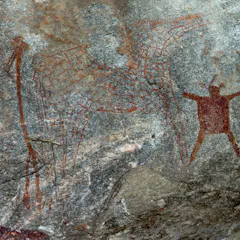
A new study doubles the age of ancient DNA in sub-Saharan Africa, revealing how people moved, mingled and had children together over the last 50,000 years.
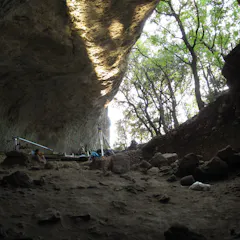
Stone artifacts and a fossil tooth point to Homo sapiens living at Grotte Mandrin 54,000 years ago, at a time when Neanderthals were still living in Europe.
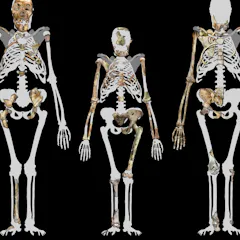
Walking has taken a very long time to develop, with evidence of bipedalism among early humans in Africa roughly 4.4 million years ago.
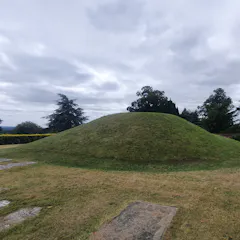
New analysis of Anglo-Saxon skulls suggests that being an Anglo-Saxon was a matter of language and culture, and not genetics.

Combining evidence from archaeology, geochronology and paleoenvironmental science, researchers identified how ancient humans by Lake Malawi were the first to substantially modify their environment.

A new environmental record for a prehistoric site in Kenya helped researchers figure out how external conditions influenced which of our ancient ancestors lived there, with what way of life.
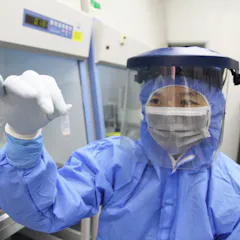
By studying the DNA of people who lived in East Asia thousands of years ago, scientists are starting to untangle how the region was populated.
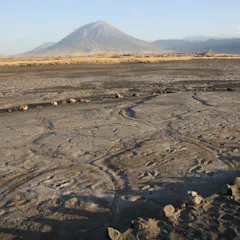
The footprints of over 20 different prehistoric people, pressed into volcanic ash thousands of years ago in Tanzania, show possible evidence for sexual division of labor in this ancient community.
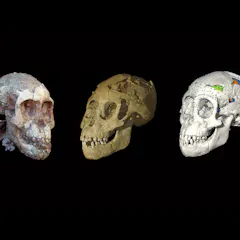
Our findings reveal the slowing down of brain development in our ape-like ancestors began more than three million years ago.
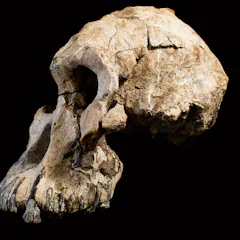
The hominin known as Lucy may not be the direct ancestor of humans.
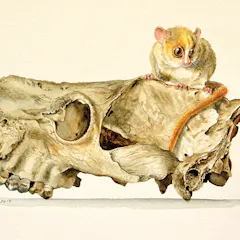
A series of new studies sheds light on the population crash and extinction of the giant birds, lemurs and more that roamed the island until around A.D. 700-1000.
Why was one gene mutation that affects hair, teeth, sweat glands and breasts ubiquitous among ice age Arctic people? New research points to the advantage it provided for ancestors of Native Americans.
The early human ‘Cockney pearly kings and queens’.
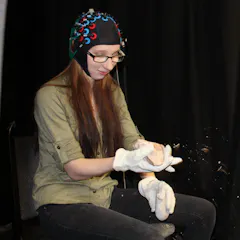
We can’t observe the brain activity of extinct human species. But we can observe modern brains doing the things that our distant ancestors did, looking for clues about how ancient brains worked.

A century-old case of scientific fraud illustrates how hard it is to untangle the truth when access to new discoveries is limited.
Top contributors
-

Assistant Professor of Anthropology, Yale University
-
Curator of Human Evolution of the Cleveland Museum of Natural History and Research Assistant Professor of Anthropology, Stony Brook University (The State University of New York)
-
Research Associate, WiSER, University of the Witwatersrand
-
Associate Professor of Anthropology, Binghamton University, State University of New York
-
Archéologue et chercheur au CNRS, Auteurs historiques The Conversation France; Université de Toulouse
-
Research Fellow in Biological Anthropology, Monash University
-
Chancellor's Professor of Medicine, Liberal Arts, and Philanthropy, Indiana University
-
Professor of Archaeological Theory and Method, University of Liverpool
-
Lecturer in Clinical Communication, University of Liverpool
-
Associate Professor of Osteoarchaeology, Uppsala University
-
Professor of History, UMass Amherst
-
Professor of Earth System Science, UCL
-
Assistant Professor of Biological Sciences, Vanderbilt University
-
Postdoctoral Research Fellow in Biology, Stanford University
-
Paleoanthropologist, University of Wisconsin-Madison