
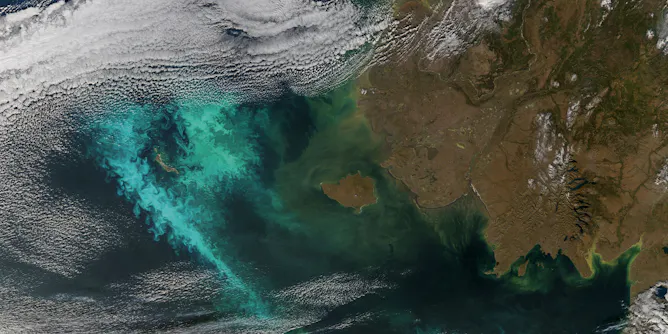
You may not have heard of them or given them much thought, but phytoplankton — the microscopic plants that grow throughout the world’s oceans — are the foundation of oceanic food webs. Although tiny, they…
Articles on Ocean acidification
Displaying 81 - 100 of 108 articles

The Great Barrier Reef is in trouble, and a draft government plan to ensure its survival does not go far enough. A number of submissions including those from the Australian Academy of Science and Environmental…

Reef historian Iain McCalman, in Sydney, and reef scientist Stephen Palumbi, in California, are monitoring reef degradation from opposite sides of the planet. They compared notes. Iain McCalman: A recent…
Scientists are coming to the conclusion that we are on the brink of a mass extinction — the sixth known in the history of the Earth, and the latest since an asteroid killed off the dinosaurs 65 million…
In many ways, Australia is defined by the oceans surrounding us. We have the world’s third largest ocean territory, most of our trade travels by sea, and we have vast offshore resources.
Scientists are meeting this week in Yokohama, Japan, to finalise and approve the latest report from the Intergovernmental Panel on Climate Change’s Working Group II – the part of the IPCC process that…
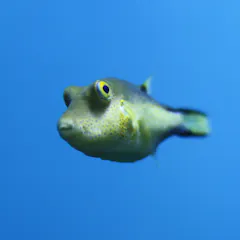
Increasing carbon dioxide in the world’s oceans could hamper fishes’ eyesight, slowing their reaction times and leaving them vulnerable to predators or unable to hunt, new research has shown. Experts say…
Rising levels of ocean acidity have been linked to anxiety in juvenile rockfish. The study found that carbon uptake in the…
An increase of carbon dioxide (CO2) in the ocean will not only have detrimental impacts on corals, but also the biodiversity…
The world’s oceans will see dramatic changes thanks to climate change, affecting hundreds of millions of people who depend on the sea according to research published today in the online journal PLOS Biology…
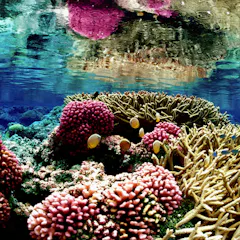
Greenhouse gas emissions have warmed the oceans in regions such as the Baltic by as much as 1.3°C. It is now thought that 90% of the heat added to the climate system by humans has been absorbed in the…
The smallest species of plankton will increase in numbers to the detriment of other species when C02 levels rise and ocean…
Increased acidification of the world’s oceans is breaking down the relationship between microbial life and larger plants…
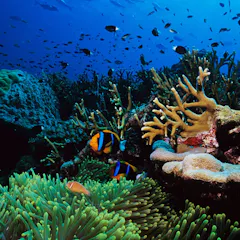
Recent studies have shown several marine species are struggling to adapt to the excess carbon dioxide and heat which oceans are absorbing. Evidence is mounting of the risks we’re taking with our oceans…
A loss of shelter is threatening the survival of the world’s clownfish. An international study has found that the effects…
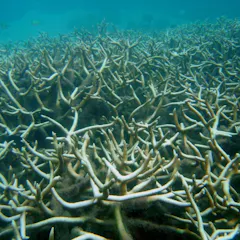
As a scientist working on the impact of climate change on marine ecosystems, one of my duties is to communicate my work. My main goal is to convince students, citizens, economists and politicians that…
Scientists have used test tubes to discover coral’s secret to building their external skeletons. The Rutgers Institute study…
Researchers at the University of Bristol created a model to test the benefits of cooling ocean temperatures for coral reefs…
Rising levels of ocean acidification may not be as damaging for marine life as previously thought. Growing concerns over…
Purple sea urchins have been found to be able to evolve extremely rapidly in relation to their environment. Experiments conducted…
Top contributors
-

Professor, School of the Environment, The University of Queensland
-
Professor, Marine Biology, Adelaide University
-
Research scientist, CSIRO
-
Senior Research Fellow, Antarctic Climate & Ecosystems CRC, University of Tasmania
-
Research fellow Environmental Management, Institute of Aquaculture, University of Stirling
-
ARC DECRA Fellow/Senior Lecturer, IMAS, University of Tasmania
-
Guest investigator, Woods Hole Oceanographic Institution
-
Distinguished Research Professor and Australian Laureate, James Cook University
-
Professor, Sustainable Marine Futures, Environment Institute, Adelaide University
-
Professor in Law, University of Canterbury
-
Professor of Marine Biology, Te Herenga Waka — Victoria University of Wellington
-
Associate Professor in Marine Biology, University of Technology Sydney
-
Director & Professor, Fisheries Economics Research Unit, University of British Columbia
-
Lecturer in Marine Biology, Te Herenga Waka — Victoria University of Wellington
-
Research Lead, Carbon Dioxide Removal, CSIRO