
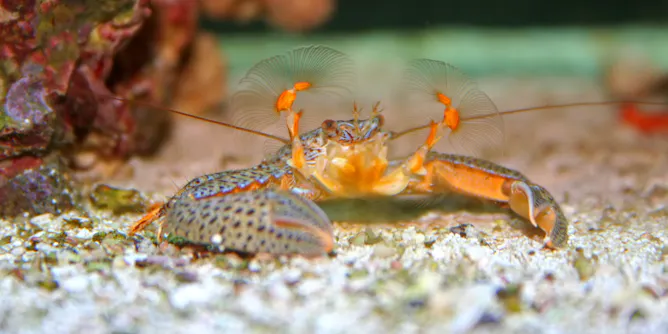
‘Smell-free seas’ would be a disaster for marine life.
Articles on Ocean acidification
Displaying 61 - 80 of 108 articles

A combination of factors – pollution, disease and overfishing – is harming corals but scientists have found clues to effective treatment by studying corals’ microbiome.
South Africa has the opportunity to benefit from its ocean economy. But to do that, the country needs to put better policies in place to counter ocean acidification.
Marine scientists have been accused of being biased towards ‘doom and gloom’. But it’s not bias if the outlook for coral reefs really is gloomy.
By artificially going ‘back in time’ to more alkaline ocean conditions, researchers have shown the damage that ocean acidification is already doing to the Great Barrier Reef.
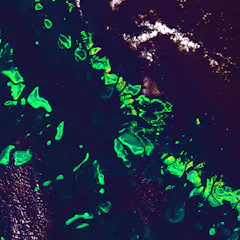
Ocean acidification will hurt some parts of the Great Barrier Reef more than others.
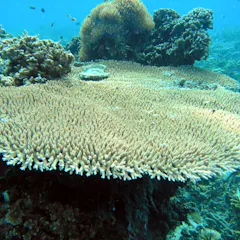
Without action to curb the rising acidity of our seas, corals will start to develop deformed skeletons at a crucial young stage of their lives.
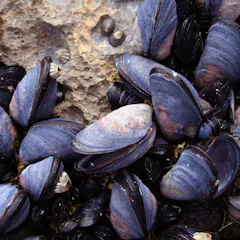
Shellfish will have more brittle shells as oceans get more acidic – making them more vulnerable to predators. New research gives a fascinating glimpse into how they will adapt.
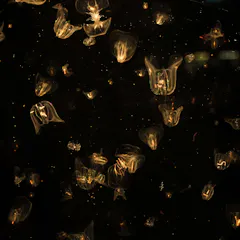
We know a lot about the potential negative effects of ocean acidification on marine creatures. But might some species actually benefit? The answer is yes, but this isn’t necessarily a good thing.
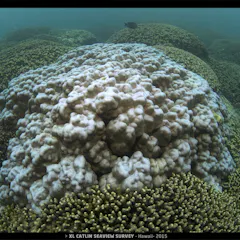
Many corals can’t make it through the bleaching events caused by warming ocean waters. But some can – and scientists are trying to learn more about the sources of their resilience.
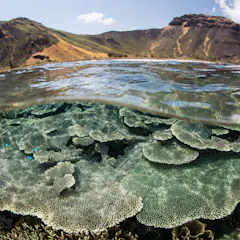
It should not be assumed that policies intended to deal with the climate will simultaneously stop ocean acidification.
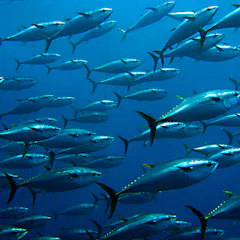
Over the past five years we’ve seen a significant increase in research on ocean acidification and warming seas, and their effect on marine life. Overall, unfortunately, the news is not good.
One of the Australian government’s new research priorities is “environmental change”. But can be hard to know how to tackle such huge and interlinked issues as climate change and species extinctions.
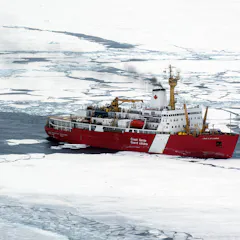
A melting Arctic means new areas will be open to commercial fishing but scientists – and bordering countries – say they need time to study the ecological and economic risks.
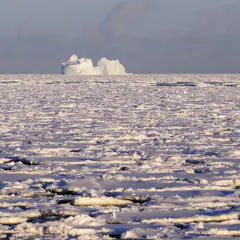
Hundreds of meters below the surface of the freezing ocean surrounding Antarctica, the seafloor is teeming with life. The animals living there have no idea that an army is on the brink of invading their tranquil environment.
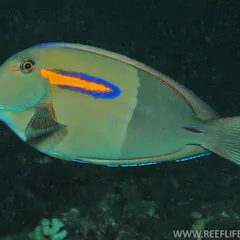
As warmer seas move further south, tropical wildlife is going with them, giving us a dramatic insight into how global warming is changing our oceans.
Failing to stick to the world’s agreed global warming limit of 2C won’t just affect the atmosphere - it will play havoc with the oceans too, potentially ruining ecosystems on which much of humanity depends.

With the United Nations set to decide on whether to list the Great Barrier Reef as officially in danger, we look at the various threats to the reef’s survival, starting with the biggie… climate change.
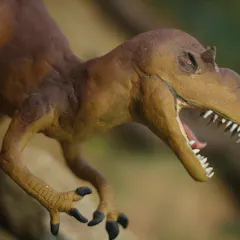
The end-Triassic mass extinction may be better known for preceding the rise of the dinosaurs, but it had a profound effect on oceans too.
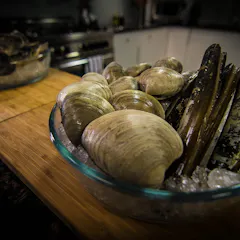
Regions that depend on shellfish heavily for their economy and with limited information exchange will be hit hardest by ocean acidification.
Top contributors
-

Professor, School of the Environment, The University of Queensland
-
Professor, Marine Biology, Adelaide University
-
Research scientist, CSIRO
-
Senior Research Fellow, Antarctic Climate & Ecosystems CRC, University of Tasmania
-
Research fellow Environmental Management, Institute of Aquaculture, University of Stirling
-
ARC DECRA Fellow/Senior Lecturer, IMAS, University of Tasmania
-
Guest investigator, Woods Hole Oceanographic Institution
-
Distinguished Research Professor and Australian Laureate, James Cook University
-
Professor, Sustainable Marine Futures, Environment Institute, Adelaide University
-
Professor in Law, University of Canterbury
-
Professor of Marine Biology, Te Herenga Waka — Victoria University of Wellington
-
Associate Professor in Marine Biology, University of Technology Sydney
-
Director & Professor, Fisheries Economics Research Unit, University of British Columbia
-
Lecturer in Marine Biology, Te Herenga Waka — Victoria University of Wellington
-
Research Lead, Carbon Dioxide Removal, CSIRO