
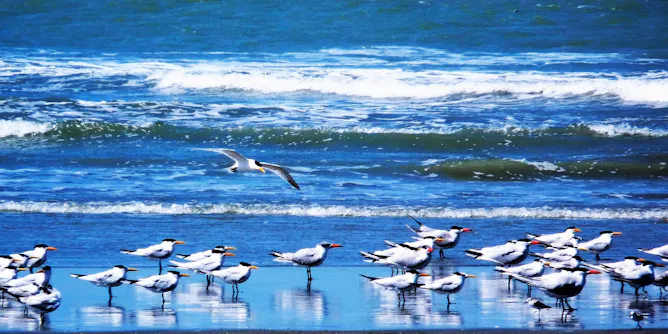
There is only a single mooring managed by French researchers that monitors the impacts of climate change on West African Canary Current.
Articles on Ocean acidification
Displaying 21 - 40 of 108 articles
From planting mangroves to dumping minerals in the ocean, there are lots of ideas for ocean carbon dioxide removal – and even more questions.
Humans have failed to take good care of the ocean — and the environment at large — because we undervalue its goods and services.
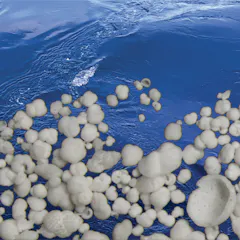
Tiny seashells draw carbon to the ocean floor when they die. This is the most significant geological process of carbon storage today, and it might increase in a warmer world, as it did in the past.
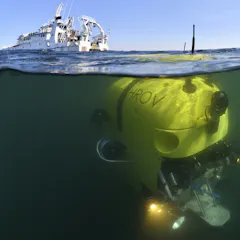
For the opening of the One Ocean Summit in Brest from February 9 to 11, 2022, France’s marine research institute looks at promising avenues of research to protect the planet’s largest ecosystem.
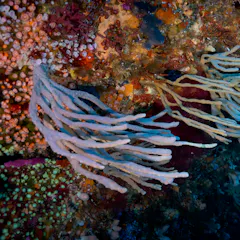
Sponges are ancient marine animals and have already shown robustness against stresses from climate change. New research now shows they can also tolerate low-oxygen conditions.
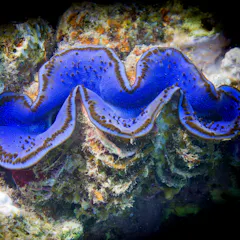
The old ways of keeping giant clam species healthy won’t work with climate change. We need new techniques - and fast.
The ocean has been buffering us from the impacts of climate change, but it is reaching the limit of this capacity. Integrating ocean and climate policy will be crucial.
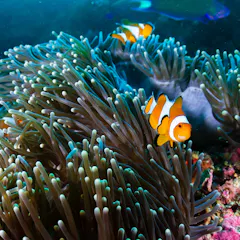
Carbon dioxide can be classed as pollution under the UN law of the sea and countries have an obligation to prevent it from entering the ocean.
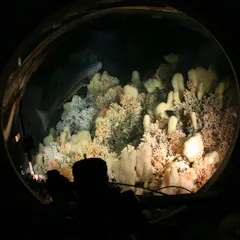
Cold-water corals live in the Atlantic’s frigid depths – and the UK is a stronghold for them.

Pacific island nations have shaped the international response to climate change. At the United Nations summit in Glasgow, they’ll draw a line in the sand.
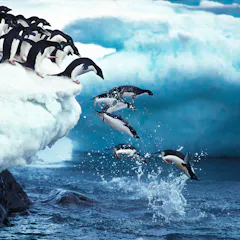
The latest IPCC report makes it clear we can no longer stop the seas from rising, but we can still control how much and how fast sea levels change.

Solar geoengineering could theoretically cool the Earth to slow global warming, and it has been controversial. Still, countries should research its risks and benefits.
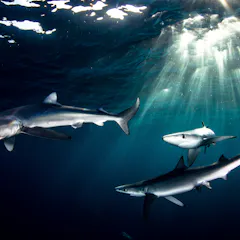
Sharks grow slowly and produce few young compared to bony fishes. In many cases, this means that their populations are fished out faster than can be replenished if not well managed.

A study of 183 coral reefs worldwide quantified the impacts of ocean warming and acidification on reef growth rates. Even under the lowest emissions scenarios, the future of reefs is not bright.
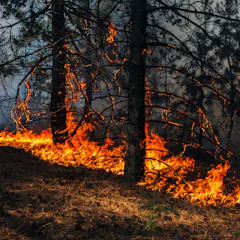
A future of heat and strife or humanity’s finest hour – our response to climate change today will define the 21st century.
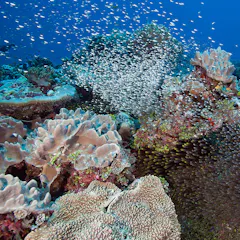
Scientists watched in real time as rising ocean heat transformed the sprawling reef. It was a harbinger for ecosystems everywhere as the planet warms.
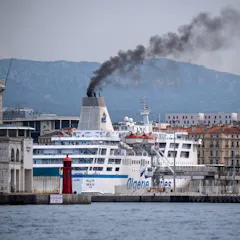
The Mediterranean region, with its biodiversity, climate, demographics, and economic activities such as tourism, agriculture and fisheries, is particularly vulnerable to environmental risks.
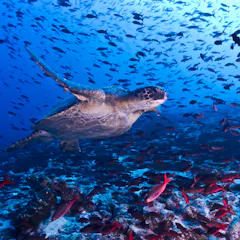
Marine protected areas will be important for achieving the ocean Sustainable Development Goals.
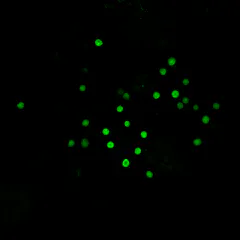
In the ocean, phytoplankton helped by diazotrophs play an outstanding role in withdrawing CO₂ from the atmosphere. But climate change is disturbing this delicate balance.
Top contributors
-

Professor, School of the Environment, The University of Queensland
-
Professor, Marine Biology, Adelaide University
-
Research scientist, CSIRO
-
Senior Research Fellow, Antarctic Climate & Ecosystems CRC, University of Tasmania
-
Research fellow Environmental Management, Institute of Aquaculture, University of Stirling
-
ARC DECRA Fellow/Senior Lecturer, IMAS, University of Tasmania
-
Guest investigator, Woods Hole Oceanographic Institution
-
Distinguished Research Professor and Australian Laureate, James Cook University
-
Professor, Sustainable Marine Futures, Environment Institute, Adelaide University
-
Professor in Law, University of Canterbury
-
Professor of Marine Biology, Te Herenga Waka — Victoria University of Wellington
-
Associate Professor in Marine Biology, University of Technology Sydney
-
Director & Professor, Fisheries Economics Research Unit, University of British Columbia
-
Lecturer in Marine Biology, Te Herenga Waka — Victoria University of Wellington
-
Research Lead, Carbon Dioxide Removal, CSIRO