
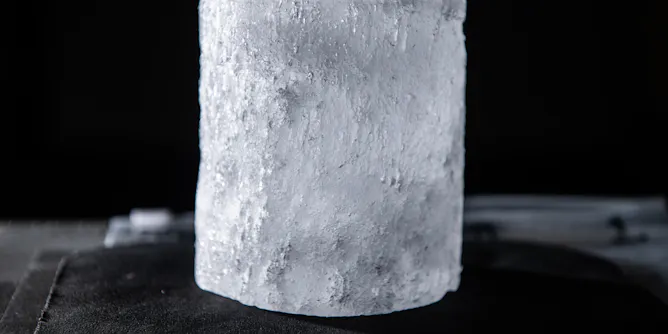
We can study the cosmos by tracing debris from exploding stars right here on Earth.
Articles on Nuclear physics
Displaying 1 - 20 of 21 articles

The ancient dream of turning lead into gold is now a reality – but it’s not quite what the alchemists might have hoped for.
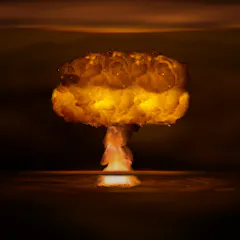
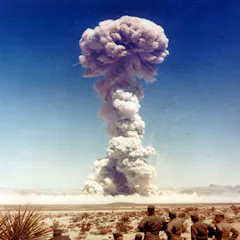
A nuclear bomb is a bomb that makes explosions by changing the nucleus of an atom in a way that releases a lot of energy.
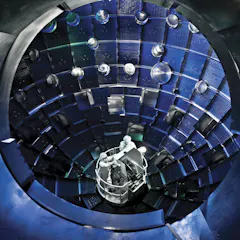
The promise of abundant, clean energy powered by nuclear fusion is one big step closer thanks to a new experiment. The results are a historic scientific milestone, but energy production remains a ways off.
A new particle accelerator has just begun operation. It is the most powerful accelerator of its kind on Earth and will allow physicists to study some of the rarest matter in the universe.
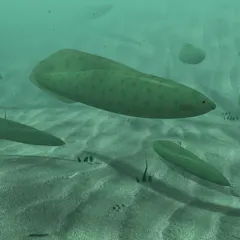
A biologist explains how researchers nail down the age of ancient fossils thanks to a physical process called radioactive decay.

Nuclear isomers are rare versions of elements with properties that mystified physicists when first discovered. Isomers are now used in medicine and astronomy, and researchers are set to discover thousands more of them.
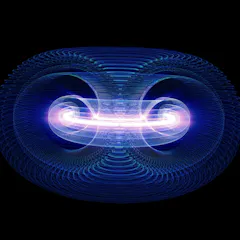
In January 2022, the JET fusion experiment produced more power over a longer period of time than any past attempt. Two physicists explain the engineering advancements that made the result possible.
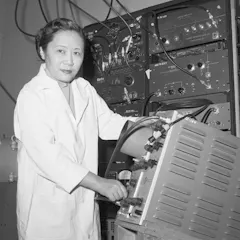
Chinese American physicist Wu worked on the Manhattan Project and performed groundbreaking experiments throughout her long career.
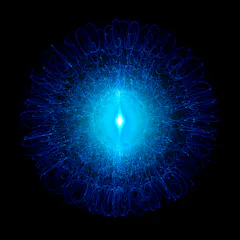
A recent experiment with atomic nuclei is hard to square with our current understanding of physics.
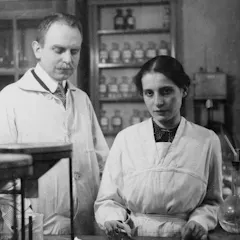
Left off publications due to Nazi prejudice, this Jewish woman lost her rightful place in the scientific pantheon as the discoverer of nuclear fission.
Alongside their famous dangers, radioactive materials have many beneficial uses. With as many more predicted as have already been discovered, nuclear physicists are searching for more isotopes.
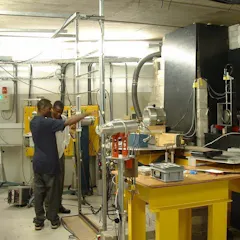
Neutrons can penetrate through matter, which means they can be harnessed for all sorts of important work.
People long assumed all the elements we see now were created during the Big Bang. But on May 2, 1952, an astronomer reported spotting new elements coming from an old star and changed our origin story.
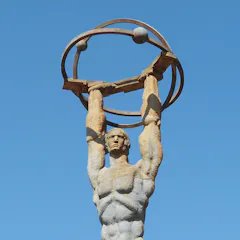
By figuring out fission, physicists were able to split uranium atoms and release massive amounts of energy. This Manhattan Project work paved the way both for atomic bombs and nuclear power reactors.

Scientists have finally been able to prove that thunder and lightning drive nuclear reactions.
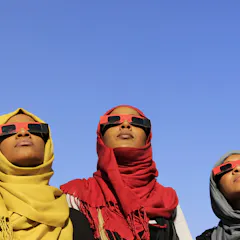
Collaboration is one of the keys to making African science soar: when the continent’s universities work together, they can produce amazing results.

Bird feathers can tell us a lot about their owners and the places they visit.
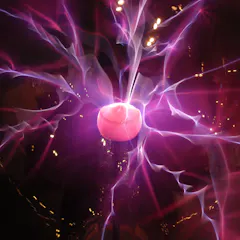
It’s not just about weapons, nuclear science has changed practically everything around us – for the better.
The identification of fakes and forgeries is a basic issue that has always raised controversy. This is unsurprising, of course – the enormous sums garnered by top paintings would turn to dust as soon as…
Top contributors
-

Professor of Nuclear Physics, Michigan State University
-
Timothy J. Jorgensen is a Friend of The Conversation.
Director of the Health Physics and Radiation Protection Graduate Program and Professor of Radiation Medicine, Georgetown University
-
Joint Research Fellow, Centre for Ecosystem Science, UNSW and Australia Nuclear Science Technology Organisation, UNSW
-
Professor of Physics, Imperial College London
-
Researcher, Italian Institute for Nuclear Physics
-
Professor of Space Physics, Lancaster University
-
Professor of Physics, Michigan State University
-
Full Professor of Physics, University of the Western Cape
-
Target design leader, National Ignition Campaign, Lawrence Livermore National Laboratory
-
University Distinguished Professor of Nuclear Astrophysics, Michigan State University
-
Reader, University of Surrey
-
Associate Professor of Chemistry, Michigan State University
-
Michigan State University
-
Postdoctoral research fellow, iThemba LABS
-
Associate Professor of Nuclear Engineering, University of Michigan