

Particle accelerators aren’t just for testing the Standard Model. They’re also used to diagnose and treat disease and study world history.
Articles on Particle accelerators
Displaying 1 - 20 of 25 articles
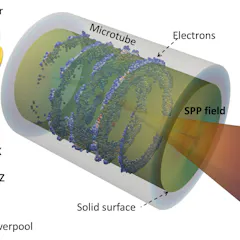
The device could yield intense X-rays which are usually produced in huge facilities.

Seven grams of salt per litre is optimal, according to physics.

The ancient dream of turning lead into gold is now a reality – but it’s not quite what the alchemists might have hoped for.

Water availability regulates tree growth and can have ‘legacy effects’ long after conditions change.
Physicists uncovered a new experiment hidden in old data from the Large Hadron Collider. Using this innovative approach, the team has unlocked an entirely new way to study quantum physics.
A new particle accelerator has just begun operation. It is the most powerful accelerator of its kind on Earth and will allow physicists to study some of the rarest matter in the universe.
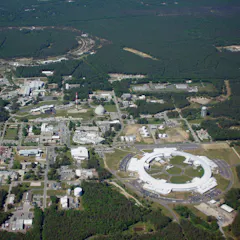
The force of nature that holds the atomic nucleus together is poorly understood, but that may be about to change.

Laser-cooling enables new measurements that could explain why antimatter is so scarce in our universe.
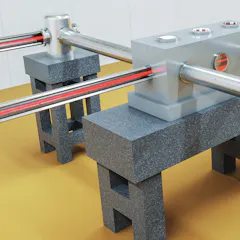
The compact accelerators are 100 times smaller than traditional ones, and could easily fit inside hospitals and laboratories.
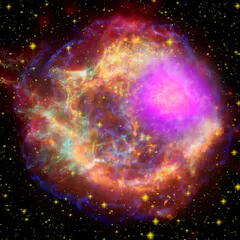
When scientists created the Higgs particle with protons, they needed the 10km-wide Large Hadron Collider. A muon machine could achieve it with a diameter of just 200 metres.

There are many forces in nature, but they may one day be united into The Force.
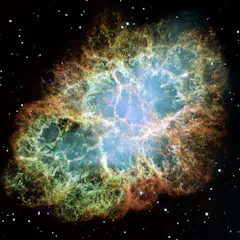
If we want an improved theory of particle physics, understanding neutrino masses is key.
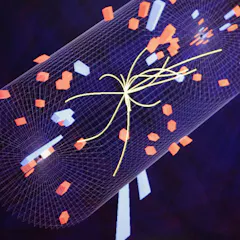
The Large Hadron Collider has generated mind-blowing science in the last decade – including the Higgs boson particle. Why is the LHC so important, and how will physicists use it in the years to come?
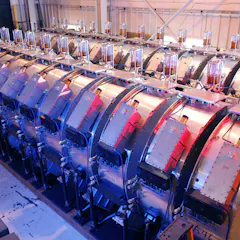
Particle accelerators are helping to push forward the frontiers of theoretical physics but they’ve also had more impact on your everyday life than you realise.
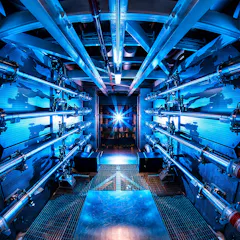
Ultra-high powered lasers are the best and even cheapest approach to uncovering the secrets of physics, but with uses closer to home too.
It’s not just about weapons, nuclear science has changed practically everything around us – for the better.
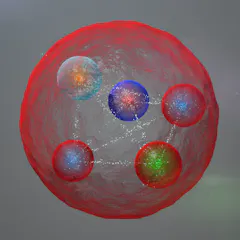
The latest data from the particle accelerator that found the Higgs Boson has confirmed another of our theories about how the universe works.
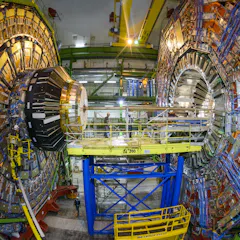
Running the world’s largest particle accelerator requires a lot of energy, but it could reveal the secrets of the universe.

The restart of experiments at CERN’s Large Hardron Collider could mark the start of a new era of discovery or a big disappointment.
Top contributors
-

Royal Society University Research Fellow and Lecturer in Particle Physics, UCL
-
Professor at the School of Mathematics and Physics, Queen's University Belfast
-
Professor of Physics, University of Liverpool
-
Professor of Physics, Head of Department, Lancaster University
-
Senior lecturer in engineering, Lancaster University
-
Particle physicist, Adelaide University
-
Postdoctoral Researcher in Neuroimaging Harmonisation, University of Oxford
-
Professor of Physics, Florida State University
-
Reader, University of Surrey
-
Postgrad student and freelance writer, The University of Melbourne
-
Lecturer, Lancaster University
-
Michigan State University
-
Associate Professor of Chemistry, Michigan State University
-
Blaise Pascal Chair, CEA Saclay, France / Senior Lecturer, School of Physics and Astronomy, University of Glasgow
-
Professor of Nuclear Physics, Michigan State University