

Scientists have extracted atoms from eggshells that are 15 million years old which reveal how plants responded to high levels of carbon dioxide.
Articles on Isotopes
Displaying 1 - 20 of 27 articles

We can study the cosmos by tracing debris from exploding stars right here on Earth.

Ancient baobabs in Madagascar have unlocked a 700-year rainfall record that is set to help scientists figure out how to adapt to climate change.

Unstable atoms emit fast-moving particles that can damage cells in the human body. Some atoms are far more unstable than others.

New analysis of silver items in the Bedale hoard reveals Scandinavians travelled to the east to trade much earlier than previously thought.
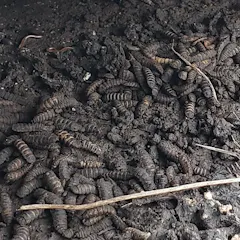
New research highlights the prevalence of maggots as an easily obtained, nutrient-rich supplement of ancient hominin diets.

Blending livelihood strategies based on what works at different times in specific environments has been key to human survival for thousands of years.
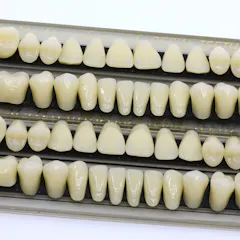
The balance of different varieties of atoms inside a person’s teeth can reveal a week-by-week record of rainfall and protein consumption during their infancy.

Not knowing exactly when regular meat consumption became part of our ancestors’ diets is a gap in our understanding of human evolution.
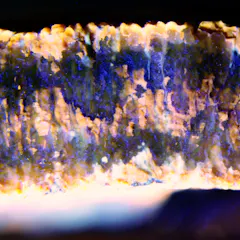
Calcite, the material making up fossilized eggshells, may preserve amino acids better than bone.

Scientists analyzing isotope ratios have found that many of the elements that make up life could be left over from Earth’s formation.
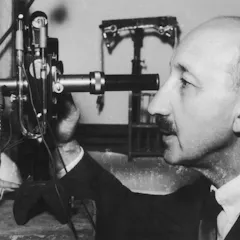
Some Nobel Prize-winning ideas originate in strange places, but still go on to revolutionize the scientific field. George de Hevesy’s research on radioactive tracers is one such example.
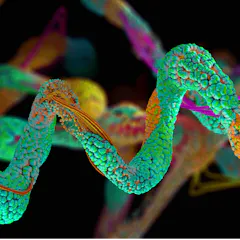
Tracing isotopes of carbon inside amino acid molecules has revealed the ‘metabolic fingerprints’ of how different animals store and use energy.

Beavers are an important ecosystem engineer in the boreal forest and researchers are demystifying their secrets.
A new particle accelerator has just begun operation. It is the most powerful accelerator of its kind on Earth and will allow physicists to study some of the rarest matter in the universe.

Nuclear isomers are rare versions of elements with properties that mystified physicists when first discovered. Isomers are now used in medicine and astronomy, and researchers are set to discover thousands more of them.

In January 2022, the JET fusion experiment produced more power over a longer period of time than any past attempt. Two physicists explain the engineering advancements that made the result possible.

Isotope mapping reveals information about a monarch butterfly’s point of origin. Using strontium isotopes helps pinpoint more precise locations.

Are the descriptions of war passed down by ancient historians accurate? A site in Sicily provided a rare chance to fact-check stories told about two battles from more than 2,400 years ago.

Leaded petrol hasn’t been used since 2002, but new research found traces of it end up back in the air after bushfires.
Top contributors
-

Professor of Nuclear Physics, Michigan State University
-
Associate Professor of Chemistry, Michigan State University
-
Professor of Medical Physics, University of Nottingham
-
PhD candidate, Biology, L’Université d’Ottawa/University of Ottawa
-
Associate Professor of Physics, The University of Melbourne
-
Étudiante à la maîtrise en écologie, Université du Québec en Abitibi-Témiscamingue (UQAT)
-
Michigan State University
-
Lecturer, Northwestern University
-
Michigan State University
-
Professeur d'écologie forestière, Université du Québec en Abitibi-Témiscamingue (UQAT)
-
Research Fellow, Australian Rivers Institute, Griffith University
-
Ph.D. Candidate in Anthropology, University of Georgia
-
Professeur Écologie Aquatique, Université du Québec en Abitibi-Témiscamingue (UQAT)
-
Professor of Planetary Science, University of Science and Technology of China
-
Joint Research Fellow, Centre for Ecosystem Science, UNSW and Australia Nuclear Science Technology Organisation, UNSW