

A subset of AI called reinforcement learning is helping scientists improve nuclear fuel technology, which they could use to power spacecraft and rockets.
Articles on Nuclear fusion
Displaying 1 - 20 of 46 articles
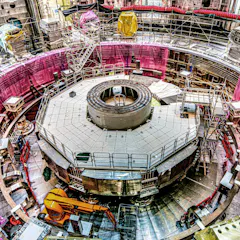
Fusion companies claim they can deliver power in a decade or less – but the reality may be more difficult.
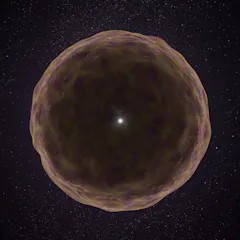
An ‘extremely stripped supernova’ confirms the existence of a key feature of physicists’ models of how stars produce the elements that make up the Universe.
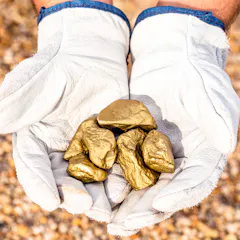
Californian startup Marathon Fusion says it could produce several tonnes of the element per year.
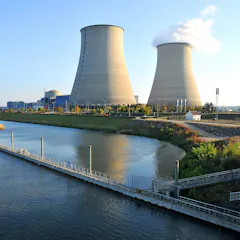
Students explore nuclear facilities in virtual reality and learn about the ethical dimensions of nuclear technology in a University of Michigan course.
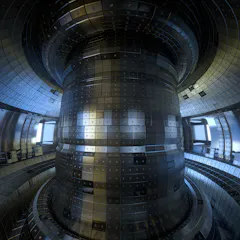
The technology could help produce more resistant materials and allow scientists more control over fusion reactions.
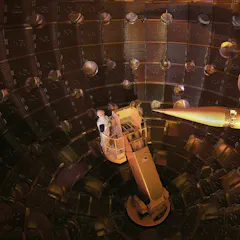
Even once researchers can reliably get more power out of a fusion reaction than they put in, they’ll still need to overcome engineering challenges to scale up fusion energy.

Three Conversation science editors look ahead to what to expect in 2025 on The Conversation Weekly podcast.

Fission and fusion are both nuclear reactions. But while one involves splitting atoms, the other involves fusing atoms together.

Fusion reactors get hot − scientists need materials that can take the heat without deforming and deteriorating.
Nuclear fusion can’t produce net energy, so is it really a solution to AI’s growing energy demands?
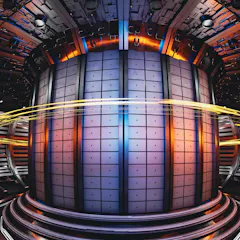
Some processes that support fusion energy fuel climate change and may harm the environment.
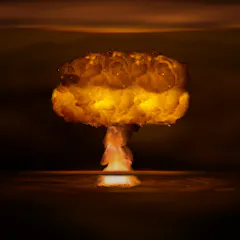
A nuclear bomb is a bomb that makes explosions by changing the nucleus of an atom in a way that releases a lot of energy.
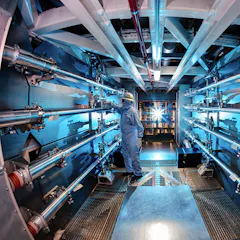
While the nuclear fusion scientific breakthrough is indeed historic, it’s important to pause and reflect on the way ahead for fusion energy.
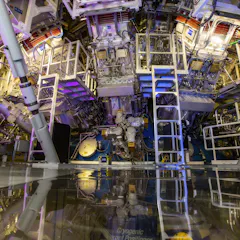
A US national lab has proved we can the fusion process can be used to produce energy, but it’s just the first step in a very long process.
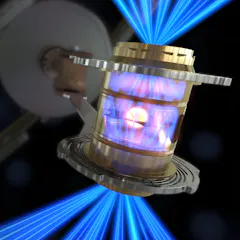
Huge challenges remain before working fusion reactors are possible.
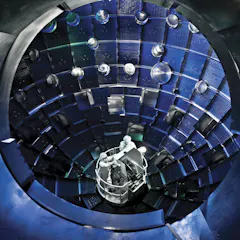
The promise of abundant, clean energy powered by nuclear fusion is one big step closer thanks to a new experiment. The results are a historic scientific milestone, but energy production remains a ways off.
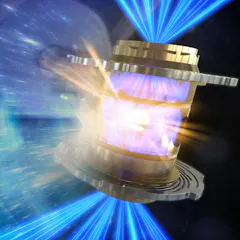
The Lawrence Livermore National Laboratory in the US has reached an historic milestone – producing more energy from a fusion experiment than they put in. Here’s what you need to know.
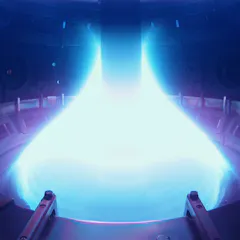
A fusion of public and private investment appears to herald a new push towards developing the ultimate clean, limitless energy source.
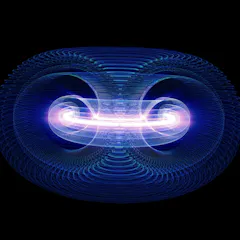
In January 2022, the JET fusion experiment produced more power over a longer period of time than any past attempt. Two physicists explain the engineering advancements that made the result possible.
Top contributors
-

Professor, Mathematical Sciences Institute and School of Computing, Australian National University
-
Lecturer in Applied Mathematics and Physics, Griffith University
-
Assistant Professor of Nuclear Engineering, Zinkle Faculty Fellow, University of Tennessee
-
Timothy J. Jorgensen is a Friend of The Conversation.
Director of the Health Physics and Radiation Protection Graduate Program and Professor of Radiation Medicine, Georgetown University
-
Senior Lecturer in Nuclear Physics, University of Birmingham
-
PhD Candidate in Politics and Environment, University of York
-
Applied Radiation Physics Section Leader, Culham Centre for Fusion Energy
-
Professor of Physics, Imperial College London
-
Professor of Nuclear Physics, Michigan State University
-
Professor of Physics, Royal Holloway, University of London
-
University Distinguished Professor of Nuclear Astrophysics, Michigan State University
-
Deputy Director for Research, Princeton Plasma Physics Laboratory, Princeton University
-
Lecturer in International Studies, University of Washington
-
Target design leader, National Ignition Campaign, Lawrence Livermore National Laboratory
-
Head of Physics and Astronomy, Curtin University