

Creating a quieter environment can improve your health – but you have to know what you’re listening for.
Articles on Noise pollution
Displaying 1 - 20 of 52 articles
Noise concerns have tanked several data centres proposed in residential areas in Australia. But is the noise just annoying, or is it bad for our health?

Constant urban noise causes chronic stress, and poorer areas are exposed to more of it.

Pedestrianized spaces can help support local businesses, give public spaces back to people and retrieve them from cars.

Communities across the state are demanding to know how proposed data centers would affect their electric and water bills, landscapes and quality of life.

Even as they create and enable expansive virtual worlds, data centers are physical buildings in real communities around the nation and the globe.

A new study highlights how noise pollution in the ocean is changing animals’ behaviour.

Paris is three decibels quieter than it was 10 years ago, thanks to an effective noise pollution campaign. But traffic noise still forces birds to sing at a higher pitch.

Noise first became a public health issue in interwar Britain – called the ‘age of noise’ by dystopian author Aldous Huxley.
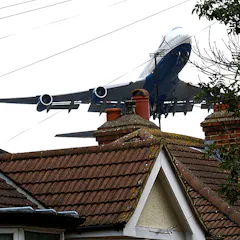
Even moderate night-time aircraft noise can increase insomnia – particularly children. The US and UK both do more to mitigate the noise around airports.

A new road charge mooted for electric vehicle drivers is based on a fundamental misconception.

Fuel tanker accidents in Nigeria can be prevented by restructuring the built environment, providing parking spaces for the tankers, and constructing good roads.

A Harry Potter nightwalk experience at a wildlife sanctuary on the Mornington Peninsula has raised concern for wildlife. Evidence suggests the fears are well-founded.

Apartment residents need more sustainable, climate-adapted designs. They shouldn’t have to depend on costly, high-emissions air conditioning to remain comfortable and healthy.

In every Australian city, you’re likely to come across a warbling magpie. How do they cope with the onslaught of noise? It turns out, the smarter ones cope better.

Too much light and noise at night in cities makes us sleep less and, as a consequence, worsens our health. Here are some of the measures that local authorities should take to remedy this problem.

Mounting evidence shows seismic surveys can harm a range of marine animals.

A new acoustic recorder could track the movements of marine mammals more accurately.

Humans are ‘noisy neighbours’ whose behaviour has long lasting ecological and evolutionary effects on other species.

In the early decades of the 20th century, people grappled with the sounds modernity wrought. Some heard only noise. Others found great beauty.
Top contributors
-

Senior Lecturer in Zoology, Bangor University
-
Emeritus Professor of Psychiatry, Queen Mary University of London
-
Adjunct Research Fellow, Griffith University
-
Assistant Professor of Biological Sciences, Mississippi State University
-
Marine Mammal Researcher, Fisheries and Oceans Canada
-
Senior Lecturer in Physiology, The University of Queensland
-
GMAT and GRE Specialist, Former Lecturer, University of British Columbia
-
Professor of Digital Sound and Interactive Media, Arizona State University
-
Phd Candidate, Evolution and Ecology Research Centre, UNSW
-
Professor of Environmental Science, Policy and Management and of Public Health, University of California, Berkeley
-
Assistant Professor, Harvard University
-
Assistant Researcher, School of Ecosystem and Forest Sciences, The University of Melbourne
-
Associate Professor, The University of Queensland
-
Postdoctoral Research Fellow, Colorado State University
-
Research fellow, Oxford Brookes University