
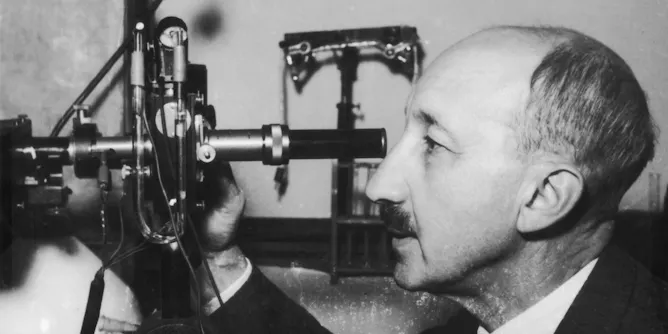
Some Nobel Prize-winning ideas originate in strange places, but still go on to revolutionize the scientific field. George de Hevesy’s research on radioactive tracers is one such example.
Articles on Nobel Prize
Displaying 61 - 80 of 272 articles
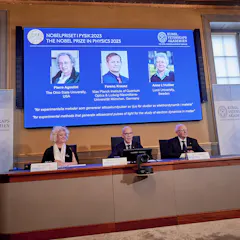
The discussions in the committee are always open, frank and sometimes emotional, but never hostile.

Quantum dot technology has also helped revolutionise medical imagining.

Quantum dots are a prime example of the way nanotechnology engineers materials at an atomic scale.
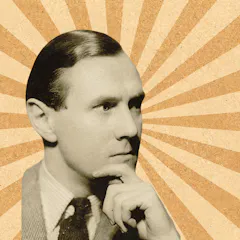
The aura of a major literary prize will inevitably fade. What we are left with is the work itself.
The 2023 Nobel Prize in physics recognized researchers studying electron movement in real time − this work could revolutionize electronics, laser imaging and more.

L'Huillier was busy teaching when she her Nobel prize was awarded.
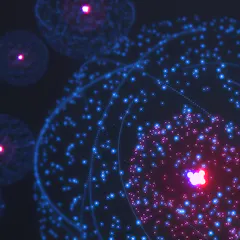
Three scientists won the 2023 Nobel Prize in physics for their work developing methods to shoot laser pulses that only last an attosecond, or a mind-bogglingly tiny fraction of a second.

The 2023 Nobel Prize in physics has been awarded “for experimental methods that generate attosecond pulses of light for the study of electron dynamics in matter”.
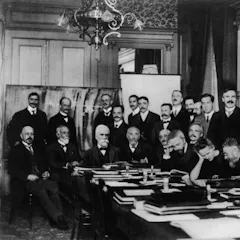
Superconductivity may sound like science fiction, but the first experiments to achieve it were conducted over a century ago. Heike Kamerlingh Onnes, credited with the discovery, won a Nobel Prize in 1913.
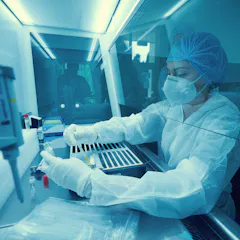
The winners of the 2023 Nobel Prize in physiology or medicine made a discovery that helped create the COVID-19 vaccines. They couldn’t have anticipated the tremendous impact of their findings.

The science that wins the Nobel Prize in Physics each year can be hard to get your head around – but it often has real everyday implications.
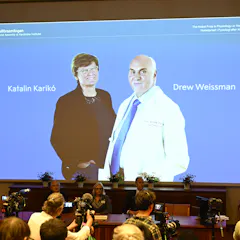
The prestigious prize was awarded to Dr Katalin Karikó and Dr Drew Weissman from the University of Pennsylvania.

The Nobel Prize categories were set up more than a century ago. Since then, science has grown and evolved in unpredictable ways.

Peace can become political when advocates oppose or try to reform governments and societies pursuing hostile foreign relations — or when these societies perpetuate injustice and oppression at home.

Riverside communities in the Pantanal make sustainable use of natural resources within an unpredictable system.
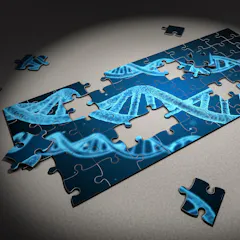
On DNA Day, Canada should be inspired by the lifesaving discoveries of its researchers. However, lack of funding threatens Canadian researchers’ ability to meet the challenges of the future.
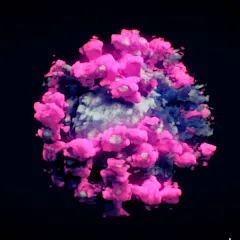
Many microscopy techniques have won Nobel Prizes over the years. Advancements like cryo-ET that allow scientists to see the individual atoms of cells can reveal their biological functions.
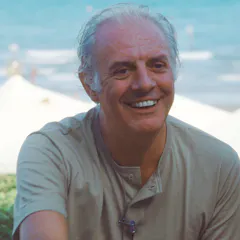
Stifling heat, drunk actors, an unfinished script – in 1985, novelist Barry Unsworth observed the chaotic creative process of playwright Dario Fo.

John Banville calls Mrs Eckdorf in O'Neill’s Hotel, ‘an inexplicably neglected 20th-century masterpiece’. Carol Lefevre shares her fascination with William Trevor’s ‘crazed’ photographer Ivy Eckdorf.
Top contributors
-

Emeritus Robert Reford Professor and Professor of Medicine, McGill University
-
Professor of Nuclear Physics, Michigan State University
-
Laureate Professor Emeritus, The Peter Doherty Institute for Infection and Immunity
-
Professor and Lincoln Professor of Ethics in Public Affairs, Arizona State University
-
Chancellor's Professor of Medicine, Liberal Arts, and Philanthropy, Indiana University
-
Professor of Chemistry, Connecticut College
-
Professor of Science Communication and Chemistry, University of Hull
-
Professor of Writing and Literature, Deakin University
-
Professor, Monash University
-
Lecturer in African and African Diasporan Literature, University of Lagos
-
Senior Lecturer in Economics, Cardiff University
-
Head of School for Physics, University of Sydney
-
Emeritus Professor, Brunel University of London
-
Professor at Division of History of Ideas and Sciences, Lund University
-
Distinguished Professor Emerita of Creative Practice, Faculty of Arts and Design, University of Canberra